Content marketing is the foundation of any successful digital marketing strategy and for good reason. It allows businesses to connect with their audience deeper, establish trust, and provide valuable information that can increase sales and brand loyalty.
However, creating content is not enough. You need a well-thought-out content creation strategy to guide your efforts and ensure your content is aligned with your business goals. This is where content creation strategy consulting comes in. Most of the time small businesses create their content strategy in-house and when they run into issues they hire external strategy consulting services.
Let’s Make Your SEO & Content Work Better for Your Business
In this guide, we’ll walk you through the steps of an effective content creation strategy so you know how to work with a consulting company and what to ask for to unlock the power of content and take your business to the next level.
Ask your content creation strategy consulting collaborator for expert advice to improve:
The Understanding of Your Audience
Understanding your audience is the first step in creating an effective content strategy. Who are they? What do they want? What challenges are they facing? What are their pain points?
You can answer these questions by conducting market research and creating buyer personas. Buyer personas are fictional representations of your ideal customers. They help you understand your audience’s needs, goals, and challenges and enable you to create content that resonates with them. Here your consultant can help.
Once you have a clear understanding of your audience, defining your objectives becomes critical to creating an effective content creation strategy. By identifying your goals, whether it’s generating leads, increasing brand awareness, or establishing thought leadership, you can ensure that your content is purposeful and measurable and, ultimately, helps your business achieve its desired outcomes.
The Definition of Your Objectives
Once you understand your audience, the next step is to define your objectives. What do you want to achieve with your content? Do you want to generate leads, increase brand awareness, or establish thought leadership?
Defining your objectives will help you create content that is aligned with your business goals and drives results.
It’s important to ensure that your objectives are measurable and specific so that you can track the success of your content creation strategy and make data-driven decisions for future efforts. Additionally, regularly reviewing and adjusting your objectives can help you stay agile and responsive to changes in your industry and audience.
The Development of Your Content Plan
With your audience and objectives in mind, it’s time to develop a content strategy. A content strategy is a roadmap that outlines the type of content you’ll create, how you’ll distribute it, and how to measure its success.
A content strategy helps you stay focused and consistent with your messaging and enables you to make data-driven decisions about your content creation efforts. By creating a well-defined content strategy, you can maximize the impact of your content and achieve your business goals more effectively.
Your content strategy should include the following:
Content types (e.g., blog posts, videos, infographics)
Content themes/topics
Content distribution channels (e.g., social media, email, website)
Content promotion tactics
Metrics for measuring success
The Quality of the Content Produced
Creating high-quality content in combination with modern web design is crucial for the success of your content marketing efforts. Your content should be informative, engaging, and relevant to your audience.
As we mentioned above, it’s important to consider the format of your content, such as written articles, videos, infographics, or podcasts, as different formats can appeal to different types of audiences and increase the overall effectiveness of your content strategy.
When creating content, consider the following:
Use a variety of content formats (e.g., blog posts, videos, infographics)
Use visuals to enhance your content (e.g., images, videos, infographics)
Use data and research to support your claims
Use a conversational tone that resonates with your audience
Optimize your content for search engines
The Distribution of Your Content
Creating high-quality content is just the first step. You also need to distribute your content effectively. Your distribution strategy should align with your content strategy and objectives.
There are various ways to distribute your content, such as social media, email marketing, guest blogging, and influencer marketing. Your distribution channels should be selected based on your audience’s preferences, behavior, and content consumption. Measuring the success of your distribution strategy will help you optimize and improve your approach over time.
Consider the following when distributing your content:
Use social media to promote your content
Include calls-to-action (CTAs) in your content to drive conversions
Use email marketing to distribute your content to your subscribers
Use paid promotion tactics (e.g., PPC, social media advertising) to increase visibility and reach
The Measurement of Your Results
Finally, to ensure the success of your content creation strategy, you need to measure your results. Measuring your results will help you understand what’s working and what’s not and enable you to make data-driven decisions to optimize your strategy.
Consider the following metrics when measuring your results:
To analyze your results, you can use tools like Google Analytics to track traffic, engagement, and other key metrics. You can also solicit feedback from your audience through surveys, comments, and social media. By analyzing this data, you can identify areas of improvement and adjust your strategy as needed.
It’s also important to regularly review your content calendar and update it as necessary. This will help ensure that you stay on track with your goals and adjust your approach based on what’s working and what’s not.
Your Traffic Drop Probably Isn’t Random
Most ranking losses come from overlooked SEO issues. Download my Complete SEO Audit Checklist to quickly identify what’s broken, what’s underperforming, and what to fix first to regain visibility.
You have Successfully Subscribed!
Conclusion
Creating a content creation strategy is essential for any business looking to reach and engage its audience effectively. With the right approach, you can unlock the power of content and drive meaningful results for your brand.
When creating your content creation strategy, it’s important to start by defining your goals and audience, conducting thorough research, and developing a comprehensive plan. You should also focus on creating high-quality, valuable content that resonates with your audience and delivers on your brand promise.
By following these best practices, analyzing your results, and refining your approach as needed, you can develop a winning content creation strategy that drives growth and success for your business.
The Google Search Console is a set of tools that website owners should familiarize themselves with if they want to be highly successful. It’s designed specifically to help track your website’s performance.
The term ‘Google Search Console’ might not ring any bells for you, but you still might already have some idea of what it is because it was once known as Google Webmaster Tools or GWT for short.
This system has been around for a while as a way for everyone from app developers to online business owners to Search Engine Optimizers (SEOs) to keep on top of how well their site is performing and what they can improve.
In 2015, GWT changed its name to Google Search Console because it became clear that it was a valuable service for a larger audience than just webmasters and its popularity has basically skyrocketed since then.
The service is free and allows people to check out massive amounts of data concerning their website such as how many people are visiting, what kind of demographics are attracted and the channels used to reach the site, the keywords that the respective site ranks for, etc.
This information is extremely important because it offers the base to optimize the content to better suit the type of visitors attracted. Do that and they’re more than likely to keep coming and their number to increase.
You can also see what pieces of content are most popular, so you can focus more on that type of topics or type of content and not waste valuable time and effort on content that isn’t actually getting the job done.
Sounds like a great service, right? So, let’s take a look at how to use Google Search Console and how you would make these tools work in your favour:
Your Website Verification
The first thing that you need to do is make an account and then get your site verified, so the Console can access the data needed to generate useful reports for you.
This is a relatively straightforward process. When you get to the homepage, the option to enter a URL under the tab ‘Domain’ will be right in front of your eyes. Enter the link of your website’s homepage.
If you have a https website include it in the URL that you are making the account for. It has to be the exact URL, in order for GSC to be able to find it and subsequently verify it.
There are several different methods through which you can verify a site and you will see them listed after you’ve entered your URL. The first option and the one that’s recommended by GSC is the HTML file method.
This one is as simple as downloading the HTML file that the Console provides and then uploading it to your site. You must leave the file there after verification if you want the site to remain verified.
You can also verify using your Google Analytics account if you have one, a Google Tag Manager account or through the Domain Name Provider.
So, now let’s take a look at some of the main features that Console has and how you can take profit of them. When you select status on your site’s page you’ll be able to access a number of other subheadings and we’ll talk about them individually now:
Performance
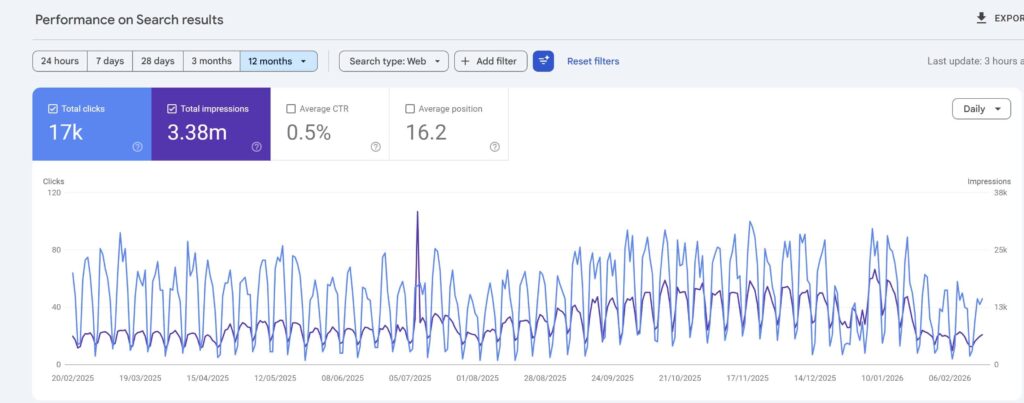
There’s a number of different metrics through which GSC will help you gauge the overall performance and the traffic that your website is getting. When you click the Performance tab, you’ll see four main sections.
The first displays the Total Clicks section. Here you’ll be able to see the total number of clicks that your website has gotten after showing up in search results on Google. Through this you can get a sense of how your site stands among similar ones.
This is influenced quite a bit by the position your site occupies on the results page. It’s relevant information to keep an eye on how your site is moving up in search results.
The next section is entitled Total Impressions. It is more specific. And will show you how well your site ranks for the main keywords. So, you will see a number after each keyword your site ranks for and this is the number of times your site shows up for that keyword.
Then there is the Average CTR. CTR stands for Click Through Rate and it refers to how many viewers have clicked through to your site after seeing it in the search results. Obviously, this provides information if your site pops up in the Google’s search results for the main keywords you need your site to rank for.
The fourth section under this subheading is Average Position. Here you have to select a period of time and you can observe which was the average ranking position of your site for a specific keyword during the chosen period.
Index Coverage
The Index Coverage tab keeps track of how many pages from your site are stored in Google’s Index. And concerning the ones that aren’t indexed, this tab will indicate which are the issues preventing them from indexing.
Index Coverage page is frequently updated with notifications when Google finds new problems that impede them to index your site properly. Most of the times it happens because there’s an error on page or a broken code or something of that nature.
Here you can visualize insights regarding such errors, details that allows you to understand them better and what caused them and solutions on how to fix them.
You’ll be given a list of URLs which are not showing up in the index and once you’ve addressed the reason why they’re not showing up you can then mark said URL as fixed so that it can be tested by Google again and hopefully indexed.
AMP
AMP stands for Accelerated Mobile Pages. The goal behind the AMP service is to make your web pages fast and easily accessible on every device. It’s not just about being easily accessible on phones or tablets.
AMP will ensure that your site reacts well and has an appealing look both on laptop and desktop screens. A site benefiting from this service has increased chances to get more repeated clicks.
GSC has the ability to keep an eye on AMP pages for you and check whether or not there are any errors or anything that’s preventing your pages from being as fast and attractive as AMP are expected to be.
Being able to track, analyze and make ensure your site is user-friendly is of paramount importance for each site owner.
Sitemaps
A sitemap is a really useful feature to have. As the name suggests, it’s a map that shows all important and relevant pages on your site and how you can access them. You should create one for your site to enable Google to identify all your content.
Once you’ve made the sitemap, you just need to add it to GSC. There will be a bar under the respective tab named ‘Create new site map’ and here you just insert your site’s URL and Google shouldn’t struggle to find anything it needs.
Job Postings
Not everyone is interested in this particular section of their GSC because not everybody will be using their site to post job listings. But GSC will be able to track how well these postings are doing and if you need to alter anything to improve their performance.
Again, this isn’t something that GSC is really known for, but if you are running a small business and you are actively hiring, this is a very useful feature, previewed with elements like collaboration tools and invoice generators.
Links
On the links section of the Console, you can see how many backlinks your site gained from other related sites. You will also be able to check the number of links that are coming from a specific site if there are more than one.
You can see if there are anchor texts which are commonly used to link to your site, and you can then utilize these anchor texts to your advantage when working on the Search Engine Optimization (SEO) of your site.
The Google Search Console is a truly useful service and there’s plenty more for you to explore and discover when you’ve got yours up and running. The amount of services offered here are numerous and there are new improvements and add-ons scheduled all the time.
We haven’t covered things like Mobile Usability and Manual Actions nor have we discussed the drawbacks of the service because there are a couple of these also. But overall, it’s well worth it and you will observe the benefits when you’ll be an active user of the Google Search Console.
Starting a business can be an overwhelming process for any entrepreneur, and having a content strategy in place is one of the most important steps.
However, startup companies often have limited resources when it comes to content marketing. This can make creating a successful content strategy challenging but certainly not impossible.
The key is to focus on what works best for your business and budget and make sure that the content you create aligns with your overall goals.
Here is a breakdown of some key steps for creating a content strategy for your startup.
What Makes a Reliable Startup Content Strategy?
A good content strategy will help you create engaging materials that attract potential customers and build your brand. It should also focus on creating valuable content that solves the problems of your customers and keeps them coming back.
For instance, if you’re a tech startup, your content might include tutorials on how to use your product or information about the latest industry trends.
As long as your content is relevant, informative, and entertaining, it will be more likely to engage your audience.
Most ranking losses come from overlooked SEO issues. Download my Complete SEO Audit Checklist to quickly identify what’s broken, what’s underperforming, and what to fix first to regain visibility.
You have Successfully Subscribed!
Understand Your Target Audience
Understanding whom you are targeting with your content is essential for any successful content strategy. Knowing your target audience will help you create tailored materials that resonate with them at every step of their journey and build lasting relationships.
Think about the demographics of your target audience, such as their age, gender, and location. Understanding who they are, what are their pain points, and what they need to solve them will help you create content that meets their expectations.
To define your target audience, consider creating personas based on your ideal customer, which will help you craft content tailored specifically to their needs.
For example, if you’re targeting young professionals, you might create content about how your product will help them save time or money.
Define Your Goals and Objectives for Your Startup Content Strategy
The foundation of an effective content strategy is to define what you want to achieve with your content. Are you looking to attract new customers, build brand awareness, or promote your products or services?
Knowing your exact goals and objectives will guide you in conceiving content that is tailored to those objectives.
For instance, if your goal is to build brand awareness, you might create content that educates potential customers about your niche and the product or service you offer.
While you define your goals and objectives, it’s important to set realistic expectations. You should also keep track of the results of your content strategy so you can measure its success.
Set Measurable Goals
As a startup, you have to set measurable goals for your content and be aware of your tight budget. This will help ensure that you can track and measure the success of your content strategy.
Your goals should be specific, measurable, achievable, relevant, and timely (SMART). If your goal is to increase brand awareness, you might set a goal of increasing website traffic by 20% in the next six months.
Remember to set goals for your content. For example, you might set a goal of increasing the number of clicks on your articles or videos by 10%. This will help you measure which content resonates with your target audience and adjust your strategy accordingly.
Create a Content Calendar
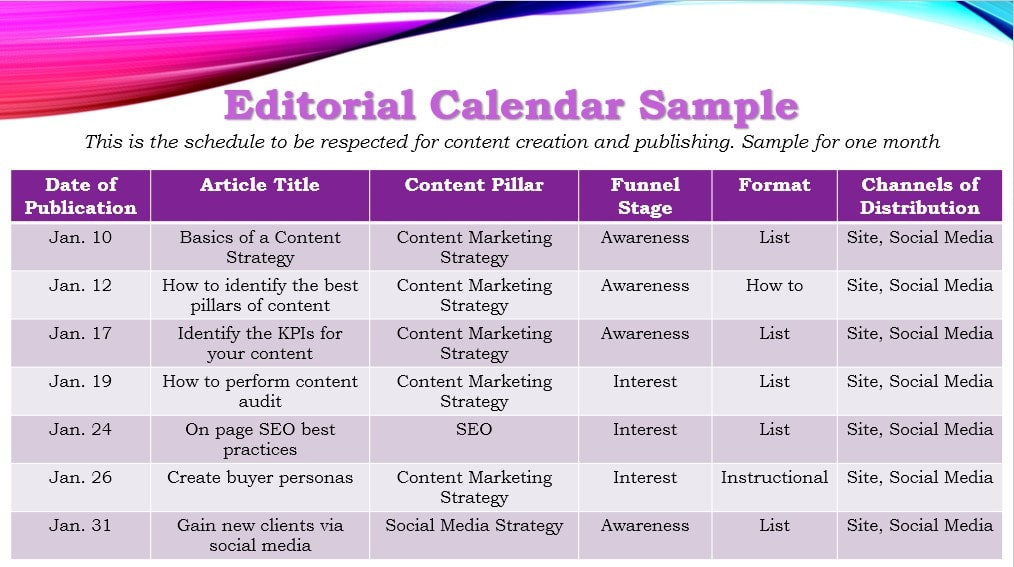
Once you have defined your goals and objectives, it’s time to create a content calendar. A content calendar is the frame of planning and scheduling your content in advance.
It should include the type of content, the topics covered, when it is published, and who is responsible for creating it. Meanwhile ensuring that your content is aligned with your goals and objectives and is being created on time.
A good calendar should also include any deadlines and special events that may require content creation. For instance, if you’re launching a new product, you might create content to promote it around the launch date.
Let’s Make Your SEO & Content Work Better for Your Business
Of course, it’s important to track and analyze the results of your content strategy. The purpose is to identify which content works best for your target audience and adjust your strategy in consequence.
You should also ask for feedback from customers to ensure that your content fulfills their requirements and that they find all the necessary info. Feedback will be the basis for creating more valuable content that resonates with them and increases your chances to reach the business goals.
Choose the Right Platforms
The next step in creating an effective content strategy is to choose the right platforms. As a startup, you need to make sure that your content reaches your target audience.
Think about where your customers are most likely to come across your content and focus on those channels. You may also want to consider using paid advertising to reach a wider audience if the budget allows for it.
With the right platform, you can ensure that your content reaches the right people and drives results. Some popular content venues include social media, blogs, and email newsletters.
Prepare All Marketing Assets
You need to prepare all marketing assets needed for your content strategy. Marketing collateral may include visuals such as logos and images, videos, templates for creating content pieces, and any tools or software needed to measure the results of your efforts.
In order to pop up in search results, optimize your site for search engines. Improve the user experience on your website, and keep an eye on its loading speed and technicalities to generate a positive experience for your visitors.
To make your website more effective and eye-catching, try some website design agencies such as Designrush. Hiring external help is another option to ensure your website is user-friendly and optimized for search engines.
Other marketing assets may include promotional materials such as flyers, banners, and other items that can be used at events or conferences.
By being organized and preparing all of your marketing assets in advance, you’ll be able to create a more effective content strategy.
Source: YouTube
Prioritize Keyword Research
Once you have all of your assets ready, it’s time to do some keyword research. It is one of the most important steps in creating an effective content strategy.
Identify which keywords are relevant to your brand and target audience and create content that is useful for your buyers and accomplishes all the requirements to rank.
A solid keyword research strategy should also include a competitor analysis to see what keywords your competitors are targeting. It’s a way to identify potential gaps in the market and create content that stands out and may outrank the competition.
Help Your Audience Find Your Content
You should always make sure that your content is easy for your target audience to find. Be anywhere your audience is present. Besides optimizing your website for search engines, creating a content distribution plan that includes channels such as email newsletters, social media posts, influencer marketing, etc.
Paid distribution is another option you can test if you have the budget. Paid ads can help you reach a wider audience, spread the word and drive more traffic to your content.
Diversify Content Formats
To cater to your audience preferences be ready to diversify your content formats. Such an approach may include videos, podcasts, infographics, and even virtual reality experiences.
By diversifying your content formats, you can make sure that you’re covering all bases and reaching a wider range of customers.
Blog articles, case studies, and webinars are also great content types for startups. With these formats, you can provide valuable information to your customers, showcase the expertise of your business and give them a solid reason to choose you.
Let’s Make Your SEO & Content Work Better for Your Business
Long-form content is an effective way to build trust with your customers. This type of content should cover topics in greater detail than shorter pieces like blog articles.
Some long-form content examples are eBooks, whitepapers, and webinars that provide valuable insights into a particular topic. It’s a great way to establish yourself as an expert in your industry and build trust with your customers.
When creating long-form content, focus on providing helpful and actionable information that your audience can use, such as step-by-step tutorials, tips and tricks, and case studies.
Publish a Case Study
Case studies are an effective way to showcase the success of your solutions. They can help you establish trust with customers, demonstrate how your solutions work, and show off your expertise in a particular industry.
When creating a case study, you should include an overview of the company, its goals and objectives, any challenges it faced, and results achieved. Try including metrics such as the number of new customers, new leads, increase in revenue, profits, and more.
Stay Flexible and Adaptable
It’s essential to stay flexible and adaptable when creating a content strategy. Trends in the industry can change quickly and you need to be ready to adjust your strategy.
You should always be open to trying new ideas and experimenting with different types of content. It is likely to give you an edge and stay ahead of the competition and create more engaging content for your target audience.
Finally, you need to review and revise your content strategy regularly to make sure it remains effective. Analyze the results of your efforts and make adjustments where necessary.
For example, when you notice that a certain type of content is not resonating with your target audience, you can switch to something else. Enhance what works to stay on top of trends and ensure that your content remains relevant and produces results.
Conclusion
By crafting and implementing an effective content strategy, you offer your startup the best chance of reaching its goals and growing.
Developing the right mix of content will help you build brand recognition and drive more traffic to your website.
Invited guest author
Nina Walker is a web designer and psychotherapist based in Phoenix, Arizona, US. Passionate about digital marketing and content writing. After finishing a course for content writing, she became a part of the DigitalStrategyOne agency. She writes short stories and blogs for sites.
Although masterpieces such as the ‘Matrix’ have sparked a lot of doubt about the benevolence of AI, its less advanced but still incredibly powerful counterparts are still here. From checking your bank transactions and credit card usage to stopping fraudulent transactions to controlling stoplights in big cities, AI has found its spot in this world. After all, it works 24/7, and does not ask for holidays, sick leave, or an extra day off when you need it the most.
AI is also an incredibly powerful tool for taking your content promotion tactics to the next level. From analytics and sensing to assuming a possible solution for your particular issue and implementing it, AI is the way to the future and a more reasonable number of hours spent behind the computer screen. If you spend hours a week doing analytics and thinking of your next marketing move, think again, and let the AI do what it was meant to do.
Let’s Make Your SEO & Content Work Better for Your Business
In the post-COVID-19 world, consumers are less prone to impulse purchases and are more likely to put more money aside for rainy days. However trivial it may seem, the difference is huge, as many failed small businesses can testify. The post-COVID consumer is less impulsive, less likely to spend their money, and has less trust in brands than ever before.
This is where AI comes into place and takes over a huge portion of your tasks. A lot of the trivial and less trivial tasks can easily be taken care of, broken down into smaller segments, and worked on. The AI works tirelessly and much faster than a human would to analyze millions of data entries and present the results you asked for.
Content Comes First
But, first things first. To promote any content online, you first need a good piece of content to promote. Once you have established your website and know the niche you would like to work in, it is time to hire a few thesis writers to get high-quality work done. Professional writers, especially in academic writing, can give you the best for even the most demanding audiences.
Considering that you may not always need top-notch content, hiring them for writing assignments that you can use as milestone pieces of content is safe. For example, a special on a new technology developing in your niche might require a bit more than the standard 1,000 words. These pieces of content can then be presented on your website as a milestone project to attract more audiences.
Creating such milestone pieces of content can also increase your visibility on search engines, since they, too, use AI to scan through millions of websites and order them by the quality (not quantity) of materials present there. Luckily, AI is not available to tech giants only, as bits and pieces trickle down to smaller businesses, usually in SaaS platforms and software solutions.
How to Use AI to Promote Content
But how can you best use AI to promote your content? Well, AI can take over significant portions of content promotion tactics:
Analytics,
Predictive analytics,
Search for relevant information,
Sentiment analysis, and
Others.
Let’s Make Your SEO & Content Work Better for Your Business
AI-powered analytics is the real deal when it comes to cracking huge volumes of data. Excel spreadsheets and complex formulas slowly become outdated as a more flexible, almost plastic approach to data analysis takes over. The main advantage of AI is that it recalibrates itself and its analytics approach to better suit the data it has to analyze and offer more precise results than ever before.
When you use AI for analytics, you can find out information on patterns behind successful vs. unsuccessful posts, the best times to post, the best times to echo the new post over content promotion channels, and engagement rates for different platforms and, ultimately, your website. All this data can then be used to paint a better picture of your business and what kind of content keeps the readers engaged.
Once the data is there, you know what to focus on in your next campaign. You should be able to specifically address the segments of the market that your AI-powered search has found as the most loyal to you. AI can help analyze and differentiate your readership and offer more details on readership segmentation. This data can then be used to plan different content promotion tactics for different promotion channels you may have.
Based on these findings, you can assume what your next logical steps are: implement, run, analyze, repeat. AI is incredibly accurate, but being able to repeat the analysis after every bold step in your new content promotion campaign can help you reach new analytics conclusions and ensure long-term but sustainable growth for your business.
Your Traffic Drop Probably Isn’t Random
Most ranking losses come from overlooked SEO issues. Download my Complete SEO Audit Checklist to quickly identify what’s broken, what’s underperforming, and what to fix first to regain visibility.
You have Successfully Subscribed!
AI Predictive Analytics
AI Predictive Analytics is great, coupled with simple(r) analytics above. Predictive analytics follows the market for longer periods, tries to find patterns in behavior, and changes its spots in your particular niche. These findings are then taken to make assumptions about what future events could take place.
Calling these assumptions is a vast understatement, as they are pretty accurate. Still, decades of figuring out the stock market and weather patterns have taught us that making accurate predictions can be difficult. Predictive analytics should be used for short-term predictions mostly and only sparingly, for very general changes, and for long-term predictions.
These predictions can be used to slowly introduce new services or new types of content that the AI says should be more fruitful tomorrow than they are today. In the blogging world, slight changes to the form length, as well as a word or sentence length, can make all the difference in your ranking, so being able to predict a part of the upcoming changes gives you plenty of time to meet the changes prepared and accommodate for them.
Search for Relevant Information
One powerful part of analytics is the AI’s ability to search for specific bits of information. AI can help boost your information-digging by doing the work in a fraction of time and for a fraction of the cost.
Let us consider a drop-shipping business in serious need of social media exposure. You could easily decide to go for influencers to promote your store and help you out, but in the sea of influencers, it can be not so easy to find the right one.
However, you could present an AI solution with exactly the type of influencer you would like to work with. The AI would then analyze millions of social media profiles to find the most accurate match for you.
The first step would be to find the influencers in the niche you’re interested in. The next step would be to analyze the outreach and engagement rates and provide you only with those influencers it thinks could give you the best value for your money.
What is left is to contact the influencers, ask for cooperation, and once the content marketing campaign is finished, use the AI again and run some analysis.
This should help you better understand how successful the content marketing campaign went and to better prepare for the next one. Finding new influencers or even tweaking the posts made by the first influencer is a piece of cake with the right data at your hands.
Sentiment Analysis has been around for a while. It has paved the way for analytics of the engagement and satisfaction rate and is likely to stay, as this is the best tool that can help you understand the QUALITY of your audience’s reaction instead of the QUANTITY of it. This is a very valuable tool to have.
AI ushers in changes to this field since the more advanced analysis offered by AI solutions encompasses more in-depth analysis and can grant you a better understanding of the reaction your content spurs.
The AI generally takes larger chunks of text, such as sentence fragments, and analyses them in performing sentiment analysis. Regular sentiment analysis can analyze much smaller chunks of text and may have issues understanding the pragmatics of the text/comment itself. AI-powered solutions can also scratch the surface of pragmatics and understand communicative intentions rather than communicative realizations.
This is a very powerful tool to have, as it can boost your understanding of the audience’s reactions and help you prepare better pieces of content for the next publishing campaign. It may not seem as much, but add just 3% of visits / spent time/engagement increase per month, and you will be able to double your stats in less than two years.
Final Remarks
AI is a powerful tool, even more, powerful if you can use it correctly and interpret its findings properly. This is not always the case but getting a glimpse of the possibilities offered by AI solutions can be empowering and save you enough time and money. So, that you can invest in understanding the way it works and how your business can benefit from it.
Implementing AI at all stages of content promotion tactics can significantly speed you up and resolve many of the common issues you may have had. Market analysis, market segmentation, and large-scale sentiment analysis were a dream just years ago, but nowadays, they are closer than they may seem.
Thus, tide the wave of AI and see where it can take you. Hidden information may hide where you did not even think you should look for it, and may open up important new opportunities.
Author’s bio. Jessica Fender is a professional content creator, copywriter, and editorial manager on Authorsreward. Her experience in digital marketing and professional development has enabled her to write better articles, essays, and case studies on these topics. Jessica enjoys reading personal development lit and listening to podcasts.
Some people may still consider that SEO does not apply to eCommerce and Google will simply pick them up and bring them organic traffic.
Unfortunately, that is more than unrealistic.
Nowadays you need to invest heavily in eCommerce SEO. You have to make sure your website shows up for the right search queries, so you can have a consistent flow of potential buyers.
Furthermore, if all your competitors are optimizing their sites and you’re doing nothing, they’re going to take ALL your traffic, which could eventually put you out of business.
To help you get started, this article will do a schematic presentation of the basic elements of eCommerce SEO, from an SEO audit to keyword research, on-page SEO strategies, and simple link-building tactics.
Let’s go!
What Is E-commerce SEO & Why Does Your Store Need It?
E-commerce SEO is the process of getting your online store to show up in search engines like Google, Bing, and Yahoo.
By boosting your site’s visibility in organic search results, you can ensure a consistent flow of qualified traffic to your site. This way, you can have tens, hundreds, and even thousands of interested prospects and customers coming every day, and consequently, a solid base to grow your business and increase revenue.
The 4 Pillars of E-commerce SEO
To optimize your e-commerce site correctly, you need to follow the 4 pillars of e-commerce SEO in the correct order.
First of all, you have to proceed to an SEO Audit.
SEO Audit
Why Do You Need Regular E-commerce Site Audits?
Failing to build the correct SEO foundation is like building a house without a blueprint.
Before we jump into any strategies, you need to undergo an SEO audit to make sure your e-commerce site doesn’t have any on-site problems. You should also undergo regular site audits to eliminate any new issues that arise and ensure the site is always optimized to its highest potential.
Most Common Site Problems
Some common examples of site issues are:
– Search engines have difficulties in crawling your website
– There are a lot of duplicate content
– There is very little content
– Your website has a range of technical issues like cannibalization or poor site structure
To see whether your e-commerce store has any of these common problems, you can run it through an SEO audit tool.
SEO Auditing Tools
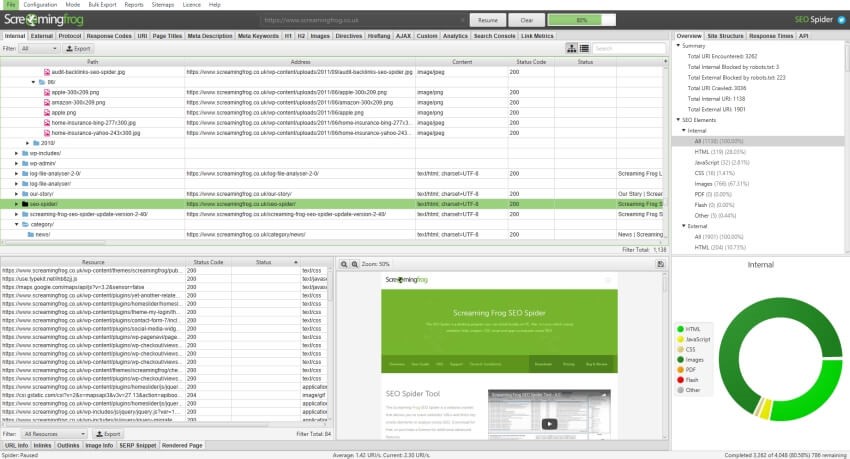
One tool that we have found to be very useful is Screaming Frog.
The Screaming Frog SEO Spider is a website crawler that lets you analyse and audit technical and onsite SEO. You can begin downloading and crawling 500 URLs for free!
Alternatively, you can use SEMRush or Ahrefs’s onsite audit tool as well. While these tools are all-in-one complete SEO suites, their auditing feature can help you identify any site problems as well.
Keyword Research
Why Keywords Are Critical
Keyword research is the most important aspect of eCommerce on-page SEO.
Keywords bring qualified organic search traffic to your store. Get these words right and you can bring in lots of traffic and consequently revenue.
Unlike normal keyword research, there are additional factors you need to consider if you want to bring qualified buyers to your Ecommerce site.
4 Main characteristics of Your Keywords
Search Volume:
You must choose keywords that have a decent search volume.
A decent search volume can vary among different niches. There are niches where an average keyword search volume (that is considered high) will have over 10,000 monthly searches, whereas 1,000 monthly searches is a large volume for others.
The best way to find out is to take other high-traffic keywords as a benchmark.
2. Intent
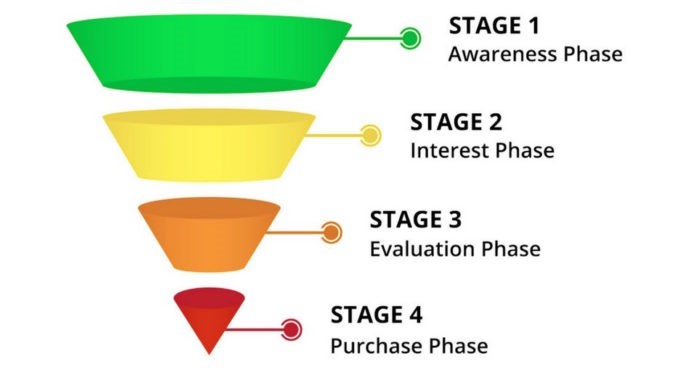
You should always aim to attract qualified traffic. These are visitors coming from the right stage of the sales funnel. These are often prospects who are at the purchasing stage in their customer journey.
There may be fewer people at this stage, however, these people have high conversion rates because they are generally ready to buy.
To understand the power of intent, have a look at this example:
– If you attracted 10,000 people with a 0.5% conversion rate, whose average order value is $20, you would bring in $1,000 in revenue
– If you attracted 2,000 visitors with a 5% conversion rate, with an average order value of $20, your revenue increases to $2,000.
That’s why you need to focus on attracting qualified traffic with keywords that have the right intent. These keywords use terms like discount, free shipping, buy now, deal, coupon, etc.
3. Relevance
To attract the right audience, you also need to make sure the keywords are relevant to your ecommerce store.
To pick relevant keywords, think of what you can offer that matches the keywords. For example, if you sell men’s shorts online, a relevant keyword could be “affordable male shorts.”
You should only optimize your pages for keywords relevant to your ecommerce site.
If you’re not sure whether the keyword is relevant, you can look at the top 10 results for a keyword and see if the 10 organic positions are similar to your website.
4. Competition
Finally, you should pick keywords that you can realistically rank for.
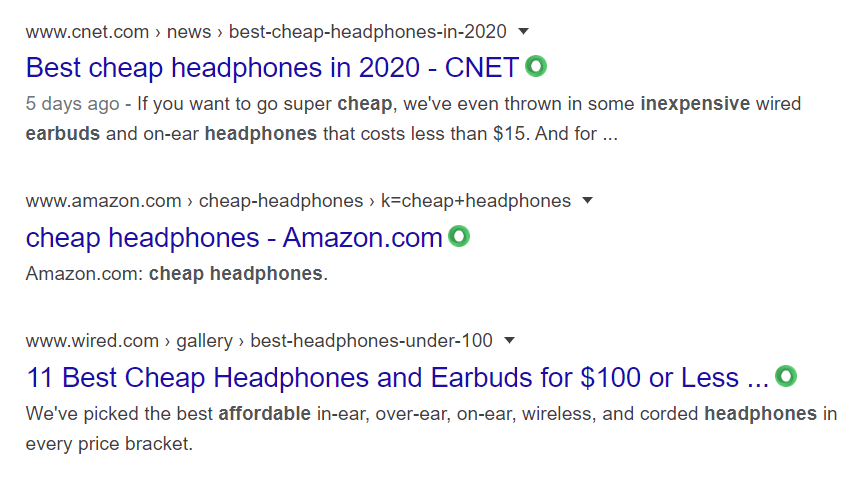
For example, if you want to rank for the keyword “cheap headphones” you’d have to compete against Amazon, CNET and Wired. These are big sites with high levels of authority.
Instead of going up against these giants, you should attack the longer tail, lower competition search keywords first.
Keyword Research Tools
Here are 3 keyword research tools highly recommended by e-commerce SEO experts:
– Ahrefs: A top, extremely comprehensive SEO tool, leader of the market. They have the keywords explorer tool which can offer you thousands of keyword ideas.
– SEMRush: A great all-in-one SEO suite that has an easy-to-use and intuitive user interface.
– My Free Keyword Research Template: A template created to give you a complete keyword research strategy based on what is working for your competitors.
When it comes to on-page ecommerce SEO, you’ll face unique challenges you don’t often come across when you’re optimizing a regular website.
Let’s begin by looking at what on-page SEO is.
What Is On-Page SEO?
On-page SEO is the process of optimizing your website, content, and code to help your store rank higher in the SERPs.
E-commerce On-Page SEO Checklist
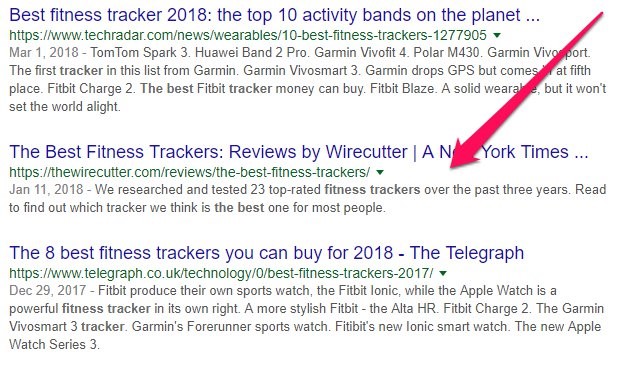
Here’s a quick checklist that lists the different on-page SEO factors that impact an e-commerce site and how you can optimize them.
Title Tags: Add a target keyword in the title tag.
2. Meta Descriptions: Include additional keywords in the description to attract clicks.
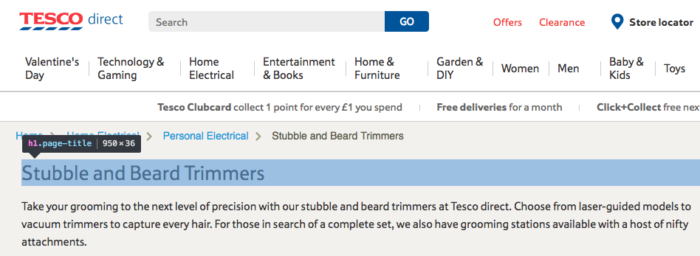
3. Headings and Subheadings (H1, H2, etc.): Use heading breaks to make it easier for users to scan and consume content. Use the product name as the heading to avoid cannibalization issues.
Source: Tesco
4. Images: Optimize all filenames and add relevant alt-tags. Add LSI keywords to each alt-tag and other variations to hit as many long-tail keywords as possible. Lower the size of the pictures for faster load times.
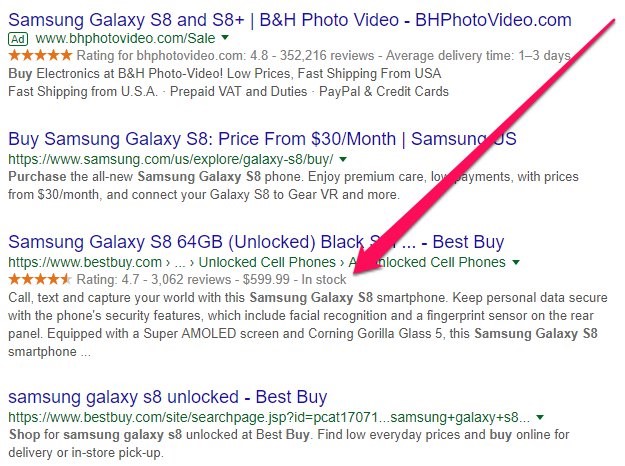
5. Schema Data: Integrate microdata and rich snippets to stand out and draw more qualified traffic.
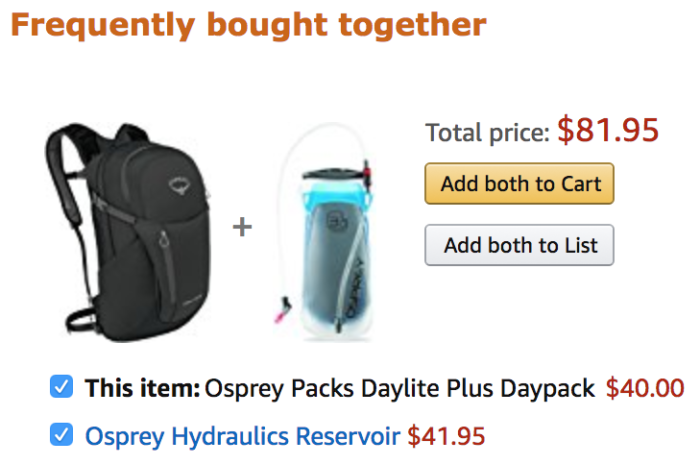
6. Internal Links: Add internal links via product recommendations.
eCommerce link building is similar to classic link building for any other site.
The more high-quality links you have, the more it can increase your store’s domain authority and search engine rankings. However, unlike regular websites, e-commerce stores need links that point to every section (including category and product pages.)
Below are 2 link-building strategies that can help you get started.
Competitor Analysis
Instead of spending thousands of dollars and hours formulating a link-building strategy, just steal your competitor’s strategy and replicate their process.
Here’s how to start:
Gather the first 10 organic results for a keyword you want to rank for and write down the URLs on an Excel document.
Use Ahrefs to find all the backlinks that are pointing to all your competitors.
3. Analyse every link from each competitor by sorting them by domain rating, starting with the more valuable links first.
Guest Posting
Guest posting is also another great ecommerce link building technique because it helps you:
– Build genuine relationships with industry bloggers
– Boost website exposure
To get started, you can:
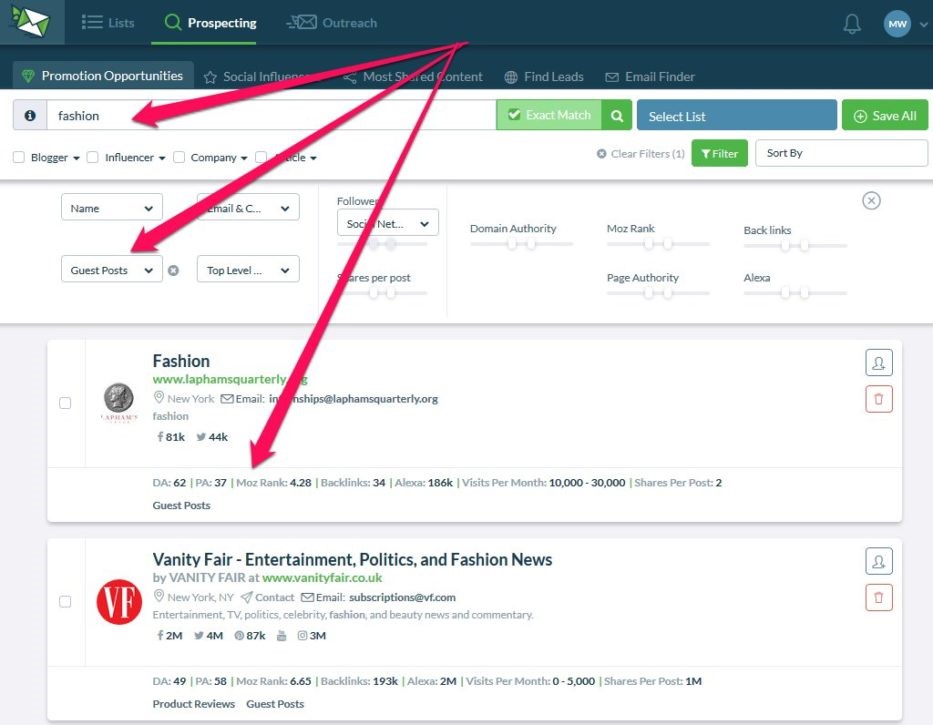
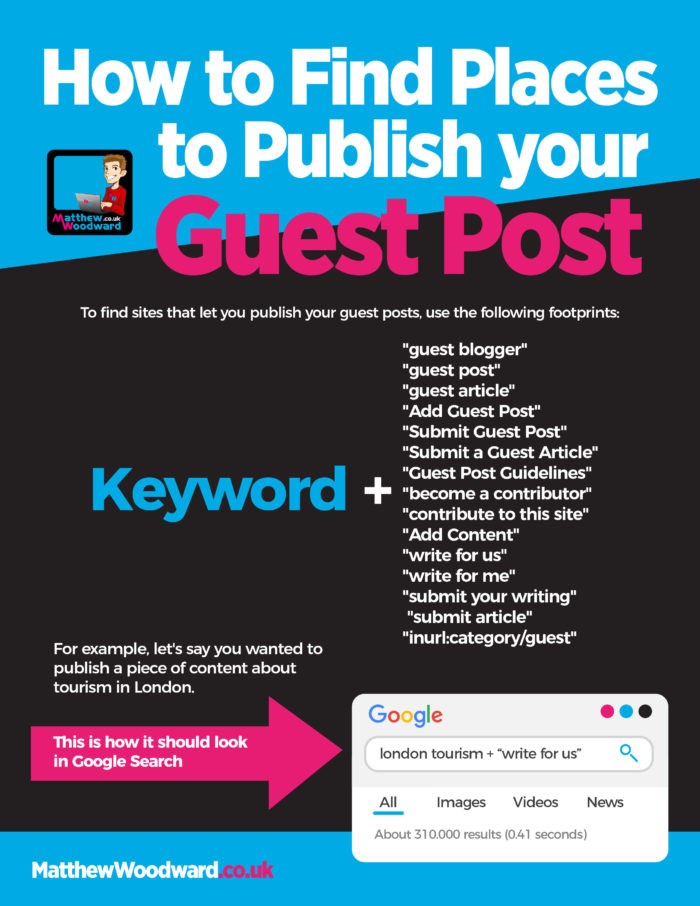
Begin prospecting your industry
Source: MatthewWoodward.co.uk
After you find a list of websites (using the technique above) that are interested in guest posts, create an Excel sheet that lists all these sites.
2. Qualify your prospects:
Analyze the sites based on set qualifiers like Domain Authority (DA), Trust Flow (TF), number of referring link domains, placement of content, niche relevance, and quality of content.
3. Outreach:
Take each website on the list, find the contact information (name and email address) of the person you want to contact. Alternatively, you can use a tool like Ninja Outreach.
After connecting with the blog manager, create an article outline for approval.
4. Create content:
Once your article is approved, focus on creating in-depth amazing content.
5. Build relationships with bloggers and webmasters:
Continue this process to build strong relationships and expand your online network.
If you want to learn more about other simple link-building strategies, make sure you read E-commerce SEO: The Ultimate Guide.
Conclusion
Investing in eCommerce SEO will be one of the best things you can do for your business.
Not only can you generate a consistent flow of potential buyers, but it will make a profound impact and change your business forever.
You can start by building a solid foundation for your Ecommerce store with an SEO audit.
And then work on keyword research, optimize your on-page SEO, and engage in link-building strategies.
What are you waiting for?
Get started today with SEO for e-commerce to build future wealth.
Invited guest writer:
Matthew Woodward is an award-winning blogger who publishes detailed case studies and tutorials in the internet marketing and SEO niche. He started his blog in 2012 and has been able to assist thousands of online businesses to achieve great results. You may reach him via his Youtube channel, LinkedIn or Facebook.
We use cookies on our website to give you the most relevant experience by remembering your preferences and repeat visits. By clicking “Accept All”, you consent to the use of ALL the cookies. However, you may visit "Cookie Settings" to provide a controlled consent.
This website uses cookies to improve your experience while you navigate through the website. Out of these, the cookies that are categorized as necessary are stored on your browser as they are essential for the working of basic functionalities of the website. We also use third-party cookies that help us analyze and understand how you use this website. These cookies will be stored in your browser only with your consent. You also have the option to opt-out of these cookies. But opting out of some of these cookies may affect your browsing experience.
Necessary cookies are absolutely essential for the website to function properly. These cookies ensure basic functionalities and security features of the website, anonymously.
Cookie
Duration
Description
cookielawinfo-checkbox-analytics
11 months
This cookie is set by GDPR Cookie Consent plugin. The cookie is used to store the user consent for the cookies in the category "Analytics".
cookielawinfo-checkbox-functional
11 months
The cookie is set by GDPR cookie consent to record the user consent for the cookies in the category "Functional".
cookielawinfo-checkbox-necessary
11 months
This cookie is set by GDPR Cookie Consent plugin. The cookies is used to store the user consent for the cookies in the category "Necessary".
cookielawinfo-checkbox-others
11 months
This cookie is set by GDPR Cookie Consent plugin. The cookie is used to store the user consent for the cookies in the category "Other.
cookielawinfo-checkbox-performance
11 months
This cookie is set by GDPR Cookie Consent plugin. The cookie is used to store the user consent for the cookies in the category "Performance".
viewed_cookie_policy
11 months
The cookie is set by the GDPR Cookie Consent plugin and is used to store whether or not user has consented to the use of cookies. It does not store any personal data.
Functional cookies help to perform certain functionalities like sharing the content of the website on social media platforms, collect feedbacks, and other third-party features.
Performance cookies are used to understand and analyze the key performance indexes of the website which helps in delivering a better user experience for the visitors.
Analytical cookies are used to understand how visitors interact with the website. These cookies help provide information on metrics the number of visitors, bounce rate, traffic source, etc.
Advertisement cookies are used to provide visitors with relevant ads and marketing campaigns. These cookies track visitors across websites and collect information to provide customized ads.