As a business, increasing your traffic and growing your following and readership are among the most challenging endeavours. Having a profitable business is usually a primary goal for every economic activity. So, deciphering the best marketing tools for business that will help you in your mission is of paramount importance.
Counting on the best selection of marketing tools for business including a toolkit of the best blog writing tools, the most helpful scheduling tools, and the easiest-to-use design tools will lighten your life as a business owner or marketer. And finally, help increase your monthly revenue.
Below is a comprehensive list of applications and tools that will help you reach the success you need and want.
Let’s Make Your SEO & Content Work Better for Your Business
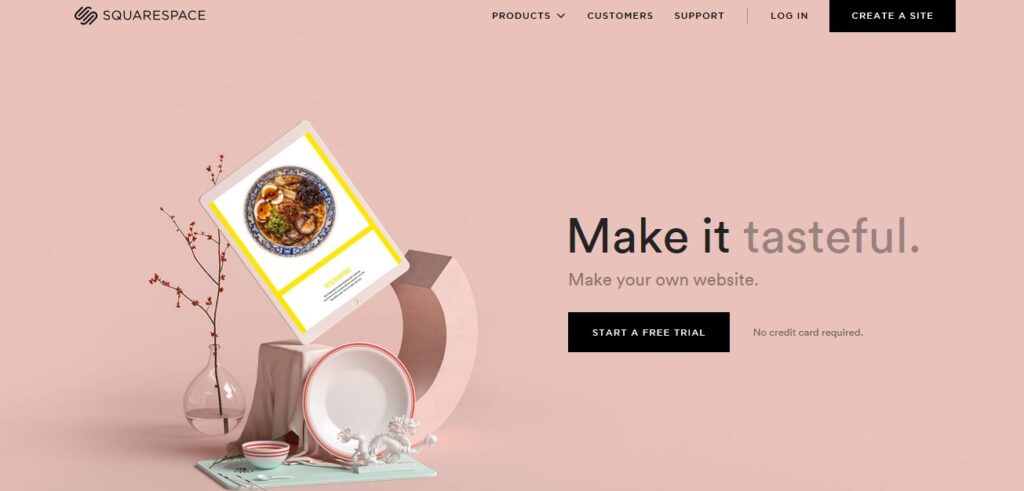
Squarespace is a site builder, and web hosting tool and includes a set of marketing features to help you design, create and manage your site, engage with your audience and grow your traffic. It provides an easy manner to build your site and brand without the necessity of hiring a web designer or a coder.
Squarespace allows you to create your site without knowing to code. You have various optimized layouts at your disposal to help you in your endeavors and intuitive builders to help you achieve your goals. You have at your disposal analytics, landing pages, e-commerce options and highly responsive customer service to support you. This is a paid tool with a free trial period.
WordPress
WordPress.org is the option you need if you want a self-hosted site that you plan to monetize and transform into a profitable business. It is highly customizable, you can literally create your site the way you want, but you will have to deal with code. You own your site and your content, and you can use all the plugins you want, free and paid, and also you can choose from thousands of themes, no matter your budget. It will cost you the hostage of the site (see BlueHost below).
Bluehost
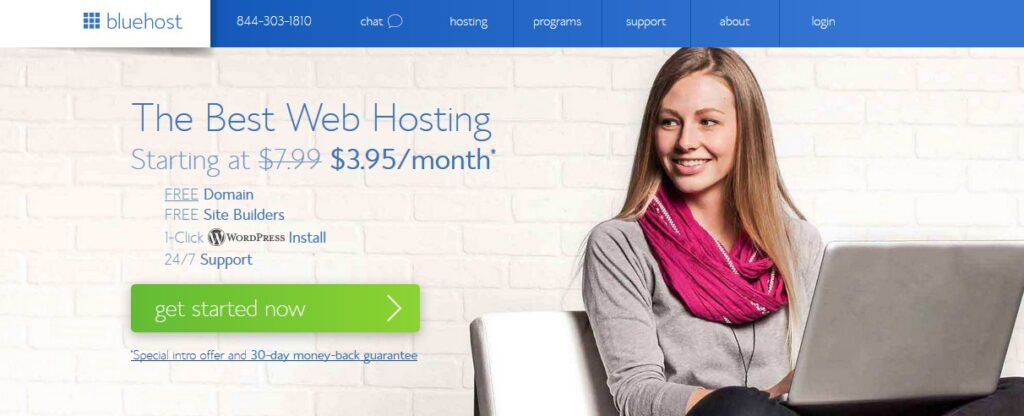
It is a popular web hosting service that gives you a free domain, free site builder, and a WordPress installation. Their customer service chat is 24/7 and their pricing rates are very affordable. Bluehost comes highly recommended for beginners as they have low rates and practice a 30-day money-back guarantee.
HRank
HRank is a great tool when you need to choose or change your web hosting provider. This web hosting rating system analyzes more than 300 providers particularly shared web hosting providers, aims to be always updated and free. It is based on analysis, research, and experience, and takes into consideration criteria such as response time, uptime, support level, company’s history and experience, website usability, etc.
Best Marketing Tools for Business: SEO and Analytics Tools
Ahrefs
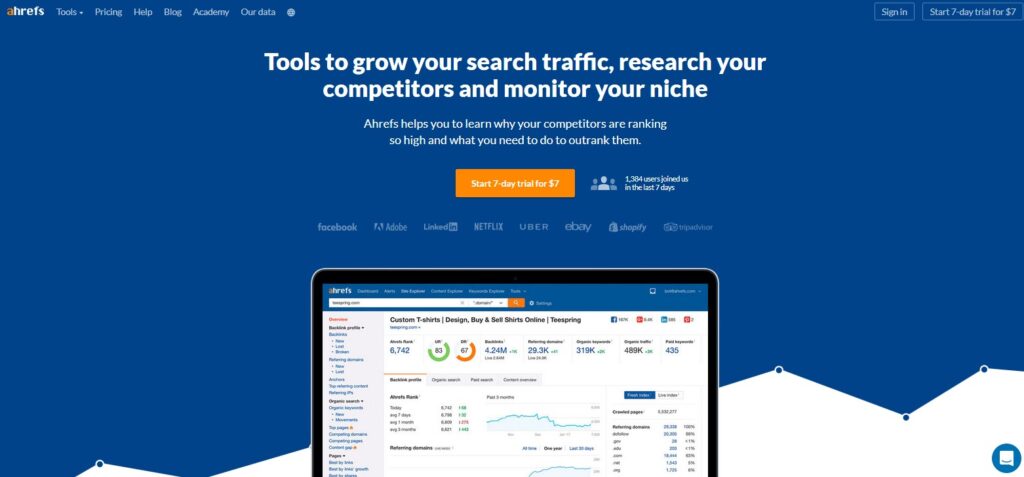
There is no such blogger or content creator who doesn’t want to see his work ranking as high as possible on search engine results. Ahrefs offers you an edge for high-ranking success through competitor analysis, keyword search, technical site, and SEO auditing, content analysis, niche monitoring, and rank tracking. It provides you with a competitive advantage by monitoring your competitors’ activity and niche and availing tools to grow your traffic. Ahrefs might not be a very affordable blogging tool for beginners, but it provides a strong pillar for future success.
Yoast
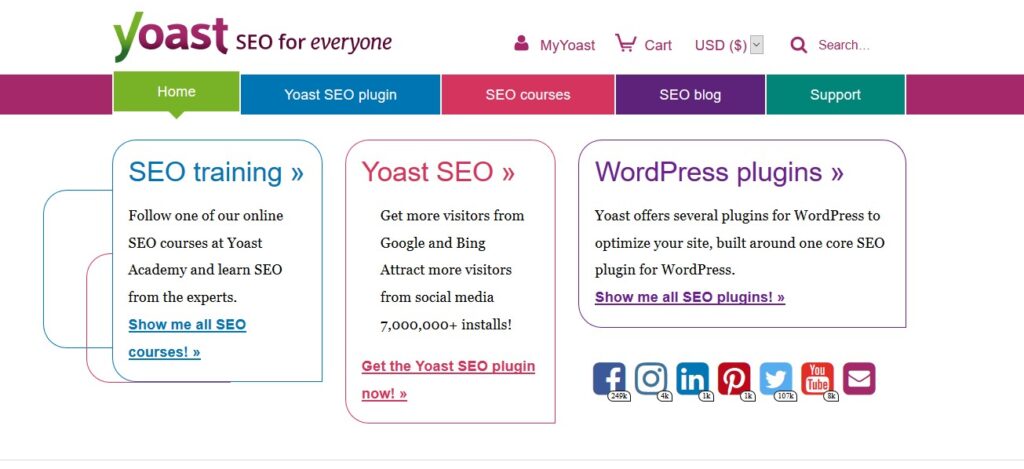
Yoast is a famous by now SEO Plugin tool. Available for free or on premium options. Getting more traffic and visitors, increasing your readers’ engagement, and making their return is a high desideratum of bloggers. Using Yoast facilities, you are sure of getting keyword optimization for your content, previews of your social media pages, readability verified, and categories control, among other technical background stuff. You have the possibility to edit your title tags, slugs, and meta descriptions as it provides a solution to anything that hinders your SEO ranking.
Google Keywords Planner
Keyword research is crucial to any blogger and in this highly competitive blogging era, counting on excellent keyword research and a strategic tool is key. Google AdWords Keyword Planner is a reliable tool to help you find the right words to target and to keep remaining relevant. It gives you a comparative analysis of the keyword trends for your niche, therefore, narrowing down your keyword list to just the most important keywords.
Google Analytics
Bloggers need to be aware of what strategy, what content marketing is working and what is not working for them, and their established goals. Measuring your content metrics is the way to go if you want to be a result-driven blogger. Google Analytics is a free tool that makes you aware of your traffic volume, sources and conversion rates, audience characteristics, most visited sections of your site, most visited articles of the blog, referral sources, and many more detailed insights. You gain the knowledge of what exactly is increasing your traffic and conversion rate thus turning your insights into adjusted strategies and a profitable business.
Best Marketing Tools for Business: Social Media Scheduling Tools
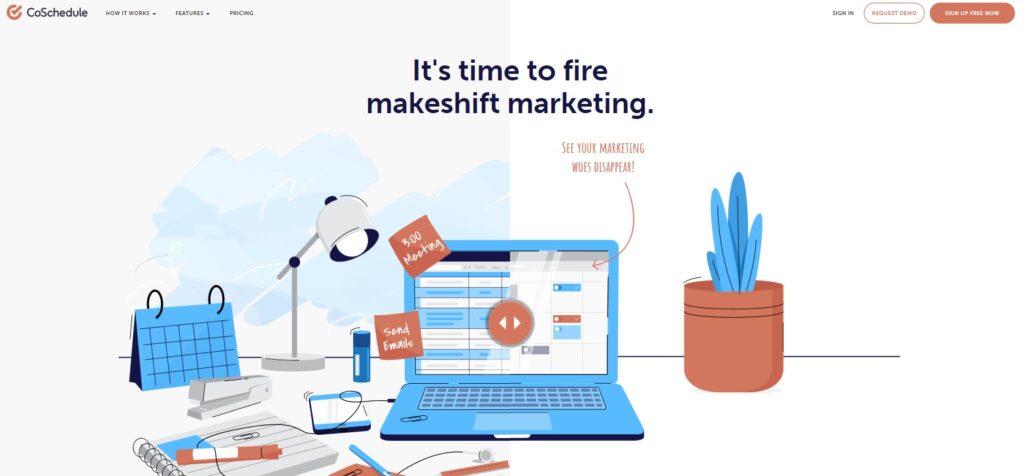
CoSchedule
CoSchedule is a paid social media marketing scheduling tool coupled with an editorial calendar tool. In short, with CoSchedule you can manage your team and their workflow, schedule social media posts on various platforms, manage communication campaigns, etc. This is a one-stop-shop for many marketing operations. Be it content marketing, email marketing, social media marketing and automation, analytics, workflow management, headline analyzer, email title analyzer, you name it CoSchedule has a reliable solution.
For blog traffic increase, efficient email campaigns, social media calendar management, and optimizing all your headlines, email subjects, and social media posts, CoSchedule is your multipurpose tool. They have a free 14-day trial period, so why not investigate what can happen in those 14 days.
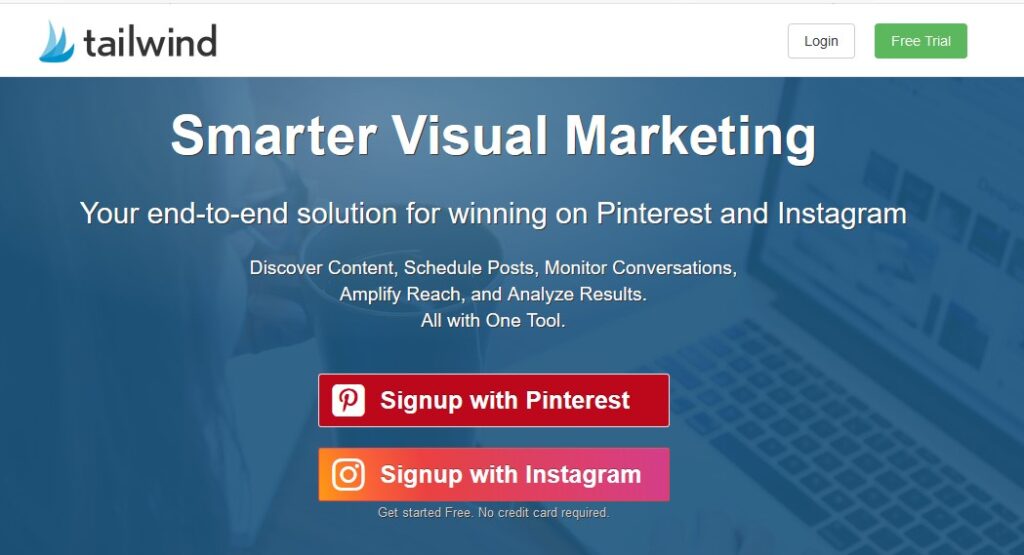
Tailwind
Pinterest is a visual search engine whose capabilities are untapped completely yet. It is a pure gold mine for most niches and for bloggers, businesses, and entrepreneurs in search of alternative ways to grow their blogs and sites. It has the capacity to be your highest traffic driver, better than any organic search engine or social media channel be it Facebook or Instagram.
However, to be successful on Pinterest, you have to pin more than 10 times a day and that’s time-consuming. This is where Tailwind interferes and saves the day. Tailwind helps to schedule your pins for an entire week in an organized manner and in advance according to an optimized calendar. They have a very user-friendly dashboard that provides you with detailed analytics.
It is a paid tool whose benefits outweigh the costs and it’s a must-have if you want to make Pinterest a primary source of traffic for your site.
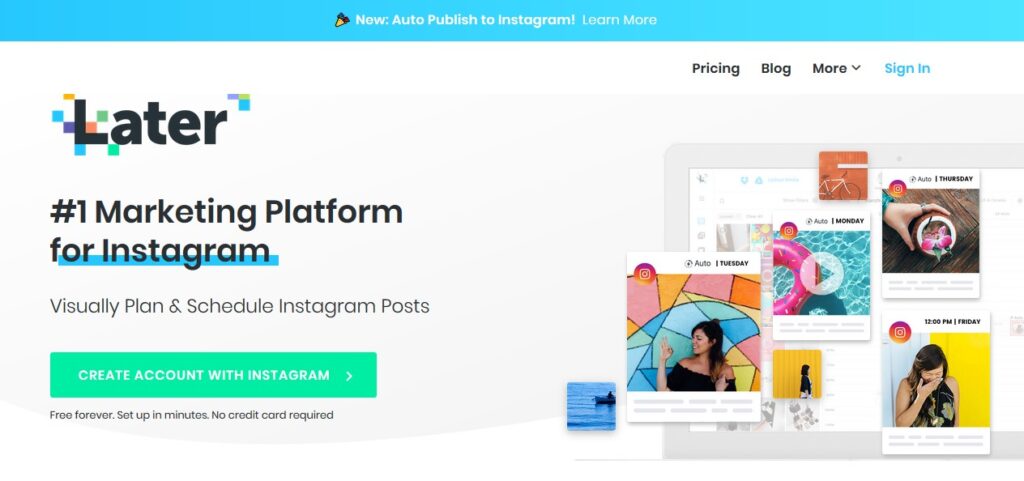
Later
There is numerous software that has made it possible to deal with social media content automation. Blogging requires you to constantly connect with your audience through various social media platforms which can be tedious. Later is an Instagram scheduling app that helps you plan, schedule, and auto-publish your Instagram posts. Being a visual planner, you can see the aesthetics of your feed before you post and make the necessary changes. There is a free and paid option which is affordable.
Social Warfare
Social Warfare plugin creates beautifully crafted social media icons that make sharing content on social media pages a breeze. It simplifies the button setup process and works exceptionally well for WordPress platforms. The buttons are light so as not to interfere with the page loading speed. It is a paid tool on a yearly subscription basis.
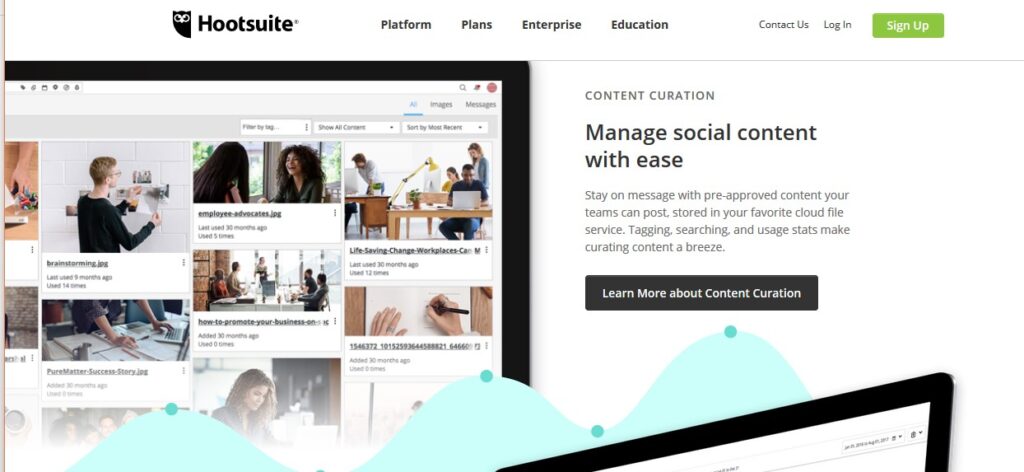
Hootsuite
This is a social media management tool that helps you keep track of all your social media activities through a properly structured dashboard. You are able to schedule, manage and report all social media activities carried out by you or by your team members. Hootsuite also measures and reports the impact of your social media campaigns hence giving you an accurate overview of ROI. It is a paid tool with a 30-day trial period.
Top Marketing Tools for Business: Email Marketing Tools
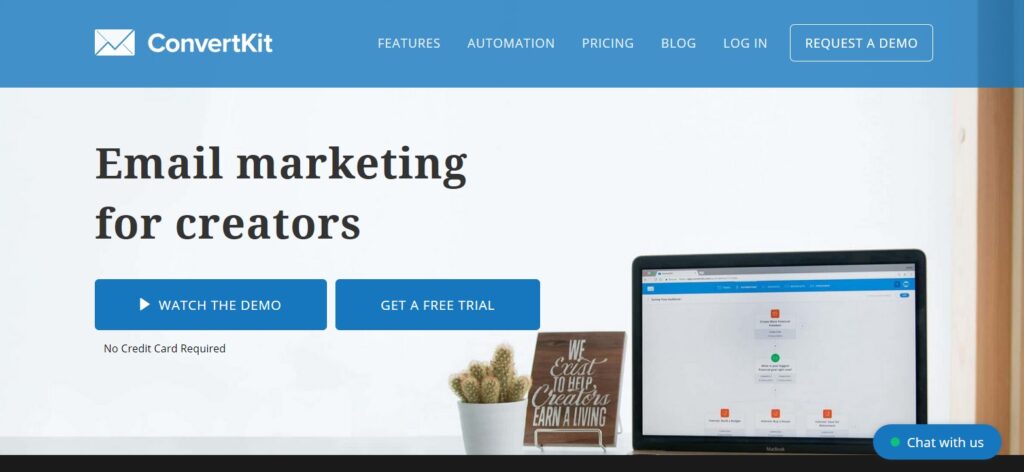
Convertkit
“Money is in the list” is a cliché but reveals the truth. The best-performing way to monetize your blog is via your email list and Convertkit is one of the best tools to grow quickly and manage your mailing list and mail campaigns. Convertkit was expressly conceived for creators and their needs. Convertkit helps you design, test email content, measure the performance of your campaigns, and automate them. And finally, grow your audience.
You do not have to be a tech genius to use Convertkit as the interface is intuitive and user-friendly and is designed to make your tasks easier. You are able to manage thousands of blog subscribers in a relaxed and convenient manner. In addition, it provides you with the option to effortlessly switch from all the other email marketing apps.
Mailerlite
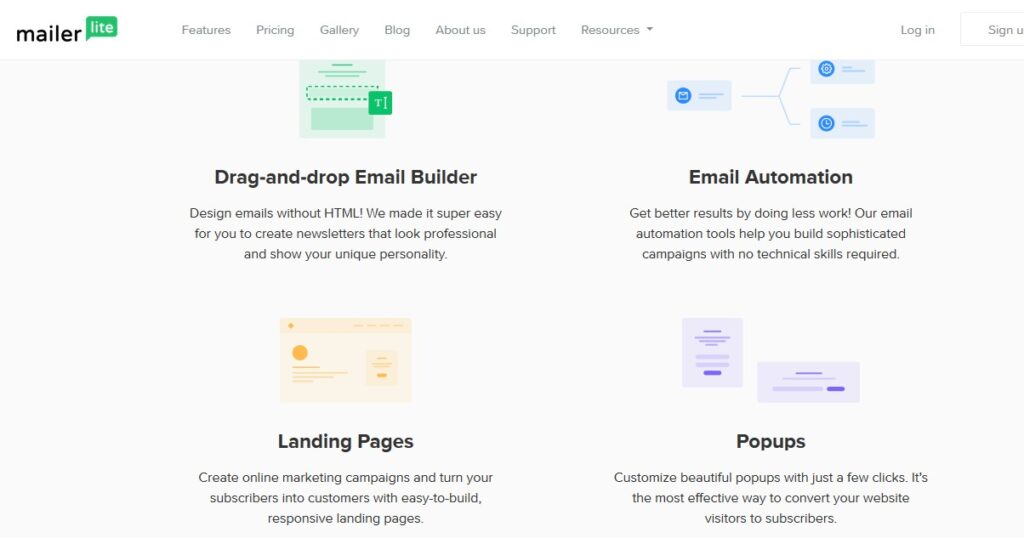
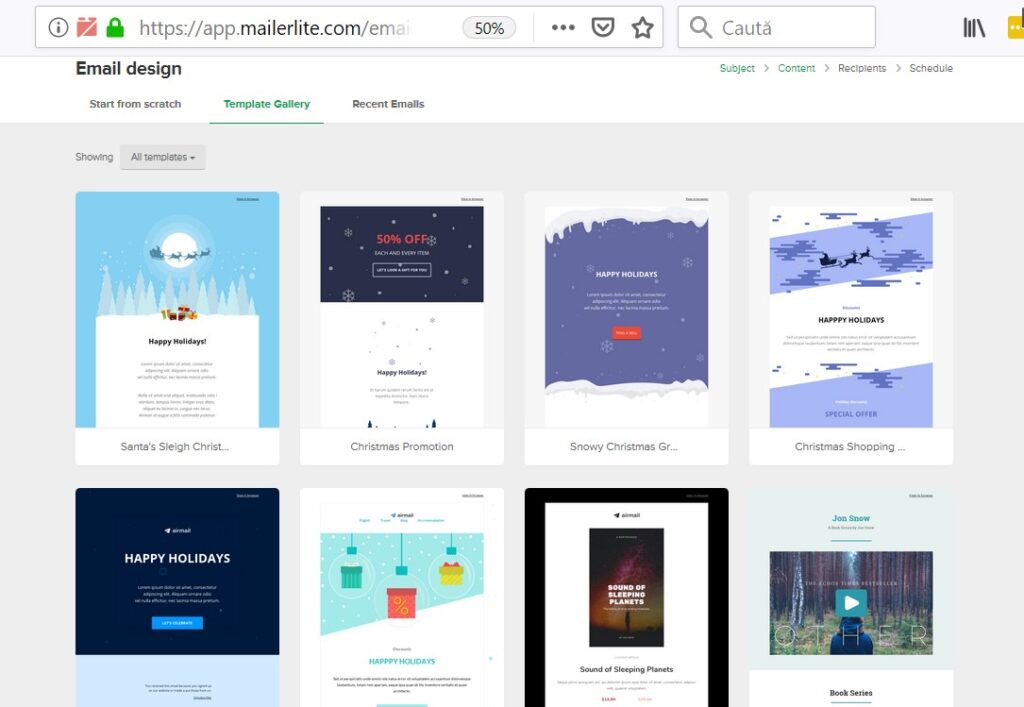
When starting your blogging journey, Mailerlite offers a free email marketing platform for up to 1000 subscribers. It empowers you with a drag-and-drop email builder, automated landing page creation, beautifully crafted popups, and an email automation platform. This gives you the luxury of creating refined campaigns and growing your following with ease for free till you reach 1000 subscribers.
MailChimp
One of the most if not the most popular email marketing tool, free for the first 2000 subscribers with a limit of 12,000 emails monthly. MailChimp allows you to create a campaign that will suit best your communication goals. It also provides many customization options for the design of your mail if you want images or videos in your mail messages.
The design of the opt-in series is very rigid for the free account and the reason why I renounced on MailChimp after the first two months. Transferring your subscribers to another email marketing app is a painful and tedious process if you have thousands of subscribers to move.
As for the design of the opt-in forms, Converkit is by far the best option. So, if you are seeking convenience, and ease and are a serious blogger with thousands of followers, Converkit is what you should choose.
Traffic and List-Building Apps
Sumo
This is a comprehensive suite of tools that help grow your site’s traffic. Sumo is free for accounts with under 200 subscribers. For around $25 a month, you get an open option of 10 tools to work with what best suits your needs. With Sumo, you are able to track your success as you continue to build a following. Tools like list builder, scroll box, welcome mat, and sharing buttons among others increase your shares and subscriptions.
Milotree
It is a cost-effective tool due to its affordable pricing. This is the quickest way to grow your social media following and email list, and subscribers. Milotree provides you with an easy way to convert your site visitors into followers. It cuts across Instagram, Facebook, YouTube, and Pinterest among others. It is a mobile-configured pop-up that auto-converts your current traffic to subscribers. It has analytics, therefore, enabling you to track and monitor growth and results.
This is a free blogging tool that is useful even for the best and most experienced bloggers. It ensures your blogs have a zero error rate when it comes to typos and grammatical errors. As we all, bloggers and writers need to verify our work from this point of view. Grammarly is one of the best grammar and spelling checking tools, compatible with all web browsers, and extremely easy to download and install.
Google Drive
Drive is a free Google blogger tool accessible to anyone with a Gmail account. Drafting and writing content on Google drive is the safest way to back up your material, make it accessible to anyone you want to share it with and collaborate during content creation. Being a secured cloud storage system, it is perfect for files, photos, and video back up.
We are all visual creatures, there is no doubt about that. Thus, the visual appeal of your content is what attracts your followers to you. It goes without saying that poorly designed content is a sure way to disaster. Canva allows you to create layouts from millions of templates available and has a huge photos and design elements database.
You can customize layouts for all social media channels, for various presentations, for ebooks, you name it. It simply empowers you to go wild with your creativity hence standing out; it is easy to use and less complicated than dedicated design apps. Its editing and resizing features are efficient. Canva has a free option that you can use with confidence and a superior paid option.
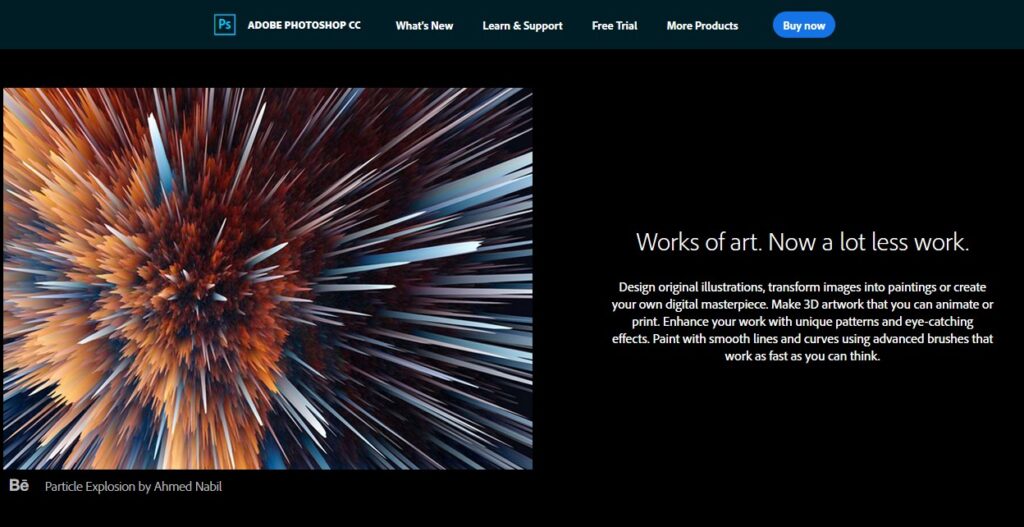
PhotoShop
PhotoShop is a powerful Adobe product that gives you the ability to create your images the way you want, with lots of advanced design features at your disposal. Photos creation, enhancement, editing, simulation and 3D artwork are made possible via PhotoShop. Additionally, you can design layouts for websites, mobile applications, logos, banners, just about any work of art. It is a paid tool with either yearly or monthly subscriptions.
Blogstomb
Images have the ability to make your website slow and this is such a turn-off to your web visitors. In an age of instant gratification, no one waits for a site that takes ages to load. Photographers use Blogstomb to resize and edit photos to give them the perfect look they are after. It is a one-off purchased application.
Screencastomatic
Video editing and recording are made to look like they cost a fortune. The best blog sites have now transitioned from images to videos. Screencastomatic is a free tool that helps create videos, add narrations, edit videos, and share them. The content produced is clear and of high quality. It is a tool creating a revolution in screen recording.
Marketing Tools for Business: Sales Generating Tools
Leadpages
Your target audience needs to be driven from just being readers to being part of your sales funnel and becoming paying customers. Landing pages are the vehicle to do that. Statistics sustain and even guarantee a more than 55% increase in sales with the effective use of landing pages. Leadpages is a land page builder tool that will help you create a conversational-driven and effective landing page.
It is a paid tool that gives you multiple and vast selections of drag-and-drop templates to create your lead gen campaigns on.
ClickFunnels
ClickFunnels is one of the most commonly used sales funnel tools to drive sales. It helps you build pages easily inside sales funnels that are built for conversion. You do not need to be a tech wizard as most of your task is reduced to drag and drop. It is a paid tool (14-day free trial) that every internet marketer need. Putting your information out in the best way possible is how your customers get to connect with you and purchase your product or service. Clickfunnels grow your business through result-driven sales funnels.
BeaconStac
This is a fancy tool that can help expand your business via a QR code generator. Start to create branded digital experiences and your business will stand out. Customized QR codes are a way to do that while inserting your logo, frames, CTAs, personalized backgrounds, and data patterns. Try a new way to manage digital campaigns and customer behavior.
Team Management Tools
Slack
Slack is a team and project management platform. It allows proper, real-time communication between teams that work together. There are over 1000 applications that can be integrated with the platform, thus saving time to get feedback and manually reviewing work.
Trello
Content campaigns entail so much work and keeping everyone on track and up to speed can take a lot of time. Trello ensures there is less stress and more productivity during the campaign duration. It reduces email strings, keeps timelines, and monitors productivity. It is a free tool that is fun, flexible with organized boards to make your work faster and easier.
Marketing Tools for Business: Income-Generating Platforms
SendOwl
This is a digital selling platform whereas a blogger, you can sell your products and services. It is easy to create a product you want to sell and get clients to buy it directly from you. It is an important blogging tool for beginners as it is difficult to make sales and monetize your site when you are just starting up. Sendowl is mobile-optimized, and secure and provides a huge network of people for you to reach out to and benefit. Their payment plan is affordable as they start monthly charges at $9.
Teachable
It is an amazing and go-to platform to create and sell online courses. They offer both free and paid plans to cater for all necessities and budgets. If you are good at creating excellent course content, Teachable provides the network of students you need to profit from your work.
Every blogger driven by success aims to be the best blogger, if possible, in his area of expertise. Having the correct resources makes it easy to produce high-quality, interesting and thought-provoking articles. Planning, organizing, managing and analyzing the content and all communication campaigns and continually improving the results are what make the best blog sites and consequently, you need the best blogging tools to support your marketing activity.
It’s 2023 and Email marketing continues to stay on top of the list of lead-generating strategies despite the fulminate rise of social media platforms. It remains effective and cost-efficient. And for these reasons, great email marketing tools keep coming up or reinventing themselves. And thus, comparisons such as the one between MailerLite vs MailChimp vs ConvertKit seem inevitable in a bid to get yourself the platform that best suits your business needs.
Disclosure: This article may contain sponsored or affiliate links. If you decide to make a purchase using one of these links, I’ll make a small commission without impacting the price that you will pay. I recommend just services or products I find useful and that I have tested or currently use.
There are plenty of other email marketing platforms besides MailerLite, MailChimp, and ConvertKit. However, finding a perfect fit for your business involves evaluating various solutions and this process can either be a harrowing experience or a complete delight.
So, to make it easier for you, this article lists a broad comparison between these 3 main platforms MailerLite vs. MailChimp vs. ConvertKit. This is a comprehensive comparison that aims to help you make an informed decision.
Your Traffic Drop Probably Isn’t Random
Most ranking losses come from overlooked SEO issues. Download my Complete SEO Audit Checklist to quickly identify what’s broken, what’s underperforming, and what to fix first to regain visibility.
You have Successfully Subscribed!
1. Customer Satisfaction Thanks to a 24/7 Customer Support
MailerLite wins on this very important feature because they have very responsive and efficient round-the-clock customer support even on the free plan. It gets even better, when you miss their chat response they send it straight to your email, this helps you find solutions to any questions fast enough rather than waste time on Google searches or troubleshooting. Particularly when you are a beginner using this type of platform.
ConvertKit too has 24/7 customer support that responds to your questions in real time. On top of this, they’re also great at community-based support.
MailChimp has customer support available only to their paying subscribers. But even then, you have to mine through a myriad of answers and this can take time and crush your patience.
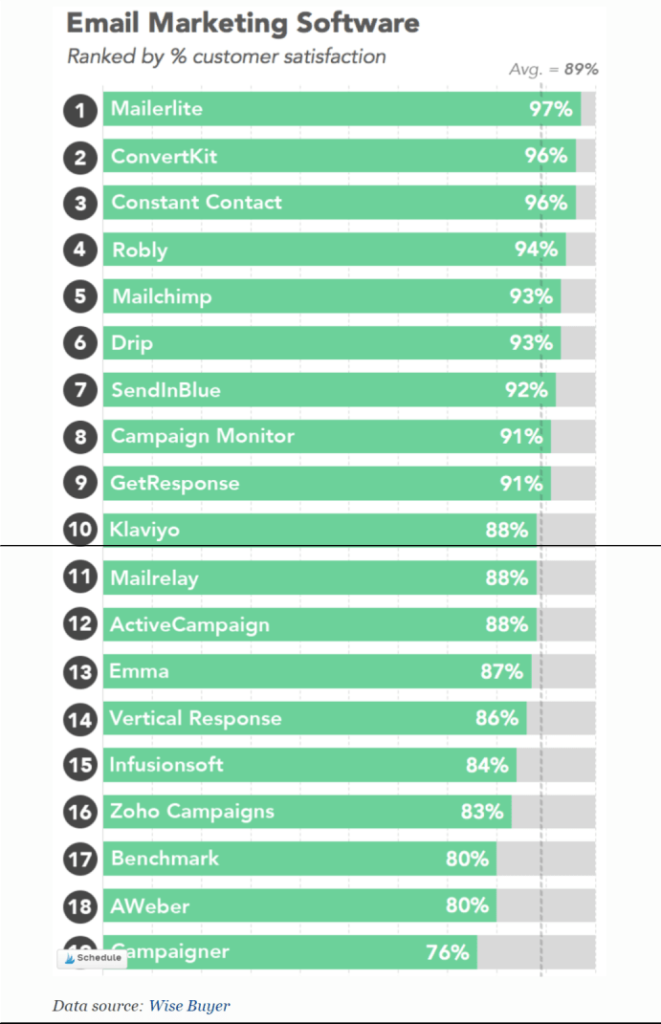
A recent survey on email marketing software ranked MailerLite at the top (97%) and ConvertKit followed right next (96%) while MailChimp (93%) ranked fifth in customer satisfaction.
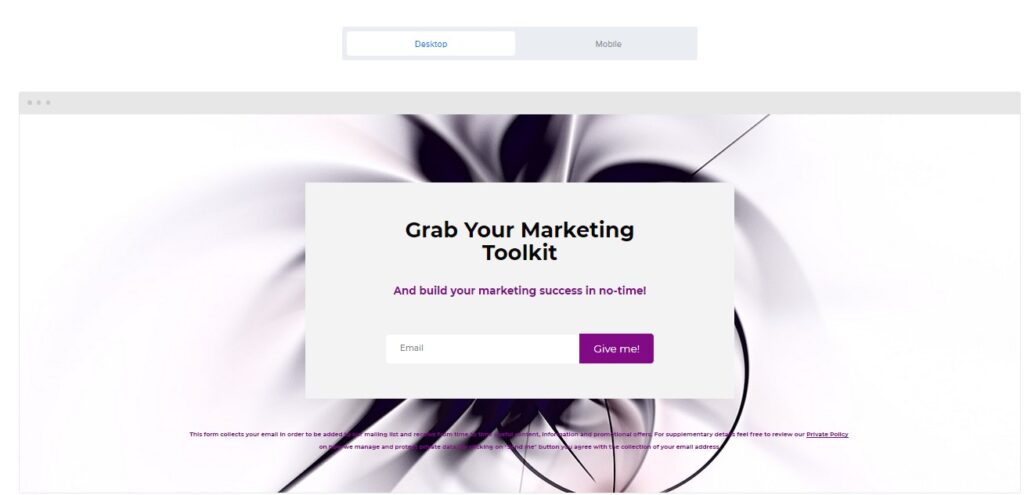
MailerLite landing page wins again here. Even on the free plan, they provide you with customizable independent landing page features that allow you to edit it according to your specific requirements. What this means is that you don’t have to run parallel accounts to capture emails or create landing pages or web forms. And they are good-looking too!
ConvertKit and MailChimp on the other hand integrate their landing pages with Instapage on plans that start at $29 per month. They are mainly not as customizable as MailerLite.
3. MailerLite vs MailChimp vs ConvertKit: Pricing
MailerLite allows you only 1K free subscribers and after you surpass this you start to pay. That said though, it’s still cheaper compared to MailChimp because even after going beyond the 1K threshold you get unlimited emails with access to all features and it gets even cheaper as your subscribers increase.
MailChimp allows you to have up to 2K subscribers absolutely free with a maximum of 12K emails per month. However, once you surpass the limit the payment is quite high compared to MailerLite pricing.
ConvertKit has no free plan and their cheapest package starts at $29.
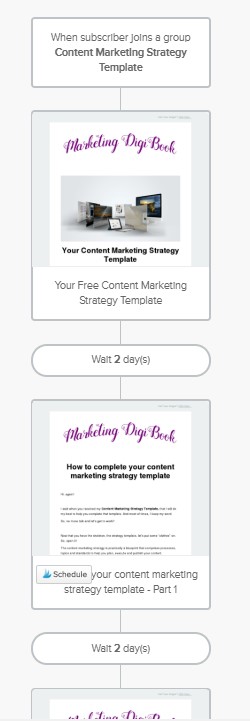
MailerLite offers you an opportunity to create workflows that are guided by your campaign’s target for instance clicks or opens or segmentation. You don’t need the technical know-how or a “how to use MailerLite” manual, as the platform is highly intuitive. The tagging and segmentation allow you to create tailored campaigns for your specific target group. They offer this feature even on the free plan.
MailChimp also offers automation including follow-up emails. It, however, offers no workflow, therefore doesn’t give you a smooth ride and from my point of view complicates your efforts to find alternative solutions.
The ConvertKit also doesn’t offer workflows, but recently they added a visual automatic builder that is way easier and faster to use compared to any feature on either MailerLite or MailChimp.
5. Template and Welcome Mail
MailerLite offers you an array of templates and welcome emails to work with, all free even in the forever free plan. And they are very user-friendly, so you do not need any guidance or some sort of MailerLite tutorial.
MailChimp on the other hand offers some features under the paid plan, including welcome mail.
ConvertKit fails in this aspect because they don’t give you much to work with and this doesn’t help you get a direction in terms of your email design or customization.
6. MailerLite vs MailChimp vs ConvertKit: A/B Testing
If you’re running a large email campaign and you depend on split testing to determine the results of your efforts. Both MailerLite and MailChimp offer you testing options. MailChimp offers up to three variables while MailerLite allows for both A and B choices.
ConvertKit lately offers testing for email content or to find out what makes your subscribers click.
7. File Organization/Manager
Both MailerLite and MailChimp have this great tool to help you organize your content into folders or files. MailerLite has a file manager while MailChimp has a content manager. These features are very handy especially if you handle huge content e.g. images.
The better of the two, however, is MailerLite because they have made it easier to create groups or segments. MailChimp is not very organized and thus leaves you with quite some work and ends up consuming your time because it’s not user-friendly.
8. MailerLite vs MailChimp vs ConvertKit: Customization
By personalizing your campaign and making it less promotional, you’re guaranteed to gain more interest and clicks. This is what MailerLite has over MailChimp. It allows you to redesign your emails to a more personalized tone, you can customize:
Customizable unsubscribe pages (it’s ok to make a great last impression, might change someone’s opinion)
Customizable buttons that you can directly add to your email
And much more.
MailChimp does not allow for any redesigning. It’s rigid on inserting your purpose at the top and your address at the bottom. There’s no readjusting the widgets and this eventually has an effect on how your email will be received. Not to mention that the layouts are far from being pleasant to the eye and it’s among the first reasons that made me renounce Mailchimp the next day I started to use it.
ConvertKit also is limited in customization options.
9. Integration
Integrating with various third-party apps can truly be helpful on so many levels thus simplifying your workflow and increasing efficiency.
MailChimp integrates with many sites including PayPal and Shopify. Why this is great teamwork? Because with every new purchase on your site, the new customer email is automatically added to your list and you’re also able to track the links and find out how much revenue your email has made (well caution to GDPR for European customers if you use it that way). It is also integrated with WordPress, Facebook, Hootsuite, Eventbrite, Google Analytics, and many more.
MailerLite API isn’t too bad though there’s plenty of room for improvement; it integrates with Bookfunnel which is especially great if you’re dealing with eBooks. It also integrates with Shopify and MailerLite WordPress plugins, Facebook, and several others. And as with MailChimp, new purchases mean new contact added to your list automatically.
ConvertKit has the least integrations except that it’s supported by Zapier, which gives it great potential for more integrations.
10. Reporting
All three ESPs have, of course, some form of reporting. The difference is in how detailed you want your report to be. If you’re just interested in a quick view of your email list growth, ConvertKit does that brilliantly. But that’s all you’re going to get.
MailerLite and MailChimp are more detailed and will allow you to track everything including unsubscribes, link activity, open rates, clicks, bounces, and even location.
The big difference that makes MailerLite win is that you can map out your data and get a visual report.
Imagine spending all your efforts and skills getting new subscribers and creating winning email campaigns only for them to land in the spam/ promotional folder! Then eventually your subscribers will not hear from you and gradually forget about you. This is what’s likely to happen to you when you use MailChimp.
With MailerLite your emails land straight in the primary box, most of the time, and this is why they have higher open rates. It’s important to note here that MailerLite GDPR compliance means there’s the transparency of consent by new subscribers. And this is a good thing for your campaign because you rest assured you are reaching the right audience (you’re not a spammer) and do not need on your list persons that are not interested in your products or services.
ConvertKit also has a higher open rate compared to MailChimp.
12. Auto-resend
All three ESPs allow for auto resend of follow-up messages to subscribers that didn’t open the email or never clicked the links.
The difference is that MailerLite allows you to do more than just resend, it allows you to make any of the following edits:
Change your email subject
You can also add a new or different message above the body of the original email to give it a more personal touch
You can change both the content and subject of the content and resend
Of course, these changes may just be what’s needed to get more clicks.
13. MailerLite vs MailChimp vs ConvertKit: Drag and Drop
As social media seems to have a great impact on marketing trends, it’s obvious that today people are more visual than ever. Therefore text only campaigns are not enough and so, you need to include some visual elements in your emails to be able to capture the customer’s attention and consequentially be able to communicate your ideas better.
In this area, all three platforms have this amazing drag-and-drop feature. But again, as seems to be the trend now, MailerLite is better than MailChimp and ConvertKit, at least in my view.
Their drag-and-drop builder makes it so easy even for beginners to design great emails like pros. You’re able to choose from an array of newsletter templates that you can edit or tweak to suit your needs. And you can also use these same templates to create your bespoke design without having to start from scratch.
14. Tagging and Segmentation
One simple strategy to use to get more clicks is to segment and tag your subscribers to create a campaign that’s very specific and relevant to them. All three platforms have these features. ConvertKit seems more inclined to bloggers and so they have a ConvertKit WordPress Plug-in that tracks visitors on your website and tags them.
MailerLite and MailChimp also have this segmentation and you can segment by:
Sign-up source
Geographical data
Customer journey
Email engagement
Purchase activity and many more
On both platforms, you can also combine the segments to target a specific audience and build strong relationships bespoke for them. MailerLite uses the Subscriber management tool. So, basically, the 2 ESPs seem to level it out here.
15. Mobile Friendly
Over 55% of emails are opened on phones and tablets. It’s therefore important that your emails appeal on any device. MailerLite automatically fits your newsletters into any size to make sure the layout remains unbroken. With MailChimp you may have to do some additional coding work by yourself to edit the mobile templates.
ConvertKit doesn’t have a mobile app.
16. MailerLite vs MailChimp vs ConvertKit – Unlimited Image Hosting, Absolutely Free!
There’s no limit to the number of images (or amount of data) that you can store on MailerLite, and it’s all free.
MailChimp also offers unlimited storage on both data and images; the only difference is that the images must be below 10MB in size, each.
ConvertKit, on the other hand, is also unlimited but has no specific media database to manage your uploaded files. This can be quite a headache.
17. Other Features
MailerLite has the following features that the other two don’t have;
Unsubscribe page builder
RSS to Email
Available in 8 languages (5 Support languages)
Common misses
They all lack spam and design testing features.
They all don’t have a backlist.
Final Tips
MailerLite
When it comes to customer experience and satisfaction, MailerLite really takes the cup home because it’s equipped with features and tools that most small businesses will require.
It’s a perfect platform for you if:
You’re a newbie who requires a simple interface with a user-friendly email editor.
You’re a freelancer, small startup, or solopreneur working on a budget. But still in need of elaborate quality automation tools that can still run sophisticated campaigns.
You’re a creative or a blogger; you’re spoilt for choice with tailor-made features to help with your campaign that includes WordPress integration.
You’re just in need of an all-inclusive email marketing platform that has great features even on the free plan.
Or you simply need a platform that offers your language.
MailChimp
This old platform is great if budget is your major problem. It offers powerful tools with useful integrations such as WordPress, Shopify, and Zapier.
MailChimp is not recommended for you:
If you’re looking for automation that is user-friendly and easy to manage. They lack a workflow editor, and MailerLite automation might be better for you.
If you’re an affiliate marketer, MailChimp also works with a super strict policy on affiliate marketing; you may want to avoid such a rigid working environment.
ConvertKit
Some strong key areas of this platform might include the ability of the landing page to collect subscribers including those without websites. This is a plus for social media campaigns.
ConvertKit may be best for you if you need very specifically targeted campaigns. This is because of their tagging and segmentation system that helps you identify a specific group that you want to target.
It’s not recommended for you if you have a low budget. If you compare the features they offer you and the price with other platforms like MailerLite, you will realize they’re quite expensive.
It’s also not very recommended if you are a newbie and have no knowledge of HTML. Again, MailerLite offers you more variety and is user-friendly even for beginners. It’s better for persons knowing to code.
Overall, even on MailerLite free, you clearly get offered premium features at no cost or at a very affordable cost, depending on the number of your subscribers. Obviously, any MailerLite review sums it all up to that fact. They’re also constantly upgrading to meet their clients’ needs. These are the reasons why everyone is migrating to find their best option.
Chances are that you already follow one or more social media influencers, or even, you already could be an influencer. The advent of modern forms of communication such as social media has created new channels for advertisers and marketers to share their brand stories in the most authentic and distinctive voices yet. And influencers are the individuals bringing credibility to this industry. Similar to word of mouth, becoming an influencer means selling in a less explicit method.
As much as there is no specific definition of an influencer, they can be considered as a third party individual that uses their popularity on social media platforms to influence purchasing decisions of their followers; therefore it’s needless to say that a successful influencer needs to have good access to an active and engaged audience whom they will influence.
With traditional advertising methods making consumers natural skeptics when it comes to purchasing, marketers have had to use tactics that seem more trustworthy. Consumers prefer to buy a product that’s recommended not advertised. These recommendations can come from a family member or a friend or a trusted influencer.
Let’s Make Your SEO & Content Work Better for Your Business
Influencers create real value for marketers and advertisers by shedding the cynicism that every consumer has toward the average advertisement. Thus, when recommended by someone they trust, they usually let their guard down and are more receptive towards these products and services.
In your quest on how to become a social media influencer in 2023, it’s important to observe that strategizing to maintain a good reach without losing authenticity while staying compliant, are the growth goals that should guide you. The influencer marketing budget has been rising in the past years sharply and it won’t be slowing down any time in this new decade.
The Numbers
The influencer marketing industry was valued at over $16.4 billion in 2022. 61% of consumers said that they had made a purchase based on an influencer’s post. On average a business gains $5.2 for each dollar spent on influencer marketing.
Another statistic worth noting is that the Nano-influencers (of less than 1000 followers) on Instagram have the highest engagement rate (5%) compared to mass influencers with over 100,000 followers. Micro-influencers have a market share of 91% in 2021. This is encouraging news, especially if you’re just starting the journey of how to become an influencer in 2023.
Going forward, this highly lucrative marketing trend of influencer marketing is only likely to grow more popular. So, with this knowledge, how then do you become a paid influencer with the kind of audience brands want to connect with? How do you become the go-to influencer that gives value to both his audience and the brand?
· The influencer becomes the conveyor of pleasant branded narratives.
· The audience trusts the influencer to be true, original, and interesting in their niches; this builds confidence in the audience and creates a ripple effect of shares and likes.
· This is how an influencer builds and increases the authenticity of the brand they work with. In return, the audience develops a strong credibility for the brand and a great relationship with the influencer. As a consequence, when recommendations for products or services are done, the impact is quite observable.
When you become a paid influencer, there are several ways in which your influence can be measured:
· The number of followers is probably the most common and basic way of measurement
· The number of likes and shares indicates your audience’s appreciation as well as interest in your content
· The quality of comments also offers insights into the commitment and audience’s potential desire to support the influencer.
In the end, as an influencer, if you’re able to maintain meaningful and deep connections with your audience, they’ll end up considering you more of a friend and a pillar of influence in their whole buying process. This is the ultimate goal.
Types of Influencers
As you learn how to become an influencer, it’s important to know the types of influencer profiles in the market. They can be in various categories either by following, by content type, or by industry.
i. By following
a. Mega Influencer
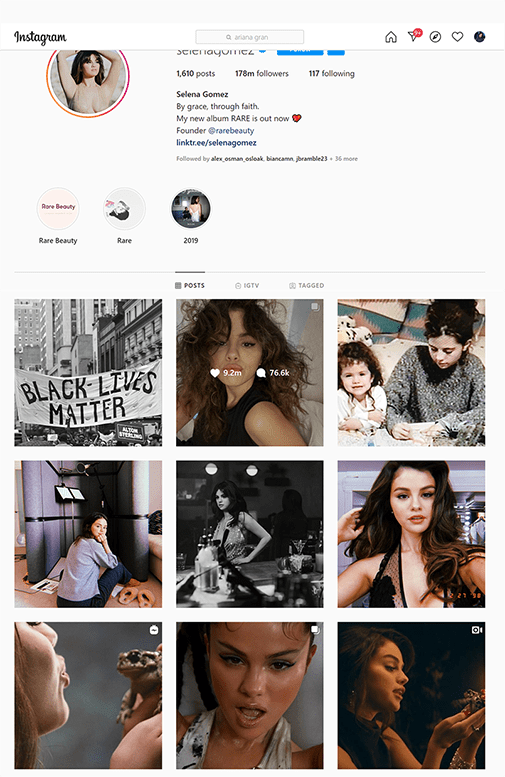
These are also called Celebrity Influencers. They are super influencers with a substantial followership and reach of over a million. Their posts often go viral and often get many likes. However, their relationship or engagement with their individual audience is weak, and partnering with them comes at a hefty cost. Ariana Grande and Selena Gomez are such influencers.
Source: Instagram
b. Macro Influencer
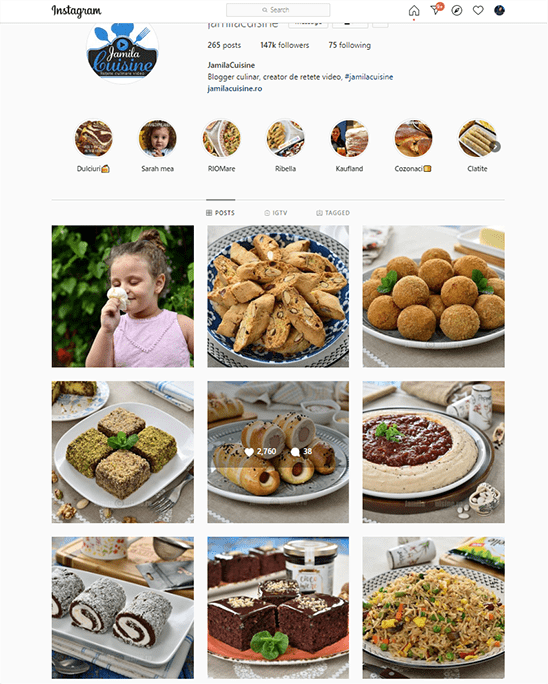
These are often self-made internet sensations with between 100k to 1 million followers. They could be vloggers or social media content creators that create content resonating with their audience. This followership is based on the originality of their content. But just like the celebrity influencer, the macro influencer’s engagement with each member of their audience is weak and they too can be expensive. Jamila Cuisine is such an influencer.
These influencers have between 1000-100k followers. They are very specific in their niche and are considered industry experts by their followers. They create very authentic content that resonates with their followers. They also have very strong bonds with them even on a personal level and their influence has a high impact.
d. Nano-Influencer
The Nano-influencers don’t necessarily have a huge following, they are relatively regular everyday folk, but this lot is the most engaged of all the other influencers. Their followers are complete die-hards and thus the Nano influencers have the most impact on their followers.
ii. By their content type.
a. YouTube Influencer
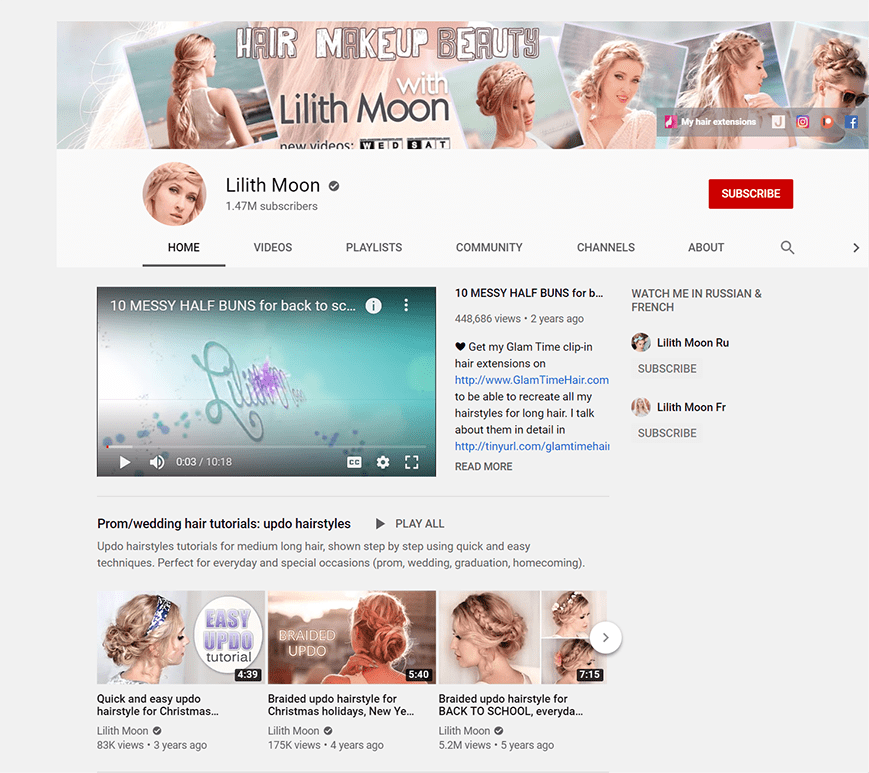
Many YouTubers continue to leverage this leading video-sharing platform to share their creativity. From tutorials to DIYs and general entertainment, these influencers are building a global subscriber base. A great example is MKBHD.
b. Bloggers
Bloggers are probably the oldest digital influencers. These are people that love to share their experiences, expertise, hobbies, or just fun activities with anyone who’d care to be interested. They use blogs as their platform to connect to this audience and can use these same blogs to lead to certain websites as recommendations. Jenna Kutcher and Melissa Griffin are such influencers.
c. Podcast Influencers
Lately, people have been diversifying ways through which they can reach their audience as technology keeps advancing. Podcasts are getting even more popular because of their nature, they’re an easy “as you go” kind of thing. You don’t need to sit down to watch or even stop what you’re doing. The influencers here just need to deliver creative, fun, inspiring, or educative content and are able to get lots of listeners.
d. Style and Beauty
If you want to know how to become an Instagram-style influencer, then you’re in this category. This is the most popular niche for influencers, whether as their own entrepreneurs or through collaboration with other brands, they are a social force that’s creating quite an impact globally. It’s a wide niche that deals with clothing, styling, perfumes, make-up, hair products, shoes and so much more.
This is another popular niche for influencers. These foodies whet their followers’ appetites with colorful food pictures taken from all angles. This is one sweet avenue for how to become an Instagram influencer.
f. Travel Influencers
These must be the most enviable of all influencers. They travel all over the world for free and in return, they give reviews and recommendations about their experience, activities, adventures, and amenities.
So, you see there are many ways for how to become a social media influencer as you’re spoilt for choice on the type of niche you can explore.
What Do You Expect to Gain As an Influencer?
Here are some major perks of being an influencer.
i. Flexibility
As an influencer, you’re not fixed to a full-time schedule or tied to a specific location. You’re free to work from the point of convenience whether in terms of time or location. This flexibility also extends to the niche that you want as well as the platform that you pick.
ii. Creating a Like-minded Community
When you become an influencer, you’re slowly able to build a community of people with the same interests as you. Once you’re able to establish strong connections with these people, you put yourself in a good position of landing deals with businesses where you become a paid influencer and the process keeps getting better.
iii. Authenticity
The ability to be authentic and realistic is one of the reasons influencers are highly successful. Being truthful and open about your journey as an influencer can give an emotional appeal to your followers. It’s just not enough to show the successes and the happy side, once in a while it’s good to throw in the struggles for your audience to see that you’re a regular human just like them.
iv. Gifts
One way brands like to collaborate with influencers is by offering their services, products, or promotional items for free for them to get a promotion or a review, or a recommendation. These freebies might go the extra mile into something like an experience such as a meet-up with fellow influencers in your niche and others even offer free training and workshops. Such benefits build up your influencing career as well.
With all these perks of being an influencer, it’s important to note that this is not an easy path. Your level of integrity must never be doubted, so it’s good to always be as honest as possible, do some research before offering your opinion because what you say to your followers will often be considered an expert review. You will also be required to be consistent and relevant at all times. Finally, keep engaging your audience to maintain their interest, even as you work to gain others.
So, with all these said, how do you become an influencer?
How to Become an Influencer
1. Identify Your Niche
Remember the passions and expertise mentioned above? This is where they come into play. People need to be able to link your name to a specific niche; this is good for your image alignment. Picking a niche can start by identifying what you’re passionate about, you can also evaluate your strengths and weaknesses as well as what you’re an expert in. All these will be critical when identifying who your audience is going to be as this will dictate a lot of what your work will be. Some popular niches include:
· Food
· Fashion
· Lifestyle
· Gaming
· Beauty
· Sport
· Tech
· Entertainment
· Health & Fitness
It’s also possible to combine 2 or more related niches, for instance, you can be a fashion, beauty, and lifestyle influencer, or a food and travel influencer, the deal is to give your own unique perspective to your audience. Be different from the rest of your competition, a unique voice is what makes the difference between the influencers that thrive and those that don’t.
2. Create a Business Profile
Make a great first impression. What’s the first perception that someone will get when they look at your bio? You must be able to capture and engage your audience’s attention at that first instant.
Your profile picture and your cover photo need to be able to really represent you as a brand. It’s therefore important to select visible images of high quality that people will easily recognize and relate to you with.
If you have an existing personal profile, you may want to convert it into a business profile. Why? There are a lot of good reasons such as the ability to get insights or analytical tools that can help you grow your platform. But it’s also ok to start with a personal profile because you can always convert it to business and it’s free. The important thing is to ensure that your profile gives the potential brand partners the quick information that they may want to know, such as your location, email address, website if you have and who you are/ what you do (expertise).
3. Choose Your Preferred Platform
As you prepare for how to become a social media influencer, it’s important to know that the type of platform you pick shall be dictated by the type of content you create and the kind of audience you will be targeting.
Instagram for instance is an excellent platform if your niche is lifestyle, beauty and fashion, travel, food, and alike. YouTube on the other hand is a great platform for tech and motor kinds of stuff and also food. LinkedIn is another platform great for professionals and business executives and so on. So, the question here is who is your target audience?
Understanding Your Target Audience
The thing that makes influencers very successful is the fact that they only cater to people with similar interests as them. This is why building connections with these people is quite easy. It is therefore very important for you as you learn how to become an influencer to know who you’ll be targeting.
How then do you understand your audience? You can start by searching content about your niche; this will guide you on 2 things. What is being talked about and who is talking about it? Once you search deeper into who is carrying out these conversations, you will be able to get clear demographics. Another way to identify your audience is to use the built-in analytical tools provided by most social media platforms.
For example, Twitter Analytics will give you insights about your current followers’ locations, interests, gender, and similar elements.
With this understanding of who your audience is, you will now be able to pick the platform to use.
Here’s an example, if your niche is lifestyle, then most of your target audience will be found on Instagram. Statistics have shown that most social media influencers would rather use Instagram than any other social media platform because it delivers. If your niche is décor and DIYs, then your platform shall most definitely be Pinterest. If you prefer creating videos and vlogging then YouTube is your ideal platform.
This knowledge of your niche and audience is crucial because it’s what will help you reach out to the right people, it’s the reason why your content will be relevant and it’s highly beneficial in your growth.
It’s also possible to have more than one social media platform. Just pick the ones that can complement each other better.
Once the platform/s of choice has been identified, the next important thing is to create a content strategy. This involves the unique voice mentioned above, something to help you stand out from fellow influencers in your niche. This uniqueness should be incorporated into your content because it’s what your audience will know you by.
The format that you pick must be one that will effectively deliver your message to your audience while allowing you to effectively express this unique voice and personality. What does this mean?
It means relevance.
For you to be able to engage and influence your audiences’ opinions, you have to communicate in a way they can understand and offer them content they can relate to. So, now that you know who your audiences are, what do you think is their preferred type of content? Do they prefer all work and no play? Or do they enjoy a little play?
One strategy that always wins in most cases is a perfect balance of both worlds. Share all your quality expertise but at the same time, give them a bit of your personal content that they can relate to, this builds authenticity. For instance, if you’re a pet influencer and your posts are mainly on pets, it would be refreshing if once in a while you show your followers a day in your life. This builds and strengthens connections with them. Other influencers even invite one follower to spend their day with them; this too is a winning strategy.
Another strategy is the use of unique weekly features such as reviews. If done consistently, your audience will always make sure not to miss a review or any feature that may be relevant to them. You can also engage them and ask them if there is a particular thing they may want to see, this will make them feel like a part of your brand.
Content strategy can also incorporate sharing of content done by fellow influencers within your niche. What this does is capture the attention of these influencers, builds your profile, and help you discover other topic ideas.
In the future, it will encourage these influencers and businesses to partner or collaborate with you since you already have a segment for reviews and are not a new face. The key thing is to keep your strategy focused within your niche.
5. Distribute Your Content
To share out your content is more than just posting it on your social sites. It goes without saying that high-quality content is a gift that keeps giving. It leads to a great retention rate for your followers; it encourages sharing and attracts new followers.
But with that said, even stellar content requires an effective distribution strategy. If you’re preparing for how to become a LinkedIn influencer, then you already know that it’s a career-centric site, this means that posts containing consumer-based content may not thrive here at all, instead, it’s the business-to-business content that will do well. Therefore, because by now you have already identified your ideal platforms that will work for your content, the next thing is a schedule of when to do it.
Different social media sites perform best at different times, you can find out about your preferred platform here. It’s therefore of paramount importance that you know the times that will best work for your content. Because that means you know the best time to reach your audience, to be able to pique their interest and interact with them.
If you want to become a Facebook influencer, for example, the statistics have shown that the best days to post are Tuesday to Thursday, and the best hours for these days are between 8:00 am to 3:00 pm. And the worst time to post on Facebook is every day before 7:00 am and after 5:00 pm, such clues can help you organize your content in order to be effective.
Other factors to incorporate in your distribution strategy include observing the basic best practices for sharing content with your audience. And even though all platforms have their own set of best practices, there are a few basic ones such as customizing your content.
Content customization is simply personalizing your content to fit different audiences on your various platforms even though the content is the same. You should not use the same liner on all platforms. What’s seen on Twitter should be different from the one posted on Instagram and so on. This shows you took some time to consider your followers and therefore are not just spamming them.
Another customization that you should consider is for mobile views. 80% of social media time is spent on mobile devices, and because all your efforts are for these people, then why not make it easy for them to view your content? Most platforms have this feature and you only need to enable it.
Finally, keep testing various methods on different channels to see which captures your audience most.
6. Show Your Expertise
As you’re prepping on how to become an influencer in 2023, all the effort you will put into your work may not go far if you lack authority, this is an important part of the puzzle. To show this authority you need to have the knowledge and expertise in your industry that is fresh and factual.
This expertise is what will establish a name for yourself; it’s what will help you stand out. So, this requires you to research and study more on your niche, you need to demonstrate that your brand has the knowledge and expertise for the solutions your followers seek.
Remember, authority is the power to influence your followers based on your expertise on matters that concern them, it’s established on trust. For you to be able to convert followers or your audience into paying customers, you need them to trust you. Therefore, share all your expertise, offer credible fresh content often and watch them support you even with their wallets.
One way to grow your audience, as well as your network, is through collaborations with fellow bigger influencers who’ve been around longer. This can be through offering your support on something they’re doing such as allowing them to promote their content on your page. To build this conversational space, begin by commenting on their posts or mentioning them in yours, gradually, they will take notice of you and when you offer space for their content, you’ll not be a stranger at all.
You can also be keen to know what events are happening within your niche/s. Could be workshops, conferences, or talks, whatever is it, attend and get a chance to meet and mingle with fellow influencers and experts within your niche.
Another way to network is through direct pitching. Create great outreach content that shows potential businesses what you can offer. This template should bespeak for each potential client, don’t do a one size fits all kind of pitch, you won’t be taken seriously.
Finally, another simpler way to call for collaborations is by tagging specific brands in your post on a topic that’s relevant to their products or services.
All these moves may at first seem tough and may not bear immediate fruits, but in the long run, they do pay.
8. Listen and Engage with Your Audience
Your audience is the reason you’re called an influencer, therefore they must know that you value them. As you keep sharing your content, they keep growing in number and their interest keeps growing as well, they start leaving feedback and comments. You must create time to respond or react to these comments or feedback in order for them to actually feel validated and this simply boosts their trust in you.
If you get any questions from your audience, try to respond to them as much as possible. It will make them see that you genuinely care about them and can also give you ideas on what they want to see more and you can incorporate it in your future content pieces.
On top of these, you can give a shout-out to a couple of your followers or audiences that have left some exceptional feedback. This is such a motivator for them.
And since you’re going to be receiving tons of these comments, it may not be possible for you to respond to all of them, in such a situation you can just like them to show that you noticed their effort and appreciate it. In scenarios where the comments are not positive, you can address them professionally without losing your calm.
Another method you can use to personally connect with your audience is by going live. Most social media platforms today have features that allow users to share real-time events. Facebook Live, Instagram Live, and others are features you can leverage to bring you closer to your followers.
Finally, another fantastic way to connect with your followers is to ask them relevant questions that relate to their issues. This will spark a great conversation between you and them. It helps them feel like part of a great solution to their daily lives.
9. Evaluate the Metrics that Matter
Every task executed should have a scorecard to see if your efforts are paying off or not. Your focus should not stop at the number of followers, you should consider engagement rate and return on your investment.
You must stay above average as far as the number of followers engaging with your post is concerned, that is the indicator that you’re relevant to them.
Are brands returning for more collaboration? If yes then it means you’re delivering their expectations, if not, check where you went wrong.
The good news is that most social media platforms will give you valuable insights and analytics that can help you track your progress as far as reach, demographics, engagement rate, and even the content format with the most engagement rate, this will inform you what your followers like to see and you can create more of that.
10. Keep Updating!
The networks keep changing their algorithms frequently. It’s therefore of absolute importance that you keep yourself updated about all these modifications to avoid being penalized. If you’re honing your skills on how to become an influencer on YouTube then familiarize yourself with all the posting conditions laid down by YouTube before you get slapped with suspensions or other such penalizations.
You should also know brand marketing regulations before using them in your posts to avoid jeopardizing your influencing career. This should be a continuous process.
Extra Tips on How to Become an Influencer in 2023
i. Consistency
Posting regularly builds a great connection and boosts trust with your followers. You can create a calendar to help you manage this process. You can include some evergreen content to be useful at any time in case you’re not able to create content at a particular time.
ii. Show Some Vulnerability, Be Smart About It
Relatability is one of the factors that make influencers succeed. People will need to see your struggles or fears at some point. It makes you more human. You can therefore show a bit of this side without going to the extreme.
For example, if you don’t want to show that you hate your career, this won’t work well for your brand. Instead, you can share about your struggle to wake up early in the morning, but then show them the tricks you use to eventually maneuver this. Just be smart about it.
iii. Avoid Shortcuts
You’ve probably heard about buying followers to quickly reach a certain number. Don’t be fooled though, the ever-changing algorithms used by most social sites can easily detect it. Brands to know this trick and now check the legitimacy of your account. Therefore be transparent and allow your growth and influence to be organic.
iv. Don’t Jeopardize Your Reputation
Your reputation is built upon the trust you’ve built with your followers over a long period of time. So, sustain this trust by being honest and realistic about your reviews and opinions. Don’t support a questionable product or service simply for the sake of a few dollars, once your reputation is ruined, you may never recover.
v. Promote – Leverage Hashtags
Ever heard of the principle of 20% effort for the creation of content and 80% for its promotion? Yes, it’s not enough to create and just post your work, one way you can achieve this is through the use of hashtags. Hashtags boost your visibility especially if you’re a new influencer.
What you need to do is find the most relevant trending hashtags within your niche and ride on them. Relevant is the norm. This will allow other viewers, who may not necessarily be following you, to get a chance to see you.
You can also host giveaways on your platform. This is another way to become popular because it not only boosts engagement, it also encourages shares and likes.
Your quest on how to become an influencer in 2023 may imply loads of work in the beginning. It is. But if you start with all this expert advice and tips, it will only get better sooner rather than later. The important things to keep in mind can be summed up in 3 words. Relatability, Credibility, and Sustainability. Build your influence and authenticity around these.
What makes some highly reputed websites always rank top in search engines? Have you ever wondered how Wikipedia, for instance, is always ranking high? The simple number one reason is that they have a high domain authority compared to other sites. High-domain authority websites such as Forbes or Wikipedia have mastered the art of how to increase domain authority.
But high domain authority doesn’t only happen to big websites, smaller businesses too can learn how to increase their domain authority over time.
What Is Domain Authority?
Domain authority or DA is a metric that indicates the reputation of a website ranking from 0 to 100, with 100 being the highest. When your website has a high DA, then it means that you rank high on Google and your traffic base is rock solid. DA is developed by SEO tools and you can track any website’s domain authority by installing their extensions or through their site explorer feature.
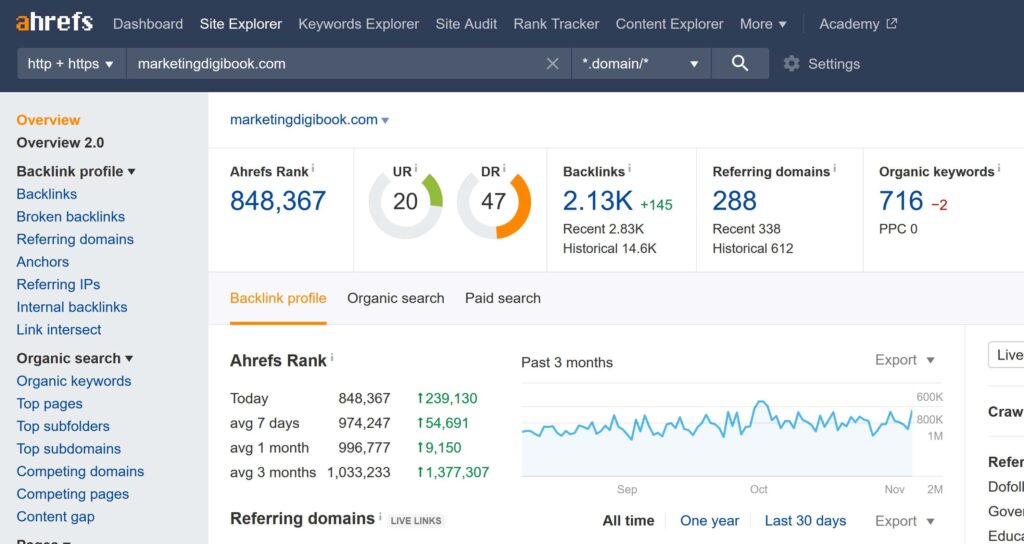
For example, MarketingDigiBook has a DA of 47 according to Ahrefs.
DA shows you a quick picture of your site’s SEO health. For a website that’s just launched, there is no domain authority, but for big and older websites, the DA ranges anywhere between 1 and 100. The DA score is generated by an algorithm that assesses the strength of a site in regard to how it ranks. For example, a DA of 60 and above is likely to rank more competitively than a DA of say 40.
With that said, it’s important to note that DA ranking is just part of Google page rank and not the only aspect considered. It’s a key digital marketing KPI necessary for your website’s growth.
How to Assess Your Domain Authority
There are tools such as Ahrefs, Moz, SEMRush, and others, you can use to find your DA. If this is not something you need to do too often, use the free trials to find out. All you need to do is list down the websites that appear above and below you on the SERP page for a phrase or term you rank for. These should be the websites you compete with. Then use the above tools to check the sites’ DA.
Alternatively, you can just use Moz to check your DA among other KPIs when you use their SEO analysis tool which is all free.
How Is Domain Authority Calculated?
The scores of a DA are made up of several ranking factors that are all balled up to make a number between 0 and 100. Moz describes these ranking factors as being inclusive of the following:
Amount of authoritative backlinks
Amount of referring links
Root domain
Quality and credibility of links
Structure and user experience of your site
It’s clear that links play quite a big role in your website’s DA. A wealth of content coupled with high authority link diversification makes for some of the ways how to increase domain authority in 2022.
It’s also important to know that DA scores are logarithmic. This means that a single factor alone will not necessarily increase domain authority. For instance, you can increase your organic traffic which will put your DA at 40 to 41, and improving on SEO alone might bring it to 45.
Let’s Make Your SEO & Content Work Better for Your Business
Does the Formula for Calculating Domain Authority Change?
The formula does not change frequently. A single formula can stay unchanged for up to 5 years. SEO apps apply minor tweaks whenever necessary. For example, Moz says they considered “Robustness against changes in Google’s algorithm and in the underlying Mozscape link index” in their design principle when they created the Moz algorithm.
What’s A Good DA Score?
By now you understand that your DA score is a relative metric that shows you how you compare to your competitors. And this can be determined by several factors such as the fact that some of your competitors’ websites have been around for years while others have superior authority such as Forbes.
It’s also possible to find that in some niches, a DA of 30 might not be good enough while in others it might be quite high.
Therefore with all these in view, it would be objective to state that there is no standard “good” score that can be set as a benchmark. The competitiveness of your DA is going to be determined by the niche your brand is in.
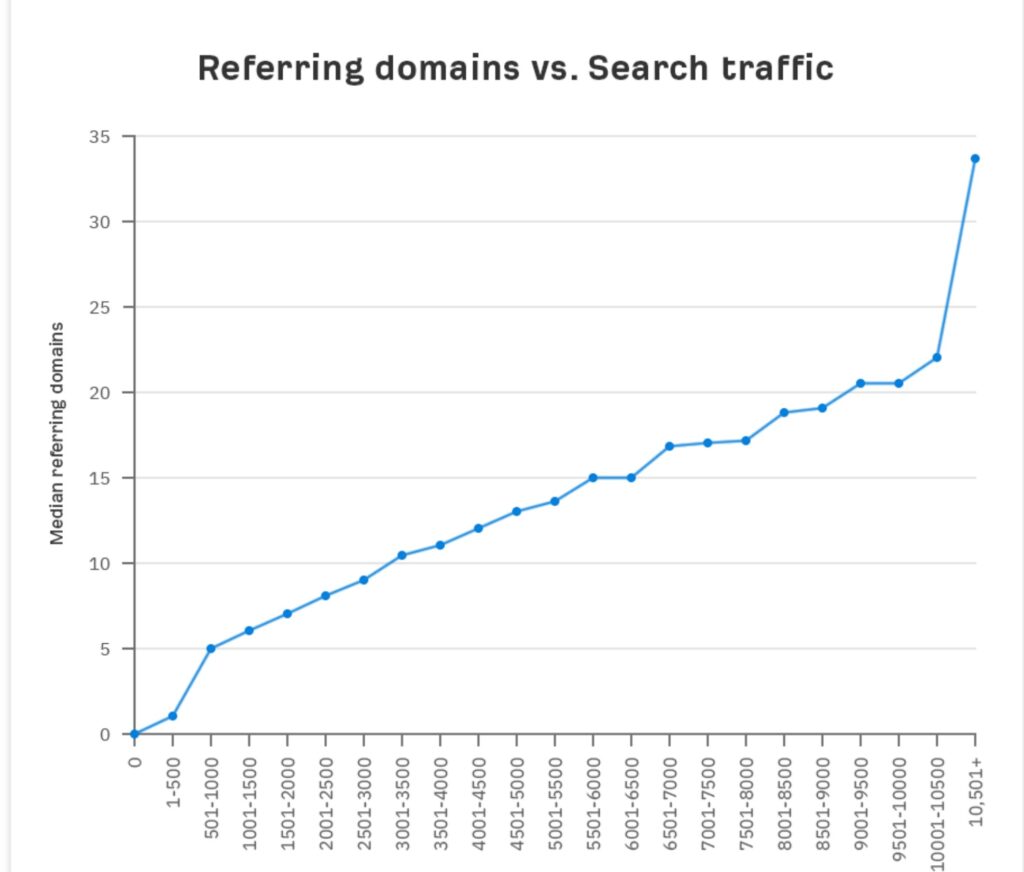
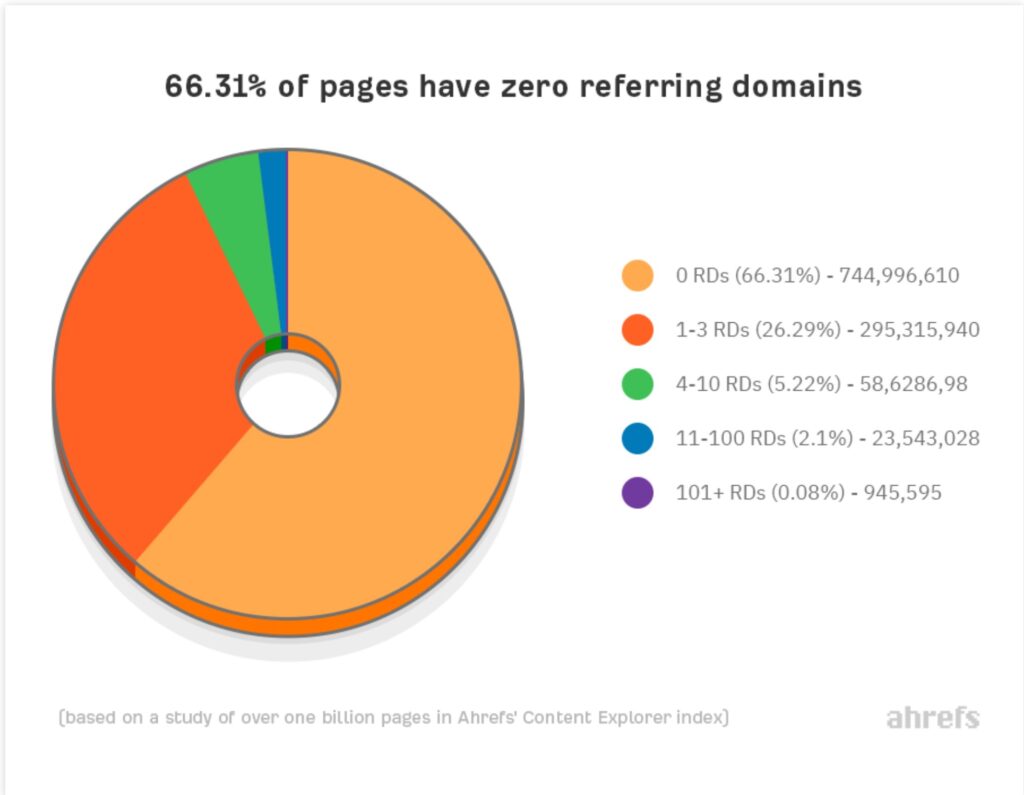
With that said, you tend to get a high DA score when your site gets a high number of referrals.
For instance, if you have about 20 domains that refer back to your site, you can get a DA score of anything from 0-20, if you get over 4,000 referring domains, you can have a DA score of anything between 40-60 and if you get over 300,000 referring domains, your DA score will fall anywhere between 80-100.
This simply means that the more referring domains your site get, the higher your DA score. But any score higher than your competitors for the target element is a good DA score.
What Does This Mean for Bloggers?
When your blog gets high refers, it means it’s considered credible, and this translates into a high DA score. Think about Wikipedia. Therefore the higher your blog’s DA score, the more the search engines recognize it, and the more users and partners value it. This means greater opportunities for you.
Such opportunities include more guest posts from other bloggers that want to contribute to your content as they get a backlink. It can also include invitations to contribute to other high domain authority websites which in return will earn you a backlink. All these and others are ways how to increase the domain authority of your site.
Domain Authority vs. Page Authority
As you have seen that domain authority is concerned with your entire website. Page authority uses a similar metric but measures the ranking strength of each individual web page. Page authority is the real test of the specific pages because it has a direct impact on your search engine ranking as well as your DA.
The metric used to rank page authority is similar to the one that ranks domain authority. It’s a scale of 0 to 100. And the factors that they use to determine page authority include the following:
How many external links are on each page?
The quality of the sites linking to a specific page.
The number of social signals on each page, i.e. Twitter, Instagram, Facebook, etc. links
How many root domains are linked on each page?
The number of sub-domains that are linking to each page.
How many of the root domain links are using partial anchor text?
It’s also important to note that Google doesn’t rank your website. It only ranks your web pages.
Why Do Low Authority Pages Outrank Higher Authority Pages?
Because there are many other factors with varying elements that can make a low authority page outshine the high authority page. These low authority pages can have exceptional performance in other areas such as:
Having links to the page that contains the key phrases in them.
The content on the page is relevant to the key phrase and it answers more questions on the topic compared to other competing sites.
It has a sign of great user engagement and shows that visitors stay longer among other factors.
So, if you’re looking to learn how to increase your page authority, then these are the factors to look into.
How to Increase Your Domain Authority Score?
Up to this point, you may be wondering “how to increase my domain authority”. Wonder no more, having a high DA is about ranking better than your competitors. This means having quality over quantity as far as links are concerned. It’s all about the relevance to your content that carries the day.
Here are steps on how to increase domain authority in 2022:
Source: YouTube
Create Link-Worthy Content
As much as content is king, it’ll only pay off if it can attract shares and backlinks. It’s therefore worth considering this when creating your content strategy. Because the more linkable your content is, the more you will attract quality backlinks as well as social shares which we have seen to be quite important.
Think of it this way. You have created amazing content and readers have found it very helpful therefore they will share it easily with other people. Such an approach will equally increase the chances of getting backlinks from high-authority sites. This will end up boosting your root domain and overall DA.
Examples of link-worthy content include:
How to tutorials. Solve your readers’ problems or pain points by giving them step-by-step tutorials that are straightforward and easy to follow.
Lists. People love quick stuff; list posts are easily sharable and straight to the point.
Feature Experts. Having an expert from your industry is a great way to get high-authority links in your content.
Long-form content. Lengthy high-quality content that offers value to readers is recognized by both Google and SEO tools. Therefore, avoid thin content and make yourself an authority with in-depth solution-focused content.
Rid Negative SEO
Inbound links are valuable for your site’s domain authority ranking. However bad links can create more harm than good. For instance, if your site gets links from harmful websites, it could truly sabotage your DA and could even cause you to get a penalty from Google.
Another source of negative SEO could come from being hosted by a cheap server that allows malicious attacks or has outdated plugins.
It’s vital that you help increase your domain authority by conducting due diligence on the health of your website by auditing your site regularly and tracking your Google Search Console data. Fix any vulnerability that you come across. Takedown all harmful backlinks and get rid of outdated plugins. Also, get hosted by a trusted server.
Optimize Your Site User Experience and Structure
One of the factors mentioned above for calculating DA was website structure and user experience. A good structure enables easier crawling by search engines to index your site on search results. You can use a sitemap to ease navigation on your website.
Another factor is to improve your internal link structure. This will help your DA in two ways, first, it will ensure a smooth user experience. Direct your links to informative pages within your website to keep your visitors on your site. This is great for reducing the bounce rate.
Internal links also allow search engines to crawl and index your pages. A good structure increases domain authority over time bypassing the value of one page to other web pages (link juice). Plus, it indicates the trustworthiness of that page and thus increases its domain authority.
Another very important factor is user experience. If you have not optimized your website for mobile use, what are you waiting for? Did you know that Google now prioritizes how well a website functions on mobile?
This is one of the best things you can do when planning how to increase domain authority. A good site must function fully and smoothly on mobile and that includes fast loading.
The final factor is to ensure the safety of your website. Use SSL certificates. It’s compulsory.
Use Older Domains
The domain age affects your domain authority score. Younger domains tend to have low scores.
Get High-Quality Backlinks from Reputable Authority Sites
Are you tired of hearing about backlinks? Well, in domain authority they’re a really important factor. Statistics have shown that more backlinks translate to more organic traffic on a page. Therefore quality backlinks are important.
One way you can get quality backlinks is to use HARO. You could also look at your competitors’ backlink sources and see how you can get a link from the same sites. And an even easier way to get quality backlinks is through guest posting.
For guest posting, you have to publish on a website that has a higher DA than yours in order to increase your domain authority. This site also has to be offering relevant content that’s within your niche, it has to be relevant and of high quality, without these two, it could lower your DA.
Link the Unlinked Mentions
Besides getting high-quality backlinks, you can also build links by tracking where your brand has been mentioned but without the link being included. What you need to do is to contact these people that mentioned you and ask them to add the link, especially if they are an authority publication. Often times they will be happy to.
Wondering how you can get all your mentions?
It’s pretty simple, use Google Alert, set up your blog or brand name (it’s an easy process), and then you will get alerts whenever you have been mentioned. You can then head to that page to see whether you have been linked, if not, contact them and get linked. And this will especially happen if your website is an authority in the niche.
This means several things. First of all, you need to keep updating your old content to keep it relevant to your readers. Google notices fresh content and this is a great way on how to increase domain authority. So, if you have content that’s several years old, go and update it with SEO optimization in mind.
Another way of staying consistent with your content strategy is by consistently posting new relevant long-form content. Ensure that this content is superior to that of your competitors. It includes correctly formatting it, citing it thoroughly, and ensuring it is error-free.
When you post such content a minimum of once a month you can rest assured that you will notice an increase in your domain authority. The important thing in your content strategy is to offer value to your readers. Without value, you won’t earn any links, ergo, no increase or improvement in your DA.
Become an Authority in Your Niche
Everyone likes to associate with experts or brands considered to have authority in their niches. If you build your blog to become an authority in your niche, you will organically get linked by other bloggers or high-domain authority websites in your industry.
Conclusion
How well your domain authority ranks will largely depend on how you build it. Does domain authority matter? The simple answer is yes. It’s a great indicator of your website’s health in terms of strength, reliability, and trustworthiness.
You can increase your domain authority over time by bolstering your high-quality and authority link strategies as listed above. Couple that with stellar content and you’ll be on your way to success. Domain authority will help raise your website’s rank in search engine results. In simple, a good DA will set you up for success.
How do you choose between two or more products and end up buying one? What drives you to pick an item you’ve never used before and decide to try it? It must be the power words used to sell. The type of words used to market a product or service plays a big role in how these products or services thrive in the marketplace.
The human mind is largely controlled by the power of words, even though one may often never notice it.
Of course, there are other brand attributes that contribute to how you pick a product, but the one that always helps make the final decision is the power of words. There are certain words that definitely help make that final decision and these are the power words.
Let’s Make Your SEO & Content Work Better for Your Business
They are descriptive and persuasive words that create an emotional response, either positive or negative. Such words will trigger emotions such as excitement, FOMO (fear of missing out), lust, greed, or basic curiosity among other emotions.
And it’s for this reason that marketers use power words to persuade and compel their customers or audience to take the next action.
What Are the Qualities of Power Words?
An effective power word must have the following qualities to trigger the right emotion.
Descriptive
Unique
Surprising
Driven by Action
Provocative
The Importance of Using Power Words in Your Content
There are two main reasons why power words are always used in marketing:
They Pique Curiosity
Triggering curiosity in your audience is one of the most effective ways to sell since naturally human beings find it hard to resist curiosity. Using the power of words can activate a person’s curiosity thereby leading to a click, a share, or whatever action you need the customer to take.
They Arouse Emotions
Psychological studies have shown that people’s emotions contribute to their purchasing behavior. As a marketer, this means that you have to connect to your customers’ emotions. Using power words that evoke these emotions in a way that creates a longing for the product or service is key in marketing.
Types of Power Words
There are a number of types of power words. But the main categories are twelve and these are best at triggering the right emotions and piquing the audience’s curiosity. Here they are:
One of the easiest ways to get people to buy your offer is to pump them up with excitement and some positive energy. People are constantly looking for the next thing that will make them feel better or hopeful. They want anything that promises to improve their current state of life.
The power of words is probably the easiest way to make this happen. As a brand, you can increase traffic, boost your engagement and convert simply by encouraging your audience.
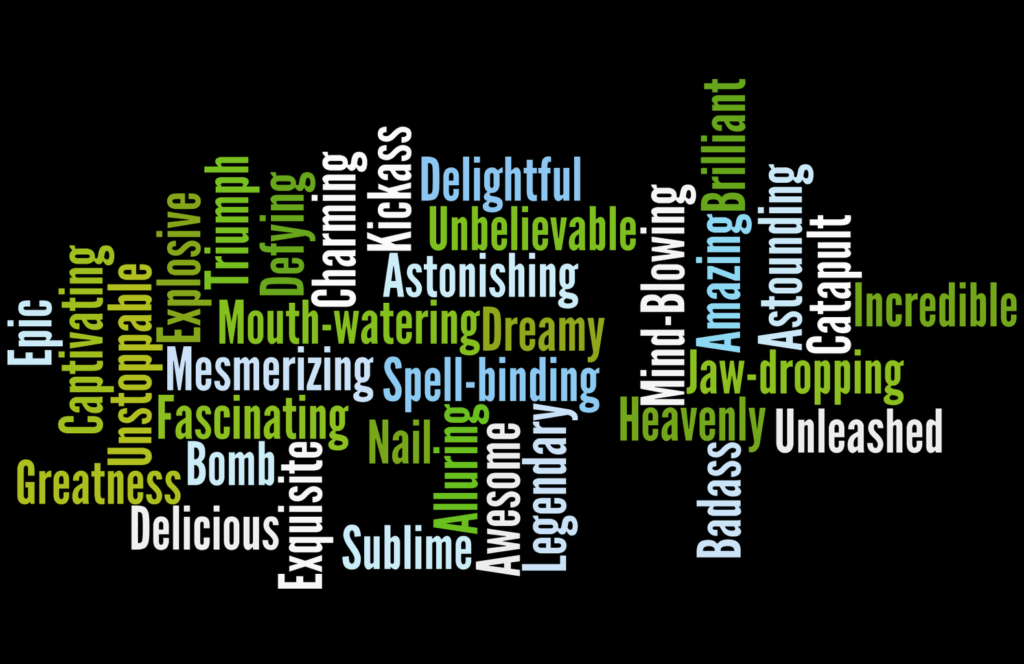
Here are examples of encouraging power words you can use in your content:
Courage
Quick-witted
Gorgeous
Command
Phenomenal
Prevail
Glory
Genius
Cheer
Breathtaking
Bright
Brilliant
Celebrate
Fortunate
Power-up
Glorious
Fulfill
Notable
Ferocious
Optimal
Persuade
Prosperous
Mind-blowing
Excellent
Bold
Beautiful
Booming
Lucky
Fierce
Foxy
Curiosity Words
Retailers are using mystery appeals to create curiosity that leads to purchases according to research. Curiosity is a natural urge to find out more or experience more and it’s an urge that must be satisfied. With this knowledge, marketers can use the power words to ignite curiosity and make their content or product irresistible.
The power words can make your product, service, or content intriguing and they are effective in conversions. Here are some examples:
Sneak-peek
What no one tells you
Unseen
Controversial
Cringe-worthy
Little-known
Concealed
Confession
Undiscovered
Shocking
Smuggled
Undercover
Blacklisted
Censored
Classified
Illegal
Illusive
Let’s Make Your SEO & Content Work Better for Your Business
The word lust can have more than one meaning to different people. In marketing, it can mean something that someone truly yearns for. You’ve seen magazines selling by using a sexy person’s image on the cover. Someone can yearn for a certain type of body or hair or style. Lust power words can also be considered words that satisfy a desire. They are used to trigger this craving in the audience.
They can attract and retain attention which can eventually lead to a sale. Here are examples of lust power words:
Orgasmic
Climax
Sensual
Alluring
Beguiling
Pleasurable
Passionate
Deliriously
Mind-blowing
Excite
Fascinate
Charming
Heavenly
Sinful
Magnetic
Crave
Obscene
Sleazy
Mouthwatering
Exposed
Frisky
Hypnotic
Fear Power Words
From the fear of missing out to the fear of not knowing, this emotion can be used positively to motivate a purchase. This is not about scaring your customers away, it’s about creating a little anxiety to leverage on. For instance, you can run a promotion and create a little fear or anxiety of clients missing out on a lifetime opportunity.
It’s about making the target audience take a chance and avoid losing out. Here are excellent examples:
Warning
Looming
Worry
Last chance
Suffering
Invasion
Dangerous
Hazardous
Trap
Hack
Drowning
Devastating
Scream
Shame
Beware
Nightmare
Blunder
Bloodcurdling
Collapse
Poor
Plunge
Played
Plummet
Anger Words
Anger or rage is another emotion that creates urgency and makes a person want to do something even more. As much as rage or anger are considered to be negative emotions, the urgency they create is what marketers leverage as a persuasive tool.
In marketing, anger power words are ideal when you want to nudge your audience to take the next step. This is especially easy when you are offering them a solution to a problem they might have failed to solve before.
Here are examples of anger power words:
Weak
B.S
Worst
Broke
Vicious
Morally bankrupt
Raise hell
Loser
Lies
Knock out
Useless
Trash
Infuriating
Snob
Stuck up
Suck
Smug
High and mighty
Hate
Harass
Foul
Disgusting
Ruined
Scam
Slam
Repelling
Demolish
Crush
Preposterous
Corrupt
Coward
Brutal
Payback
Barbaric
Beat down
Obnoxious
Annoying
Pesky
Your Traffic Drop Probably Isn’t Random
Most ranking losses come from overlooked SEO issues. Download my Complete SEO Audit Checklist to quickly identify what’s broken, what’s underperforming, and what to fix first to regain visibility.
You have Successfully Subscribed!
Greed Words
There’s a little greed in everyone. You can increase it in your audience by using greed power words. What they do is make your product or service seem incredibly valuable and incredibly scarce. And when your audience realizes this, the little greed in them is increased and they will want your product or service while they can get it.
Marketers can use these words to compel their buyers or subscribers to act quickly or they will miss out on a huge save-up offer.
Such words include:
Bonus
Freebie
Gift
High-paying
Special
Before
Triple
Wealth
Cheat sheet
Boost
Undefeated
Surge
Exclusive / Exclusivity
Elite
Boss
Unbeaten
Elegant
Clever
Genius
At the top
Optimal
Bold
Amplify
Fortunate
Successful
Value
Hurry
Expires
While they last
Sale ends soon
Don’t miss out
Reduced
Savings
New
Extra
Double
Safety Power Words
It’s of paramount importance that you make your prospective buyers feel safe in dealing with your business. After all, everyone wants to feel safe and you must prove that you value each customer’s safety.
Safety power words are about reassuring your audience that they will not be risking their money or time in engaging with your brand. Such power words are meant to make the audience feel like they are being protected from some loss and therefore they are given a little push to enter this safety zone. It resumes to building confidence around your offer and brand and making them feel like it’s just what they need to be on the safe side.
Examples of such words include:
No risk
Trustworthy
Approved
Track record
Money-back
Try before you buy
Accredited
Fully refundable
Official
Cancel anytime
Science-backed
Genuine
Recognized
Scientifically proven
Best-selling
Foolproof
Research
Authority
Case study
Ensured
Well respected
Professional
Bankable
Authentic
Anonymous
Reliable
Refund
Endorsed
Studies show
Certified
Money-back
Risk-free
Expert
Backed
Privacy Protected
Legitimate
Lazy Words
Nobody likes to do more than they need to, and this is where the power of words delivers efficiency. How does this happen? They simply make your audience grab the chance you’re giving them quicker to avoid doing something more in the near future and to also fulfill their current need easily.
Marketers use sloth power words to keep the audience motivated to take the next action and gain what they want with minimum work. They make the call to action more digestible and your content in general very enticing.
Did you know that vanity is a great driver of purchasing behavior? Studies have shown that people buy things that make them feel and look good.
Vanity power words truly carry the power of words and this is why they are some of the most used power words in lifestyle and beauty niches. People want to look and feel successful and marketers use these words to help convert easily.
Here are a few examples of vanity power words:
Remarkable
Fearless
Sensational
Ahead of the game
At the top
Strong
Attractive
Beautiful
Gorgeous
Genius
Quick-witted
Elegant
Smart
Sassy
Fortunate
Awe-inspiring
Elite
Super-human
Cheer
Brilliant
Kick ass
Jaw-dropping
Handsome
Drop-dead
Valor
Successful
Bravery
Mind-blowing
Powerful Words That Give Power
In marketing, making your prospective buyers feel powerful is more effective in converting them than exerting power over them. When you make your target audience feel powerful, you’re actually building trust and confidence in your relationship with them.
Taking away the feeling of vulnerability and replacing it with a sense of power makes them confident enough to take the next action.
Here are examples of power words that make people feel powerful:
Conquer
Potential
Upper Hand
Mighty
Supreme
Forceful
Elevated
Able
Control
Influence
Accomplished
Paramount
Command
Clever
Prevail
Power Words That Exude Confidence
Besides making your audience feel powerful, you need to exude authority and confidence in them. You want them to respect and trust your brand without making them feel inferior. You need to use power words that make you come out as an expert in your field. This will form the ground on which you’ll sell better.
Such words include:
Confirmed
Accurate
Data
No Doubt
Unparalleled
Proven
Scientifically Shown
Dominate
Percent
Guarantee
Legit
Actual
Agree
Power Words That Build Trust
All your marketing efforts must be grounded on trust. Without trust, you will not be able to convince anyone to look at your product or service. No matter where your content goes, it must be shown that you can be trusted.
You can make people feel safe, greedy for your product or any of the other emotions discussed above, but trust is more than just an emotion. It’s the foundation of your entire marketing effort.
Here are some power words that will cultivate trust in your target audience:
Verify
Tested
Pay zero
Bona fide
Results
Authoritative
Ironclad
No questions asked
Well respected Worldwide
Dependable
Fully refundable
Recession-proof
No risk
Secure
Protected
Track record
According to
Scientifically proven
Your Traffic Drop Probably Isn’t Random
Most ranking losses come from overlooked SEO issues. Download my Complete SEO Audit Checklist to quickly identify what’s broken, what’s underperforming, and what to fix first to regain visibility.
You have Successfully Subscribed!
How and Where to Use Power Words
The power of words is most effective when used the right way. Here are various places and ways you can make the most of power words:
Power Words in Brand or Business and Blog Names
How can you stay etched in people’s minds? It’s through using powerful words in a memorable way in both your business name as well as in your blog or website name. Make yourself easy to be remembered but ensure it describes who you are or what you do.
Power Words in Product Names and Descriptions
It’s possible to use power words in product descriptions and product names. They add that needed punch to arouse the right emotions in your customers. And give the customers that nudge to take the next action without a doubt.
This is where copywriters come in handy. They use powerful words to tell the customer beforehand, what to expect from the product. What is your product promising to deliver? What solutions are you giving to them?
In the product description, power words will immediately attract attention and evoke the required emotion that will lead to the final action of purchase.
Power words ensure that your product name and description are not boring.
Use Power Words on Landing Pages
Once a prospective buyer lands on your website, then it means you’re the only one they’re listening to at that time. It also means that it is your chance to make a great first impression, and power words will help you stand out.
Here is where you leverage the power of words to ensure customers convert before leaving the page.
Your landing page headlines, content as well as sub-titles must all capture the visitor’s attention and arouse the right emotions and interest to purchase or subscribe.
You can A/B test various power words to see which ones work most effectively because again, your landing page is your converting machine. Win them with the power of words in a way they cannot resist. Use words that will make them keep exploring for more.
Amplify Your Headings and Sub-headings Using Power Words
The purpose of titles and sub-titles is to grab your readers’ attention fast. This is most effective when you present your irresistible offer upfront. And what will make the reader dive in to get more information? An attractive headline with power words will make or break your content.
Use suitable power words to draw your readers in to look for more. You can also include a CTA in your headline or sub-headline to boost the chances of conversion.
In sub-headings, power words are the first things the reader notices before committing to reading the content. They scan your entire content by reading the sub-headings. Catch their attention using the ideal power words that hint at what the piece is talking about.
Power Words in Email Subject Lines
Again, there is no difference in how you use the power of words in the headlines above. A powerful subject line packed with the most appropriate power words can lead to the opening of the email or be deleted.
Don’t waste your efforts on creating a great list but then use mediocre subject lines that won’t get you any eyeballs.
Use promising power words to get more engagement and clicks on your emails.
Use Power Words in Testimonials
Make social proof as credible and real as possible. Remember over 90% of customers read online reviews before buying or subscribing to a product. So, if you have a couple of testimonials on your website, pick and use the ones with invaluable power words.
These will help transfer the positive feelings from the existing buyer to the potential buyer and eventually boost your conversions as well as credibility from users.
Power Words in Opt-In-Boxes
Most websites use the opt-in feature to draw in their customers and motivate them into taking a certain action. For instance, if they want to increase subscribers, sign-ups, or whatever action they may want the customers to jump into.
Using power words makes this very easy since it will trigger the right emotions to get them into action. So, say it right with the power of words.
Amp Up Your Sales Pages with Power Words
The main purpose of the sales pages is conversion. Your sales copy needs to be as convincing as possible in order to nudge your visitors into buying your product or service. To convince them sufficiently, power words must be used persuasively on your sales page.
When the power of words is well used, you will have higher chances of not only sparking a real interest from your buyers but ultimately converting.
Call to Action
Similar to your sales page, your call to action is truly where the action is. It needs to be the most powerful call in order to inspire your prospective customers into clicking through.
Using power words in your CTA requires skill because it naturally uses fewer words. The selection of words you use needs to be able to give the final punch into action. And the inclusion of power words makes it even easier to convert your prospects.
Power Words Best Practices
There are best practices when using power words, to ensure effectiveness. Luckily for you, they are not a myriad, but only three best practices that are easy to observe when using power words:
Do Not Overpromise
It is one thing to promise heaven but it’s another thing to deliver it. While trying to make your work as compelling as possible, do not overpromise. This can be quite underwhelming to your potential customers, and it will give the impression that you’re not all that bravado.
Make claims that you can actually deliver on. Don’t just use power words for attention. You need your customers or clients to come back and say the actual value of your offer will win their trust and they will come back for more.
Simply put don’t just use power words as click baits.
Do Not Overdo Power Words
Less is more, it’s how you use them that counts. Try using a few words of power in a skillful manner that will elicit the right emotions without overdoing them.
Readers and people, in general, have learned to quickly identify sales content and they drop it immediately. Overusing power words can be annoying to the reader. It will also give the impression that you’re uber-desperate. Your content will stop winning attention and instead look like a concoction of spam.
Craft your power words in a sparing but skillful manner; balance them well throughout your content, this is how it will be most effective.
Don’t Exaggerate the Urgency
Yeah, we said urgency is a key ingredient in converting. However, if you overdo it, it will seem simply like marketing hype.
This is particularly so when it comes to emails, CTAs, and opt-in buttons. Urgency does increase the likelihood of a click-through and conversions, but only when used effectively, e.g. “Before the Offer Ends”, this can definitely get results. But “Last Chance Ever In Your Life” is truly a failure. Be reasonable with your sense of urgency to have an impact.
Conclusion
People are naturally receptive to certain words that create certain emotions. They easily go with the flow of emotions that are created by the power of words. Understanding this and using this knowledge to pick the right power words can be very valuable to your brand marketing.
Power words are a simple hack that boosts the effectiveness of your content marketing campaign no matter where you’re using it. Power words will get your prospective buyers clicking –through for more.
The trick is in following the best practices listed above and using them responsibly through all the categories of power words given above.
Once you master it, you will see an improvement in terms of the subscribers you get, the traffic on your website, and finally, your conversions. Simply put, power words will give you maximum impact.
We use cookies on our website to give you the most relevant experience by remembering your preferences and repeat visits. By clicking “Accept All”, you consent to the use of ALL the cookies. However, you may visit "Cookie Settings" to provide a controlled consent.
This website uses cookies to improve your experience while you navigate through the website. Out of these, the cookies that are categorized as necessary are stored on your browser as they are essential for the working of basic functionalities of the website. We also use third-party cookies that help us analyze and understand how you use this website. These cookies will be stored in your browser only with your consent. You also have the option to opt-out of these cookies. But opting out of some of these cookies may affect your browsing experience.
Necessary cookies are absolutely essential for the website to function properly. These cookies ensure basic functionalities and security features of the website, anonymously.
Cookie
Duration
Description
cookielawinfo-checkbox-analytics
11 months
This cookie is set by GDPR Cookie Consent plugin. The cookie is used to store the user consent for the cookies in the category "Analytics".
cookielawinfo-checkbox-functional
11 months
The cookie is set by GDPR cookie consent to record the user consent for the cookies in the category "Functional".
cookielawinfo-checkbox-necessary
11 months
This cookie is set by GDPR Cookie Consent plugin. The cookies is used to store the user consent for the cookies in the category "Necessary".
cookielawinfo-checkbox-others
11 months
This cookie is set by GDPR Cookie Consent plugin. The cookie is used to store the user consent for the cookies in the category "Other.
cookielawinfo-checkbox-performance
11 months
This cookie is set by GDPR Cookie Consent plugin. The cookie is used to store the user consent for the cookies in the category "Performance".
viewed_cookie_policy
11 months
The cookie is set by the GDPR Cookie Consent plugin and is used to store whether or not user has consented to the use of cookies. It does not store any personal data.
Functional cookies help to perform certain functionalities like sharing the content of the website on social media platforms, collect feedbacks, and other third-party features.
Performance cookies are used to understand and analyze the key performance indexes of the website which helps in delivering a better user experience for the visitors.
Analytical cookies are used to understand how visitors interact with the website. These cookies help provide information on metrics the number of visitors, bounce rate, traffic source, etc.
Advertisement cookies are used to provide visitors with relevant ads and marketing campaigns. These cookies track visitors across websites and collect information to provide customized ads.