Which are the elements of the best infographic and how to create infographics? I have been fascinated by infographics for a while, then I thought I would like to try my hand and create one myself. Even if I am not exactly a visual person, I am a great fan of the written word primarily, infographics are the exception to the rule in my case. I am not a professional designer, I am just a person with a sharp aesthetic sense. Back to the initial question, let’s explore a bit.
Disclosure: This article may contain affiliate links. If you decide to make a purchase using one of these links, I’ll make a small commission without impacting the price that you will pay. I recommend just services or products I find useful and that I have tested or currently use.
All infographic makers preach that their tool helps you build an infographic in 15-30 min, well, this is an exaggeration, only if you want to gather some elements or you are just referring to the final stage of putting together the design for the infographic, otherwise is far from being that simple.
Let’s Make Your SEO & Content Work Better for Your Business
In my adventure of finding a good infographic tool I tested several free infographic makers and here is what I discovered:
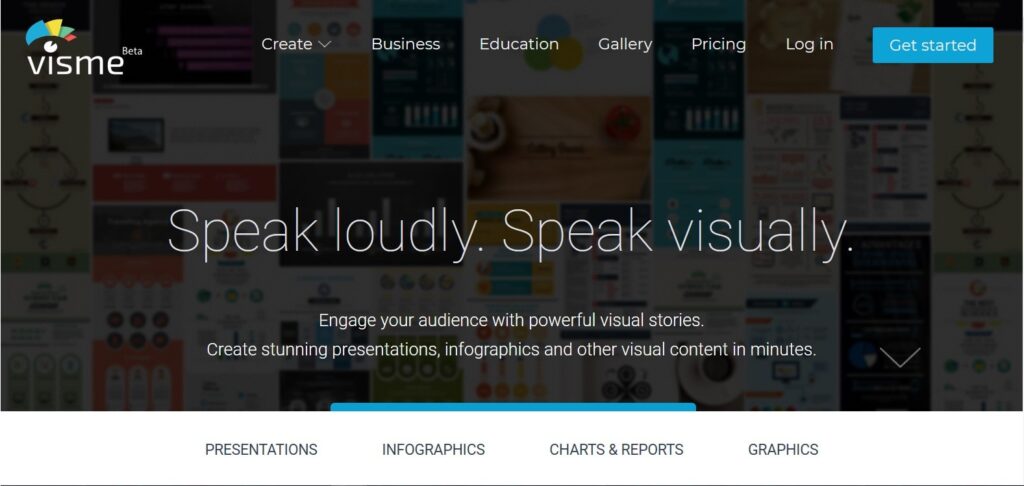
Visme is a reliable tool to create the infographic you desire, the best infographic. There is a decent collection of free infographic templates from which you can pick up one that fits your taste, or you can create your own from scratch. You have the option to download for free the infographic created at a decent resolution.
Their distinctive advantage is the possibility to insert animations and make interactive infographics. If you share your infographic as a URL your visitors will be able to see these animations.
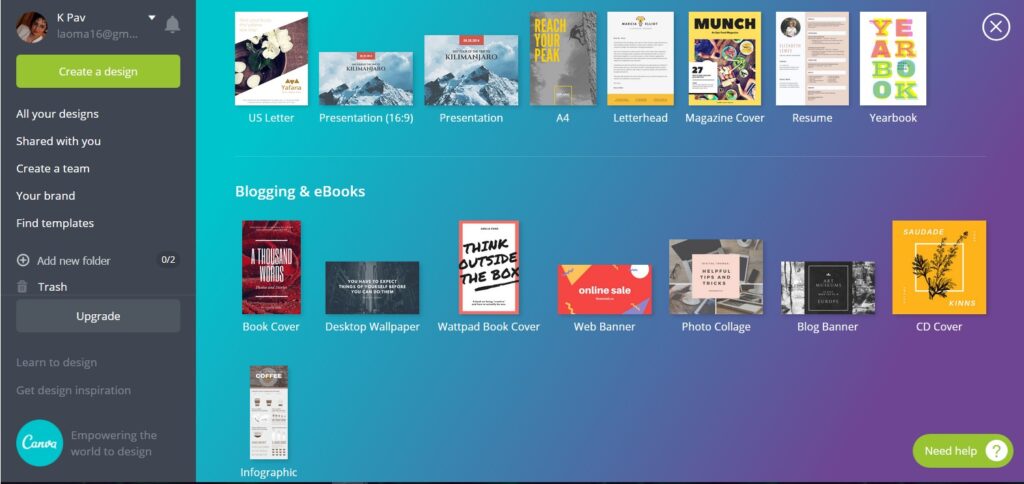
Canva is among the most popular tools for design and free infographic makers, if you are not a professional designer. Among its capabilities counts infographic designing. They put at your disposal a large collection of free infographic templates, the largest among the applications I tested, infographic examples, a plethora of fonts, and more than one million images. It has a well-organized and intuitive interface. You have the possibility to download your work in several formats or share it.
If you want to create your own infographic as a beginner, this is the best infographics maker to start with and you have a pretty good chance to create an appealing design.
Piktochart is also a good infographic tool, it has a rich collection of free infographic templates to choose from, updated weekly. You can make your own infographic from scratch or use built-in blocks, icons, charts, maps, and an extended selection of photos. You can download your creation as PDF or embed it into your site or as slide show.
And beside some good infographic tools, I also came up with one that succeeded the exploit of offering me one of the most unimpressive user experiences I had in years. I refer to Venngage, despite having a decent template collection and infographic examples, they provide some poor client service and use some misleading advertising.
They claim it’s free to test their services, when in fact it’s not, it’s impossible to export or share an infographic if you don’t have a paid subscription. And they also have various limitations, like the number of items you can upload. All in one, an infographic maker app I will not try again any time soon.
That our brains process better images, it’s not a secret anymore. And this is one of the reasons that explain the success of infographics, as they are visually interesting content marketing pieces that interpret in a simple and digestible manner, complex concepts or data sustained facts. “Publishers who use infographics grow in traffic an average of 12% more than those who don’t,” says HubSpot. It’s a differentiation element that most often stands out.
And in many cases, infographics generate lots of buzz, like these study cases about infographic ROI from Vertical Measures. Or this one from MobileCause which generated over 700 leads.
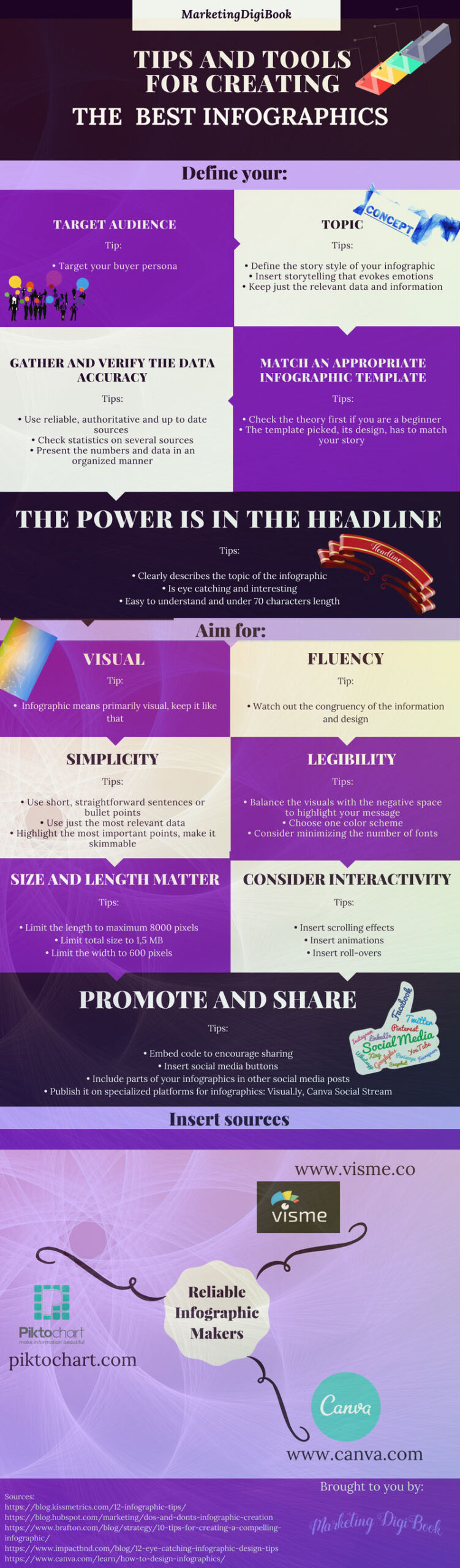
Anyway, simply gathering together some data and some images will not guarantee the success of your infographic. You want the best infographic you can create to appeal to your audience. There are some tips on how to create infographics online, and some steps to create the best infographic that you should carefully follow, to see valuable results and return on investment.
Keep reading:
Define the Target Audience for Your Infographic
To obtain the best possible results from your infographic, make it specific, tailored, and personalized to your buyer persona’s interests and needs. Your infographic should be relevant to your target segment, not to the whole world.
The highest value leads, the highest traction, attention, and even virality, will be generated by your target audience. Conceive a creative format that will resonate with your audience.
Relevant tip to make your own infographic:
Target your audience
Define the Topic, the Subject of Your Infographic
Choose a topic that resonates with your audience, and that raises her interest. If it’s possible to be a trending story even better.
Your infographic should have a compelling central idea, and be coherent and attention-grabbing from the very beginning. Its primary purpose is to educate and inspire.
Relevant tips:
Define the story style of your infographic – serious, surprising, funny, exploratory
Insert storytelling that evokes emotions, not just numbers and data
Keep just the relevant data and information
The Power is Hidden in the Headline
The headline makes and breaks. If your headline is not powerful enough, your infographic won’t be viewed. As simple as that. In fact, your title should be brilliant, or close to it.
Relevant tips to create your own infographic:
Clearly describes the topic of the infographic
Is eye catching and interesting.
Easy to understand and under 70 characters length.
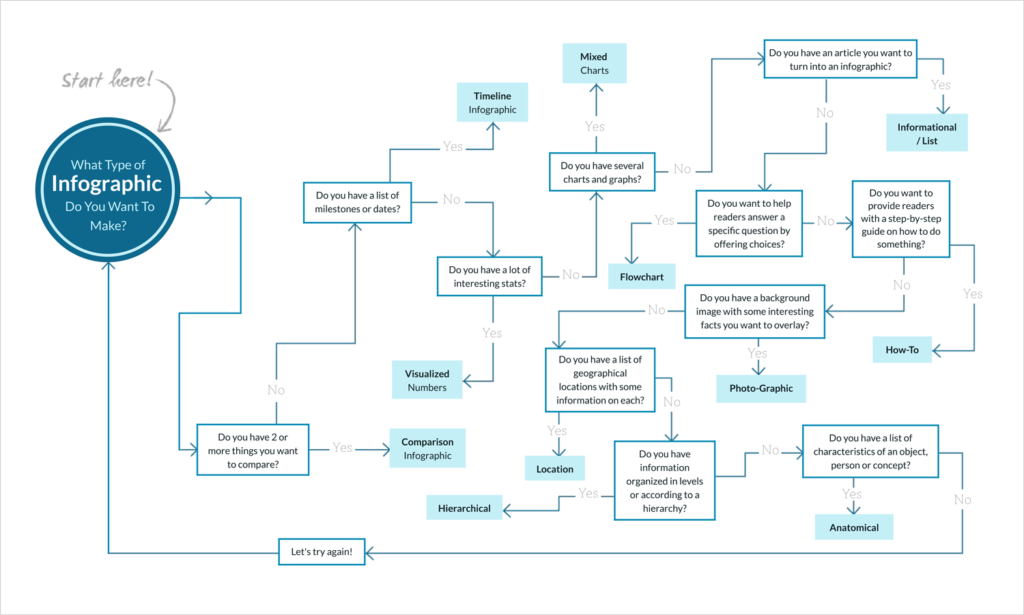
The template and the format you choose for your infographic need to be fit for its idea and story. And should help you adequately convey the main idea to your audience. Infographic makers offer a variety of customizable templates, take your time and choose one that best matches your infographic story. If you want to help your readers answer a certain question by offering various options, you will choose a flowchart, not a “how to” template.
Relevant tips:
Do your homework and check the theory if you are a beginner. Take a look at a types of infographics presentation.
The template picked, its design, has to match the story you want to tell. If your infographic speaks about great achievements, having a dark crusty background is not exactly the best option.
Personalize the template you choose according to the purpose of your infographic
Gather and Verify the Accuracy of Your Data
The major advantage of infographics is that they present data and numbers in an attractive and interesting way. If your infographic presents many numbers and figures, it is worth to double check them.
Relevant tips for best infographics:
Use reliable, authoritative and up to date sources for your data
Check statistics on several sources
Present the numbers and data in an organized manner
Aim for Simplicity
As always less is more. A minimalist approach is most often the best way to create your infographic. The scope of infographics is to stylize complex ideas into simple visuals. So, just keep it succinct if you want to impress, and focus on just one point without confusing concepts, jargon, long text, or loads of data.
Relevant tips for best infographics:
Use short, straightforward sentences or bullet points
Use just the most relevant data
Highlight the most important points, make it skimmable
Infographic means an emphasis on visual pizazz. Don’t clutter it with too much text. Find the right balance between the two, but keep the written info to the minimum. Embed your infographic with attention-grabbing images to make your data more interesting and engaging.
Relevant tip for best infographics:
Infographic means primarily visual, keep it like that
An infographic is a sublimation of best practices in design. Negative space is important for the balance of your infographic layout. Effective infographic design is fluent and pleasant for the eye, not a noisy conglomerate of visuals.
Relevant tips for best infographics:
Balance the visuals with the negative space to efficiently highlight your message
Choose one color scheme with a few colors and keep it that way
Consider minimizing the number of fonts used, one maximum two should be enough
Aim for Fluency
An effective infographic matches perfectly the design and the cognitive information. They must flow and combine harmoniously to convey the fluence of the infographic and smoothly drive the viewer through the thought process. The best infographics tell a good story, completed by a great graphic design.
Relevant tip for best infographics:
Watch out the congruency of the information and design, their fluency
Consider Making Your Infographics Interactive
Visuals are an essential learning tool, no doubt about that. But it’s also true that kinetic learning is more powerful, humans retain better while executing an activity. Thus, adding interactivity to your infographic should increase its effectiveness. It may offer control to the user and provoke imagination in ways that a static infographic is just not capable of.
Add scrolling effects to spice up the users’ experience and together with animations to engage them further. This interactive infographic is a great example. Other options to make users involve and participate are to insert roll-overs or clicks to discover supplementary information. Or to insert their own data, like in this already famous infographic comparing your revenues to those of John Paulson. It’s a great infographic idea, and also great to destroy your day, duh! (Do yourself a favor and don’t try it when you have a bad day.)
Relevant tips for best infographics:
Insert scrolling effects
Insert animations
Insert roll-overs
Size and Length Matter, So, Keep an Eye On
Infographics during the publishing process might suffer resizing, verify that the readability is not damaged. The smallest fonts need to be visible without effort.
Infographics are meant to be long, but too long means losing your audience on the way. Users might have a slow connection, and a heavy file translates into a poor user experience.
Relevant tips for best infographics:
Limit the length to maximum 8000 pixels
Limit total size to 1,5 MB
Limit the width to 600 pixels
Insert Sources
If you are relying heavily on data in your infographic, citing sources is a must. It will generate trust and authority for your infographic. You can cite the sources at the end of the infographic or even within its body if that doesn’t disturb the general flow.
Promote and Share Your Infographic
Infographics don’t become viral and popular by default, they need promotion. You know the dictum “a piece of content marketing means 20% creation and 80 % promotion”, infographics are no exception. As a consequence you need to share your infographic on social media, data say infographics are three times more shared on social media platforms than other content marketing types. Publish it on your site, insert social sharing buttons, reach influencers in your niche and ask them to spread the word, and ask your audience to share it.
Include parts of your infographics in other social media posts
Publish it on specialized platforms for infographics: Visual.ly, Canva Social Stream
Since visual content marketing is gaining momentum, infographics are still raising interest and bringing results. Not to mention they are a great way to stand out and engage your audience.
And these days is really possible to create outstanding infographics without being a designer, just by using a reliable infographic maker tool and respecting the tips for the best infographics listed above. Have you discovered any other tips or tools that you would like to share?
Are you new to Facebook advertising and searching for simple Facebook ads for the dummies guide? Then this article will give you all the important expert advice that you need.
There is literally a myriad of ad choices today, both free and paid and according to Adweek, tables turned in 2017 when digital advertising exceeded TV advertising. With the huge amount of content being thrown around each minute, consumers have become fatigued and their attention span has become shorter than ever, just about 8 seconds.
But this can change if you can better understand your consumer’s purchase behavior and motivation by leveraging the data shared by tech research and insights discovered lately and using this to give your consumers exactly what they need when they need it and where they need it.
Disclosure: This article may contain affiliate or sponsored links. If you decide to make a purchase using one of these links, I’ll make a small commission without impacting the price that you will pay. I recommend just services or products I find useful and that I have tested or currently use
Let’s Make Your SEO & Content Work Better for Your Business
Advertising is all about giving your consumers an enjoyable experience that will convert into a purchase. And this is why Facebook ads remain the best overall ad channel for you to use.
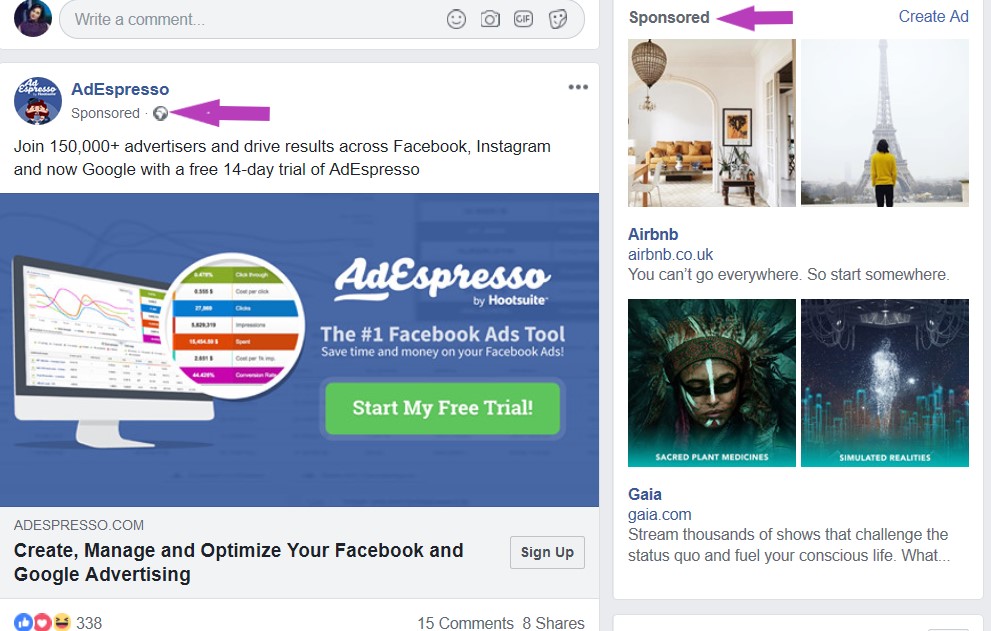
Which would be a simple definition of Facebook advertising: the action of paying to place advertising/ promotions in Facebook feeds targeting a specific audience.
Here are a few reasons why Facebook ads for dummies is your best choice for the moment and in the near future:
Why You Should Use Facebook Advertising
World Wide Customer Reach
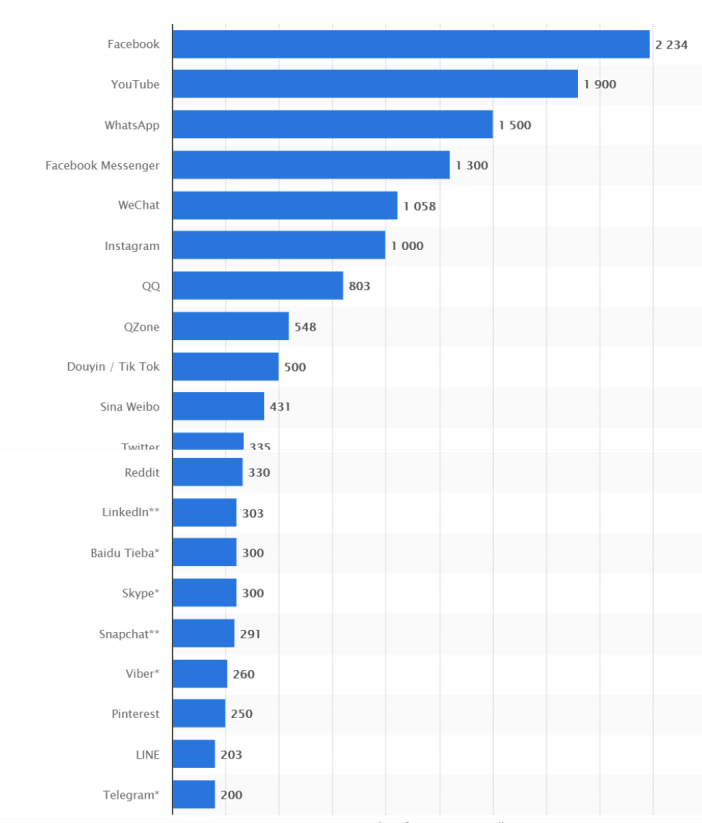
With over 2 billion active monthly users, Facebook remains the juggernaut in digital marketing today and possibly in the years to come. This is a huge audience with great diversity.
Taking into consideration that the ever-changing algorithm that Facebook uses transforms the organic connection with fans into a struggle, Facebook ads are the remaining substitute.
2. Simple to use
You can create ads fast and easily from your Facebook page. You can use either the “Boost Post” or “Promote” button with a few clicks. But everything highly depends on your objectives.
3. Split testing
Facebook allows you to test your ads on various bespoke audiences and core elements of an ad included in one campaign. What this means is that you get valuable data on your target demographic and this way you create content that’s relevant to them and the efficiency of your ads improves.
4. Lead generation
Facebook lead ads make it simple for your potential customer to give you information through the lead ad form that appears on their screen irrespective of the gadget they’re using. Here customers can request more information on your products or services directly. This engagement with the customer is something that you’re going to need.
5. Conversion measurement
Facebook provides metrics, insights, and other tools that you can use to measure your success and the return on ad investment for your campaigns. This way you can understand the effectiveness of your ads and the actions that drive success.
6. Your ads are tailored to your specific goal
Facebook provides an array of advertising objectives; this means that you’re able to choose the options that best suit your brand’s goal.
7. Cost effective
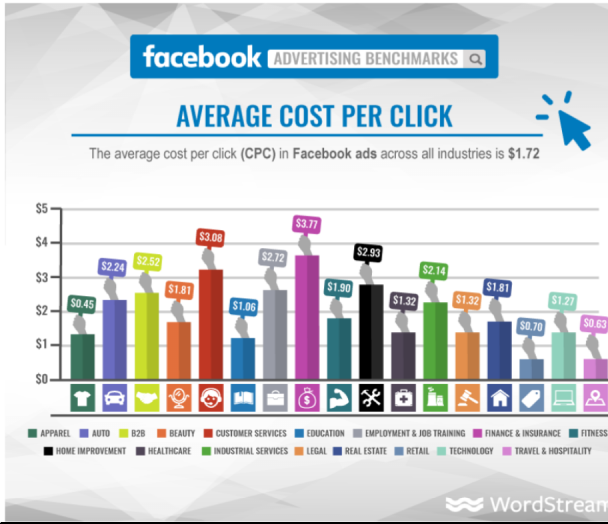
You can spend up to a minimum thread placed between $1 to $5 a day based on your budget and ads campaign, in order to manage your Facebook advertising costs. And as you proceed you can adjust, pause or stop ads as finances change in your business. These features make Facebook ad pricing adjustable and cost-effective.
Facebook ads can be very cost-effective if you approach them the right way and you know what you are doing. And the reverse of the medal is also true, you can lose lots of money if you approach them in an amateurish way or treat ads superficially.
8. Targeting capabilities
You can target your audience by location, gender, interests, age, demographics, or even purchase history. This means you can engage your target audience with a campaign that’s tailored just for them.
This list is not exhaustive, Facebook’s ads advantages are so much more and keep getting better day passing.
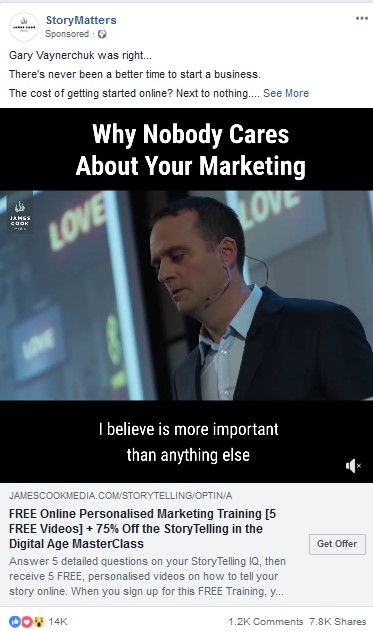
Here are some examples of Facebook ads and Facebook video ads:
Taking into consideration that advertising budgets are continuously increasing, there should be a solid reason behind this.
If properly managed Facebook ads offer small businesses a relevant competitive edge. Here is an impressive Facebook ads example that illustrates the success you may reach: an eCommerce company Barbell Apparel betted on Facebook ads to surpass their product lunch goal 49 times.
So, with this knowledge in mind, how then do you create a winning Facebook ads campaign?
Ouch, tough question!
How to Create Facebook Ads Step-by-Step and Ads That Convert
Facebook advertising comes in two categories. There is paid advertising and organic advertising. They’re both very effective if done well, except that with the free advertising method, it will be required much more time to deliver consistent results. The paid method on the other hand means you get a swift and easier start but at a cost.
Some of the options offered by Facebook on the paid ad method include:
Boosting brand awareness
Boosting videos
Boosting app installs
Boosting page likes
Boosting page visibility
Boosting engagement
Free Facebook ads give you these options to promote your ad:
Sharing content
Joining groups to market your brand
Manually inviting people to your page
Engaging people in discussions
As you can see, free means more work. Notwithstanding all these, here are the steps to follow for either method you pick, to help you meet those targets:
Facebook ads for dummies: Identify your objective
Before starting your ads campaign, you must have an objective that will help you become visible to your prospects and that will make them think about your product. This objective must be backed up by a strategy. Ask yourself the following questions:
What’s your specific product?
Who are you targeting?
How is the product used?
What is the goal of the campaign?
Which are the pain points and objectives that your product solves?
What’s your budget?
The bottom line here is that your ads should generate meaning and purpose to your target audience; they should add value and at the same time nurture your credibility as it opens your relationship with the future consumer.
Your ad objective could be:
Store visits
Conversions
Traffic
Brand awareness
Engagement
Lead generation
Facebook ads for dummies: Develop your strategy
If this is your first attempt at this, you may feel a little overwhelmed on how to balance the Facebook posts, videos, infographics, and even how to keep creating new relevant content. But here are a few things to help you through:
Understand the customer journey by knowing the best way to reach them, and then include emotion and expectation to make your content relevant.
Know your placement, will it be a Facebook page? Instagram? Audience network? (as explained below)
Make sure your ad communicates your brand’s core values.
Be ready to adapt to the ever-changing data, you’ll be more effective with time.
Focus on your ideal client and let that ad speak to their goals, challenges, and opportunities. b. Choose the placement of your ads
Placements are simply where you want your ad shown. It is the place where your target audience spends their time the most. You can allow Facebook to show your ads where they‘re likely to perform best.
Depending on your goals, your ads can appear on:
Facebook – Feeds, Instant articles, In-stream Video, or Marketplace.
The good news here is that your ad can run in all the above options.
Facebook ads for Dummies: Have a budget
Are you wondering how to allocate a budget, how much to what? Or how to choose your budget scheduling in your Facebook ads manager?
Conversion is always going to differ, so testing work is absolutely necessary. Here are experts’ recommendations during the test period:
Let the ad run for 4-7 days to give Facebook the optimum time to optimize.
It’s ok to spend $5 to $10 per ad but if your budget can allow for more, the better and quicker the results.
Once you get into the budget and schedule part of the Ad Set, you have the daily option and the lifetime option. The daily budget focuses on spending a bit each day while the lifetime budget is for the entire campaign period and can end up using more money. For you as a Facebook ads beginner, the daily budget is advisable.
The benefit of testing your ads will help you with the Facebook ads budgeting phase, as you’ll find out which ad performed the best, and then you can scale it up and pivot on it.
v. Carousel (lets you show several pictures or videos)
vi. Slideshow
vii. Lead generation ads
viii. Offers
ix. Post engagement
x. Event responses
xi. Page likes
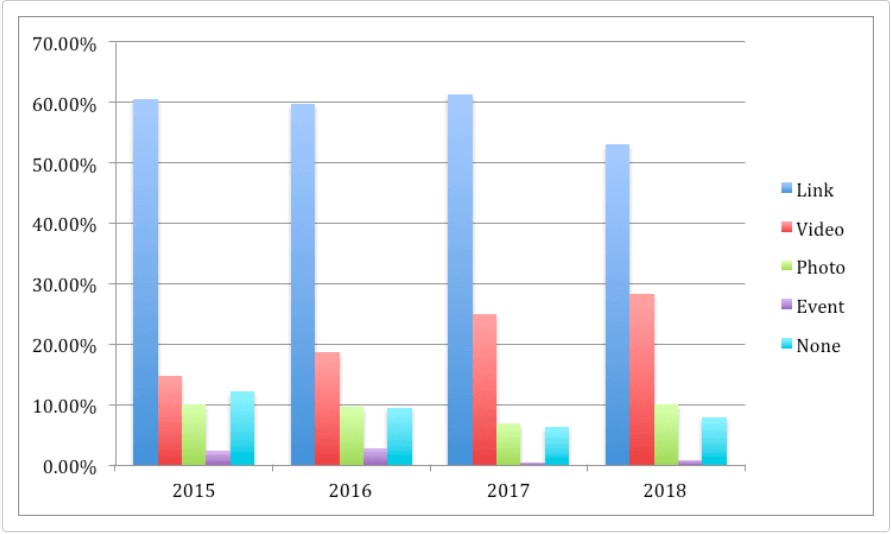
Each ad type offers unique advantages and depends on your ad’s goal or objective. That said, Video ads and Carousel are known to have the highest engagement.
Evolution of the types of Facebook ads used by companies. Source: Adespresso
The next stage of this Facebook ads for dummies tutorial is to create the ad itself.
Now, let’s create that first winning Facebook ad.
Consider these key strategic steps:
a. Define Your Sales Funnel
The funnel is a set of steps a user is guided through before they reach the conversion level. So, then it’s obvious that your Facebook ads success narrows down to having a high-converting funnel. But how do you build a high-converting funnel?
First, you attract customers with valuable content that solves their problems.
Then encourage action by building a simple emotional and compelling landing page that will quickly create a connection.
After that create a content plan that will resonate with your audience by knowing precisely what they will need or want at each conversion stage.
b. Proof of concept
This simply means that by the time you’re creating this Facebook ad, you’re positive that people actually need or want what you’re selling.
c. Install the Facebook Pixel
This is a small piece of code that acts as an analytical tool, allowing you to measure the effectiveness of your ad by understanding the actions people take on your website. Facebook pixel is vital for creating lookalike audiences. You should therefore set it up first to be able to optimize your ads to the right people.
d. Write a killer ad
The best approach here is to write your ad from up to 5 different angles that will resonate with your target audience.
e. Lookalike audience
The minute you get a good amount of conversions, then it’s time to start building lookalike audiences. Targeting people who are similar to your current customers always works.
Having worked on the above key points before creating your ad, has proven to propel Facebook ads upward leading to faster success.
Now that you have all the basic winning tips for creating a great Facebook ad, the next thing you need to know is how to manage them.
Facebook Ads for Dummies: How to Manage Your Ads
You have created a brilliant ads campaign, and it’s up and running; now you need to measure its effectiveness, influence, and overall quality.
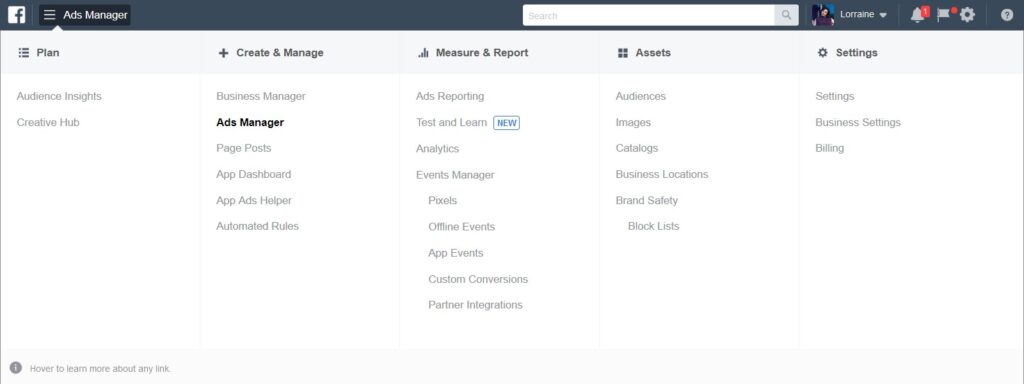
Facebook has made this easier by incorporating management tools that will help you see what’s working and what’s not. These tools also help you experiment with various images, titles, and texts to see which gets the best response.
Customize your graphs and tables to see the metrics that present valuable information for you.
Duplicate your ads, ads set, or ads campaign.
Edit your ads setting e.g. targeting and budget all from one place
Follow up on your metrics in one shot.
Business Manager
This one enables you to manage all your advertising accounts, pages, apps, and permissions in one place. Through this tool, you can:
Create and manage separate ads accounts
Get an overview of your ads impressions
Here is a simple guide on how to set up your Facebook business manager.
So, to recap the benefits of Facebook ads management tools here is a tutorial with a few tips that will come in handy and give you an added advantage for your ads:
a. Learn to keep your audience interested in your content by keeping the frequency of your post relevant. Work with seasonality, high demand, or days such as Black Friday. Along the way, you’ll learn the times that get the most response and stick to them.
b. Create an actual Facebook business page for your brand; do not use a personal account. Why? Because you will miss out on all content creation tools, promotional opportunities, and insights that come with the business page.
c. Make the most of Facebook’s targeting tools such as the bull’s eye button that you can use to set metrics for your preferred audience.
d. Make use of the call to action buttons such as the “watch video”, “sign up” etc. These buttons help you improve traffic to your page, or website or just get a good serving of eyeballs on your Facebook page.
e. Use a recognizable profile picture so that your consumers will easily remember your brand. Be it a company logo or your personal headshot of you personally as a brand, let the image you use be your very first voice.
f. Still on images, let your cover photo also be captivating in a way that catches your audience’s attention. Quality is everything.
g. Use videos. The most shared content on social media today is visual content. This could be, at least partly the reason why Facebook added the “watch now” button. So, make it fun, and informative and allow your audience to get a great experience.
h. Keep an eye on the response on your page and interact with your audience.
i. Promote your page to build your follower base and improve traffic.
When this is all done, now you enter the next phase of finding out whether all the work you put down will bear any fruit.
Facebook Ads for Dummies: How to Measure the Success of Your Facebook Ads Campaign?
Even the best strategy can be a waste of time unless you can prove that it achieved its goal. It is important to know what worked for your brand so that you can improve on it and gain even more. Measuring the effectiveness of your Facebook ads means going a little deeper than the metrics into intangible data, like branding awareness and popularity.
Important factors you may want to consider before digging deeper are:
i. Remind yourself of your goal
The only way to determine the success or effectiveness of your Facebook ads is if you compare your initial goal, with what you were trying to achieve in the first place. A goal helps you create a unique formula to measure your success.
ii. No formula fits all
Your formula as indicated above is determined by your goal therefore needs to be unique. Using the Facebook ads report, you have 45 metrics to track. These variables are numerous, so you need to evaluate the ones that make your ads successful and the ones that are relevant to your goal.
Now, with these two key points in mind, let’s look at some of the most effective metrics you can use.
Conversions
This means different things for different business folks but generally, it refers to whether the audience took the desired action e.g. product to cart or app downloads.
Reach
This means your brand is viewed and recognized by more people. How many people did your ad reach and what was the percentage of your target?
Frequency
How many times was your ad seen by the same audience?
Return On Investment
Whether your brand is new or not, ROI is an important if not the most important metric. That said, don’t get discouraged if the ROI is low when you’re just starting. At this stage brand awareness that drives engagement is equally important. It may take you a little more time to nurture the users’ interest before they make a purchase.
Impressions
This is the number of times your ad was shown.
Facebook Ads for Dummies: Supplementary Tips to Improve Your Facebook Ads Results
Take into consideration that Facebook ads are to be approached differently than Google ads or YouTube ads for example, as ads on Facebook are integrated naturally into the flows without impacting the user experience. Also, Facebook users are not looking to buy at that very moment, ads need to capture their attention and rise interest.
Most often Facebook ads fail because of this simple reason: if you just throw up some random ad to a “cold” audience, not familiar with your brand and product, you cannot expect relevant results.
Best Facebook ads are visually appealing, relevant for their target audience, and include a value proposition and a clear call to action.
Build different ad campaigns for the different stages of the sales funnel: for awareness, decision, and conversion. And custom audiences play a great role here.
When you are just starting with ads, no matter the channel, start small and expand later in the function of the situation and goals.
Never pay for impressions, you want to pay for clicks and conversions.
The right balance in the ad composition between length, words, and tone are decisive if the viewers decide to move further by clicking on your ad.
The perfect ad is a combination of a clear, relevant, five-word headline matched with a 20 words ad text that is concise and catchy (Adespresso research finding).
Link descriptions were shorter in 2018, 13 words, and the top 5 CTAs were “Learn More”, “None”, “Shop Now”, “Sign Up”, “Book Travel” among the selection of over 30 CTAs that Facebook provides. (Adespresso research findings)
Respect Facebook specs, and use less overlay text to have better results from ads.
Video ads are more and more popular, when creating Facebook video ads consider inserting the most important information in the first 5-10 seconds, using the primary colors (red, yellow, blue), and taking advantage of scrolling text.
First focus on small changes that will bring the largest wins.
Conserve what works for you in terms of ads and continuously test to improve your results. Test small variations and only one at a time.
Ad fatigue will interfere after a certain time, ads performance will decline after a few weeks or sometimes days.
Don’t stop the campaigns too early, before they touch their potential, give them at least a week to evolve.
Run the best-performing ads set until it starts declining, which might be a week, most often around 5 days.
Start to expand on your ads – increasing budgets and reach, only when your ads are generating positive ROI.
Experiment with audience targeting.
Custom audiences are the common elements for high-performing Facebook ad campaigns.
Do your best to increase the Relevance Score, as that translates into higher click-through rates and lower costs.
Facebook ads are not unfortunately rocket science, you have to cater your own way and find out what works for your business. Test everything, track and optimize continuously your ads performance
To improve direct sales via Facebook, target persons that already considered your products and visited your site.
It’s possible with Facebook to track offline conversions too.
Here’s something to note, Facebook marketing can now alert you if your ad fails to deliver and consequentially offer more details on why it failed. The new “ad run status” feature will indicate if something is not right with the ad and will list the error codes that affected its running. This troubleshooting by Facebook allows you stay on top.
Results indeed come first. Determining the proper metrics to evaluate your campaign allows you to optimize your Facebook ads strategy to improve your outcome.
Finally
If your business is new to Facebook advertising, remember that your first goal isn’t to just sell, but to promote your content that’s related to your target audience in entertaining, informative and unique ways. Your primary goal should be to get click-through and traffic to your website. Following your landing page should be properly optimized to avoid your entire effort going down the drain.
But Facebook is a great platform for businesses of all sizes and it’s a rich territory for all your marketing plans that can support your business expansion if properly used, and Facebook ads is particularly such an example.
Even if it is more and more popular, influencer marketing is nothing new. It is as old as marketing itself. The reason it’s such a hot topic today is because how consumers perceive marketing and advertising messages thanks to newer technologies. New technologies are the base that generated this major rise of social media influencers. And influencer marketing trends are to be considered if you plan to use influencer marketing for your business.
Influencer Marketing Definition
For most people, what comes to mind when they hear about an influencer is a humongous social media following. But the truth is that this is a misconception, a confusion between popularity and influence.
An influencer is someone who has the ability to change the thinking or perception of others regarding a certain thing and is able to interfere and get them to make some decisions. In marketers’ lingo, this is simply someone that helps consumers buy from you.
How Do They Achieve This?
An effective influencer must absolutely have the following pre-requisite factors:
a. Salesmanship They must have a convincing style of communication in such a way that they can confidently sell their point of view to their followers and convince them to embrace it.
b. Credibility They must prove expertise and sound judgment with a level of authority on the subject matter to gain the followers trust and confidence.
c. Reach and Engagement They must have some kind of following but with a high engagement rate. A large reach is insufficient without the engagement.
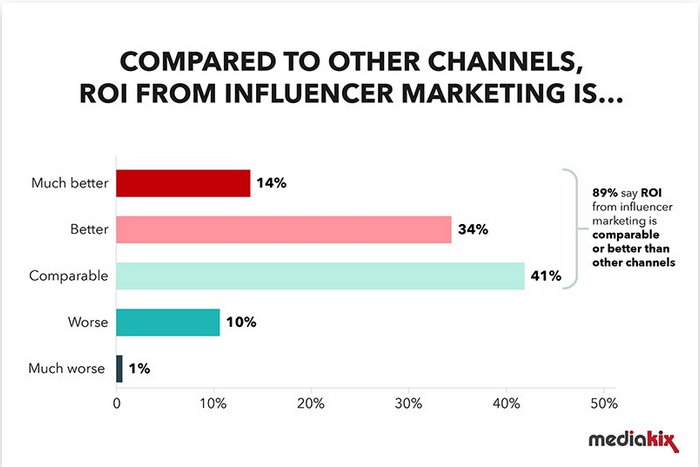
If you are in doubt let’s check some numbers, some influencer marketing statistics: No less than 89% of marketers sustain influencer marketing ROI hits the same level if not higher than any other marketing channel.
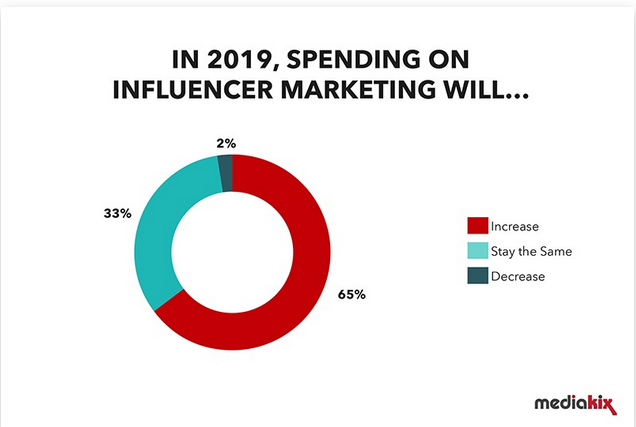
If in 2018 only 39% of companies had planned to increase influencer marketing budgets, in 2019 their number reached 65%
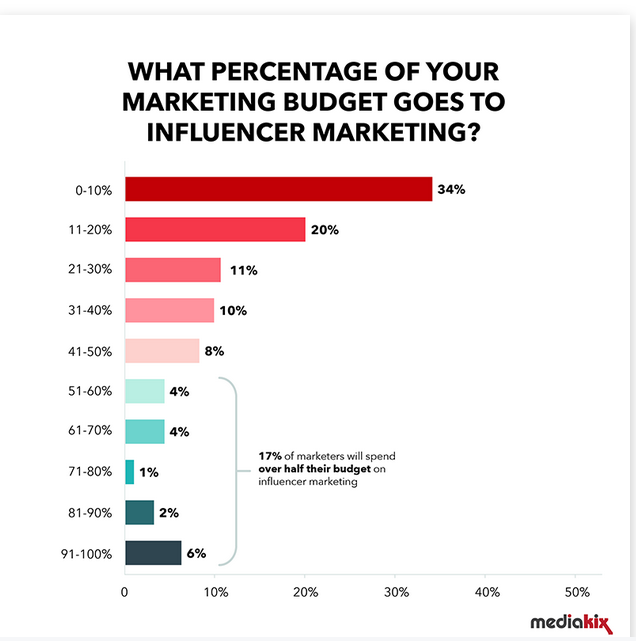
Typically, influencer marketing budgets range between $1,000 – $10,000 per year, or $100,000 – $500,000 per year.
Instagram influencer marketing ranks first among the preferred channels for influencer marketing.
How Will You Know the Right Influencer for Your Business?
With the rise of more fine-tuned technology, anyone in business must engage both traditional and modern methods of marketing albeit on varying degrees. This is the guaranteed path to reach a larger slice of your target audience.
With that said, influencer marketing campaigns are better suited for some businesses than others because while some may appeal to the mass, others may be very niche specific. Business with products or services that fall in the fashion, food, beauty, or even travel industry may work perfectly with social media influencers. But businesses such as civil engineering or construction may require some good old traditional methods of marketing.
Let’s Make Your SEO & Content Work Better for Your Business
So, to help you know if influencer marketing is good for your business, here is a small analysis that can help you:
• Are there any social media influencers in your industry and are your competitors using them? • Where is the majority of your audience consuming her content? (You must have this information already) is it social media? • Where does your audience find the information for her purchasing decisions? Where does she seek product recommendations? Is it on social media?
If the answers to the above questions are yes, then you should collaborate with social media influencers, no doubt. You must first vet them to ensure they’re credible, relatable, and can resonate with your target audience, this means they must fall within your niche. Their personality and style of approach must also be in tune with your brand voice.
The main metric that indicates an effective influencer is engagement. This can be broken down into:
• How many likes, views, comments, and even shares does the influencer receive on average per each post? • How does the influencer get along with the followers? What kind of relationship do they have? • Are the followers responsive and active? (some influencers have fake followers) • Is the influencer known beyond the social space?
Types of Influencers
Without going into deeper details, for the purpose of this article, there are three main types of influencers. Below is a brief summary.
a. Mega Influencer
This one has a massive following or audience and it’s now about who they know, but rather who knows them. They usually don’t have to engage because it’s the crowds that simply flock to them; they may include athletes or actors. Examples may include Will Smith, Oprah, or Kim Kardashian.
b. Macro Influencer
This influencer can be anyone with the right amount of audience. It may range from 10,000 to a million followers. These groups can comprise journalists, bloggers, or self-made social media stars. They are very niche oriented, which means they tend to have a voice over a specific category e.g. tech, fashion, politics, food, etc.
The way they have influence is the following: they build trustworthy content and opinions that people can rely on. But they offer quality engagement, and this is why they’re considered experts. A good example is Marques Brown Lee, a tech expert and influencer well-known in his space.
c. Micro Influencer
These are basically ordinary guys who may have about 500 to 10,000 followers. The reason they’re very recognized is because they tend to have the highest engagement as numbers, due to the small number of followers they have. They always come out more effective, sometimes even more than the mega influencers.
So, without further ado, and with the above understanding, here are the top influencer marketing trends to keep your eye on.
Top Influencer Marketing Trends
1. Increasing Budgets
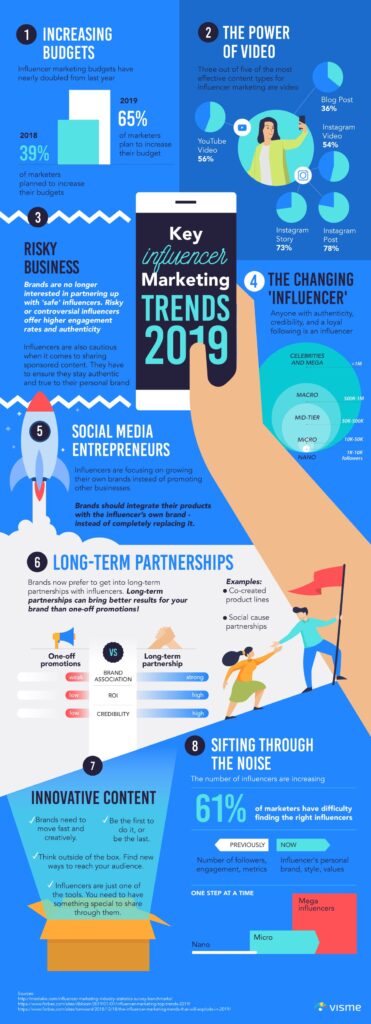
Statistics have shown that 80% of marketers have found that Influencer marketing is effective. 65% of them plan to increase their influencer marketing budgets going forward.
Why is this? The answer is simple; the rate of customer traffic and customer quality is way higher than when other marketing channels are used. So this shows there is increasing confidence in social media influencers. The main reason for this as will be explained in more detail in the next trend, is that the ROI is quite high.
2. High ROI and Measurement Methods
For quite a long time now, measuring the ROI of influencer marketing has been its chink in the armour. But this is not really the case at all; the fact is that there isn’t a one size fits all approach, so the key performance indicators may vary from brand to brand. But they’re all measurable nevertheless.
Your goal could be to increase awareness, so you can use Google Analytics to track the number of users that became aware of your product through your influencer marketing campaign. If there’s a spike immediately after you hired the influencer, then you have your answer.
KPIs such as follower increase, impressions, or reach can easily be tracked. Another good indicator to track is hashtags, especially if you and your influencer are using your own specific hashtag, it will be very easy to track. As a matter of fact, Ad Week shared research that showed hashtags boost engagement by 12.6%.
Therefore, with the possibility of measuring influencer marketing campaigns under the belt, it’s then a no-brainer that ROI has the odds to climb higher as per statistics.
3. Micro Influencers Are Crushing It
Sometimes called Nano influencers, these are self-made stars with a number of followers between 500 to 10,000 on social platforms. These guys are considered just normal people. The reason why brands are gradually banking more on this group is that they’re very knowledgeable in their specific niches and tend to engage more with their followers, this creates a relationship based on trust and authenticity. When it comes to fees, they’re also much cheaper than the mega influencers.
So, long story short, they’re effective in their campaigns and more affordable. What most brands are doing, instead of going to one mega influencer, they’re engaging many micro influencers at once for greater success. They are a true force to reckon with.
4. Influencer Marketing Trends: Video and Live Streaming Are Becoming More and More Powerful
A Goldfish has an attention span of 9 seconds, a second longer than a human’s attention span on the internet. Infographic shows that the average time spent on an internet page lasts between 10 to 20 seconds.
However video content holds up more especially if you’re able to capture the viewer’s first 3 seconds. It’s for this reason that video marketing has been growing across all platforms, hence the introduction of video features on all social media platforms. Research shows that 87% of marketers now use video as a marketing tool, and 83% confirm a good ROI when using video.
Videos have a way of bringing authenticity and social media influencers discovered this a long time ago. Brands are on board as well and now they sponsor live feeds on their influencer’s campaigns. Instagram influencer marketing and YouTube influencer marketing are particularly prominent in this. Facebook live is not behind either, a lot of collaborations are happening there too.
Some marketing activities that make this fun include the unboxing of new products, behind the scene live streams or Q& As, or popular explainer videos. Of which the influencer always drops the brand’s name every now and then throughout the stream.
5. Influencer Marketing Trends: Authenticity and Honesty Are Attention Gainers
People’s trust levels have really changed and gotten very sensitive especially when it comes to purchase decision. Authenticity is the backbone of influencer marketing. When the audience senses one fake or unrealistic vibe from their influencer, they automatically back off and no longer consider their opinion credible.
Most genuine influencers may even try and talk about products without being paid or sponsored by the product owner (brand). This genuineness is what consumers are looking for. The passion-driven talks, explainers or any such content is the blood of influencer marketing.
Honest and credible influencers lead to a strong and effective campaign, and this is a growing trend it also explains further why micro-influencers are better than mega-influencers. It’s all about authenticity and not just sales.
6. Verifying Audiences
This point closely follows the one above. Every market has at least one fraudster. Social media influencer market is no exception, unfortunately. Greedy people want to buy followers because again, there are those others that make it possible to happen.
These fraudulent fake accounts (bots) can basically do what an organic follower is able to do, including liking or commenting on the posts. But because this is not a secret, brands now are more vigilant and are engaging third parties to verify that the influencer’s audience is indeed real. This is done before engaging the influencer to avoid dealing with consequences later.
7. Influencer Marketing Trends: Influencers Are Considered Entrepreneurs in a Competitive Marketplace
As influencer marketing keeps growing and as more influencers are earning some good money, they’re realizing that they’re a growing brand and thus are getting themselves more comfortable in this competitive space.
This means they’re getting more creative, and more business savvy and are able to use whatever resources they have on their own to create quality content for their audiences while leveraging on any relationships they build with companies.
Brands as well are watching and making use of the best opportunities that are not only much more affordable but also more effective and for this reason, most of them are building long-lasting relationships with their influencers.
8. Instagram IG TV Will Catch Up
YouTube influencer marketing has been on the lead for some time now because of course, video is king. However, with the rise of the IGTV, Instagram influencer marketing is gradually catching up. This is because its videos are short and easily digestible to the audience that doesn’t have too much screen time.
Influencer marketing is growing and evolving each day, and with this, there seem to be some new rules to abide every other time. As seen on the influencer marketing trends above, more will be expected in terms of budgets and growth of the entire industry as a whole. What this means is that despite all this growth, some best practices should be observed, as they won’t change no matter the future changes or trends.
Here they are:
i. Authenticity It’s been mentioned above, and it can’t be emphasized enough, whichever side of the marketing campaign you’re standing on, whether as a brand or an influencer, authenticity remains the paramount priority. This refers to the content being created as well as the collaboration relationships between the brand and the influencer.
This is key because once the audience notices something untrustworthy going on, she will back off. And this means a ruined reputation both for the influencer and the brand.
ii. Effective and Clear Communication This is a business venture both for the brand and the influencer. Any communication exchanged must be as elaborate as possible and must be conveyed in good time. So, what this means is that you must know what you want to achieve from this “marriage” before you put anything out to the public, to avoid misinformation drama.
To achieve this, it’s encouraged that the brands create comprehensive brief with all the guidelines they would like the influencer to use. The influencer on the other hand is advised to involve the brand in content creation just so that everyone can be on the same page. When everyone has approved the content and the process of execution, then it’s good to go.
iii. Stay Open To Learn and Re-learn Human beings never cease to learn. Each marketing campaign is always different from the previous one. And the marketing space and trends are constantly evolving, nothing stays the same. So, it’s important to keep learning and keep optimizing accordingly.
After each campaign, do some research and see how well it performed, tweak where necessary and boost what succeeded. Consider things like seasons to see how best to optimize. Keep learning.
Take Away
People are overwhelmed with internet data and what they do now is just skim through information. Brands have noted this and have found a way to engage with them through partnering with social media influencers to boost their chances of getting noticed through that split second of eyeball.
The above trends can guide anyone on either side to effectively get the best out of their marketing efforts, use of live video; staying authentic and using the social media influencers with the highest engagement rate will earn you a good ROI. Remember the saying, show me your friends and I’ll tell you who you are.
The Content Marketing Institute research B2B Content Marketing revealed that 85% of marketers consider higher quality, more efficient content marketing as being the first factor that contributed to their increased success. Thus, how to create quality content remains a tough question.
Disclosure: This article may contain affiliate links. If you decide to make a purchase using one of these links, I’ll make a small commission without impacting the price that you will pay. I recommend just services or products I find useful and that I have tested or currently use.
The aphorism “quality content is king” is by now universally known and in general lines correspond to reality. You cannot contest that content is one of the base pillars of marketing today. Virtually every marketer, writer, or blogger wants engaging content, quality content, interesting content, useful content, viral content… But finally, what’s exactly engaging/interesting/quality content? Which are the parameters that a piece of content should accomplish in order to be classified as such?
Let’s Make Your SEO & Content Work Better for Your Business
Tough question! Because what’s interesting for you, for me might not be, what you call useful a tier might not. So, this is a subjective appreciation. It’s up to the target reader to judge it.
Top performers have dug their way to find out what high-quality content marketing means for their audience and defined it. It’s a path each writer should follow.
Some tactics that can help you build high quality content marketing are the following:
Your Content Should Relate to a Problem or a Desideratum of Your Audience
Your Traffic Drop Probably Isn’t Random
Most ranking losses come from overlooked SEO issues. Download my Complete SEO Audit Checklist to quickly identify what’s broken, what’s underperforming, and what to fix first to regain visibility.
You have Successfully Subscribed!
Each and every piece of your content should be audience-centric, focused on its interests, problems, challenges, or pleasure. It’s your job to define your audience, who you write for, and who’s your buyer persona. Put yourself in your readers’ shoes and depict which are their needs, research, or simply ask them. Validate your ideas with your audience, through a survey, social media, or Quora.
Quality content resonates with your readers and makes them read what you wrote and offers them something valuable to take away. Just give them what they want and need, when they need it, in the form of advice, lists of clear steps, tips, and insights.
“The more you help your readers with what they care about, the more they’ll come back” states Sue Dunlevie from Successful Blogging
Define Your Audience, Your Buyer Personas
Defining the exact features of your buyer personas has crucial importance for your content quality, as you need a specific person for which to write, whose problems you answer and solve. Before planning content or producing content, it should be clearly established who is the reader of that content. Establish details like gender, age, occupation, struggles, interests…
For example, Buyer Persona Mary: Mompreneur, 30-40 years, 1-3 children, interested in work-life balance and struggling with finance and budgeting
Buyer Persona Lindsay: Entrepreneur, 40-50 years, interested in improving client experience and struggling with content marketing and ROI
Personas help better understand who’s the reader, and the customer and ease the task of tailoring and further personalizing your message. Write for a specific person, not for everyone, not for SEO. Readers/ buyers are real persons looking for answers, for solutions. Your personas should rely on real persons, on details found out during real in-depth interviews and research.
“If you try to write to everyone, you’ll really be writing to no one” Gina Horkey, HorkeyHandBook
Mark W. Schaefer made research and revealed that 90% of one company’s sales are the result of the action of three to four buyer personas.
Write 1000+ Words of Content
A longer content, in principle, brings extended value to the reader. Now the trend in Inbound Marketing is about to change from 1000 – 2000 words content to 3000 – 10000 words, but that’s mainly for ranking reasons. And, also, it seems that in general people are more likely to return and share long-form articles.
Long-form articles are perceived as having higher authority and lead the reader from simple to complex in the same piece of content, a fact that attracts more readers. Long-form articles are in general highly researched, well-written and comprehensive, they cover integrally a topic and answer all related questions that might arrive. That’s why long-form is considered as having a higher quality, but the longer form doesn’t mean filling words to hit a number. Write a long-form article just when it is meaningful and adds value to the reader.
For the moment the paradigm “the longer, the better” gains momentum! However, a balance should be found, otherwise, we are going to find ourselves quite confused and in a not-so-appealing situation of starting to read a piece of content this year and finishing it the next.
How to Create Quality Content? – Format for Readability
Since visual content equals more interesting, and thus shareable, the format of the content is becoming more and more important. Besides the substance of the content, its structure counts also. A readable design that uses bullet points, lists, images, charts, or infographics makes content much easier to consume.
With such a huge quantity of content published every day, it’s not a surprise that most readers are in fact skimmers, reading about 20 – 28% of the content of a page. So, formatting is an absolute must to attract their attention and keep their interest alive. Large blocks of text are just about to become history.
It’s not enough to have stellar, well-researched content, it should have a great graphic format too. Like in the example below:
Formatting helps readability. Source: Backlinko
How to Create Quality Content? Use Your Own Voice in a Conversational Manner
Each writer has their own style and voice, so, use yours, don’t try to mimic someone else, the original will always be better than the copy. Be authentic, be you, use your unicity and you’ll find your own audience, the one that enjoys your style. Or as Neil Gaiman stated “The one thing that you have that nobody else has is you. Your voice, your mind, your story, your vision.” This is the differentiation element that will make you stand out.
If my style is academic and somewhat humorous, I will most probably never be able to write in a snappy sarcastic style and be authentic. Pretending or expecting a writer to write on all tones, all voices, and for all niches is amateurish nonsense.
Alicia Honeycutt considers the voice of a writer as being one of the “biggest secrets of professional writers”.
Your Traffic Drop Probably Isn’t Random
Most ranking losses come from overlooked SEO issues. Download my Complete SEO Audit Checklist to quickly identify what’s broken, what’s underperforming, and what to fix first to regain visibility.
You have Successfully Subscribed!
Quality content is one that sounds natural, not like something forced. Writing in a conversational tone, similar to a conversation among friends is by far more engaging for your audience, than using an elevated, academic voice. So, write from your heart, write on their level.
How to Create Quality Content? Support Your Content with Data
These days providing good content is not enough anymore. In order to have high-quality content you need to research and back up your content with data. Facts are important and people enjoy reading facts, thus including them in your content becomes a must. Don’t omit to offer credit to the sources that endorse the cited facts.
High-quality content implies gaining your audience’s trust and establishing a relationship. Gaining and building trust is not as easy as it might appear, but providing value inside your content and having data from valid, authoritative, and recent sources helps achieve this goal. Do your homework and cite reliable sources that are reputed for publishing accurate information. This way your content will gain trust.
Relating and sharing stories is an essential human activity, we all love good stories and there is no surprise that stories are engaging and delight readers. Storytelling is fundamental to just about everything in our world and the manner in which we communicate, interact and live derives from it.
Use stories to teach lessons in an entertaining way. Use your own experience and speak about problems you encountered to help your audience solve similar challenges. Speak about inspiring stories of leaders and inspirational persons. Tell stories about other persons achievements and success.
As Bryan Eisenberg says: “Effective content marketing is about mastering the art of storytelling. Facts tell, but stories sell“.
Most often great content equals a great story.
Measure the Success of Your Content
High-quality content translates into traffic, engagement, sales, and ROI. Numbers and metrics will give you the exact measure of your success if your content has the desired quality. High-quality content attracts the target audience and converts it into leads and sales. Track and measure the results your content brings with tools like Google Analytics, SimilarWeb, or Open Web Analytics.
Your audience judges the quality of your content and metrics are the real proof. It’s your job to permanently watch your metrics, measure your progress and modify your strategy accordingly if the results are not as expected. Engagement, shares, and likes are important but leads, sales, and return on investment (ROI) are even more important.
But content is a mix of art and science, parts can be measured as for example engagement, partly not exactly as for example style and aesthetic.
Draw a Conclusion
Be helpful till the end and do the whole work for the audience, write a synthesis and formulate a conclusion for your content. Collect and provide supplementary resources concerning that subject for your audience.
In my conception, the above-listed tactics combined generate high-quality content marketing. What’s your opinion, what do you consider high-quality content? How would you create quality content? What tactics would you add up to this list?
These are wild times and a crisis like the one happening now has the potential to flip even the strongest businesses upside down. This season has left entire cities under quarantine, some businesses have completely shut down, events and conferences canceled or if lucky, just postponed or moved online. To add salt to injury, there are endless waves of speculations and presumptive forecasts even worse than the pandemic itself, that are hurting businesses even more.
But going through a global health crisis shouldn’t mean a rise in panic or disorder; neither should it mean there should be battening down of hatchets and binging life away, a crisis or downtime shouldn’t always mean doom and gloom. Business won’t be as usual and that’s ok. You and 99% of people out there are tapping into unknown waters and no one is prepared at all.
Let’s Make Your SEO & Content Work Better for Your Business
It’s possible to make the best of every situation, particularly in how one frames it in their mind. For instance instead of feeling as if you’re entering a recession, think about a reset or re-evaluation and reinvestment in your brand, living through a pandemic for most businesses means that they (businesses) need to engage their sensitive gear in how they sell because this is a time of community building and service around the globe.
But how do you get here with all these uncertainties?
Here are 3 essential stages to help you build your crisis approach protocol. They’re interlocked phases that are effective in calming you during such a time, maintaining your business flow, and stimulating deeper creativity that you never knew existed within you.
Stage 1 – Take a Deep Breath and Put Yourself Together
As the owner or founder of the business, you’re its most valuable asset; therefore, unless you’re personally in a position of groundedness, capacity, wisdom, and strategy, you will not be able to hold together your team.
Keep Calm
It’s common for the global marketing community to create unhealthy patterns that can push you to operate in haste, panic, and create anxiety by making you feel as if you’re not doing enough, not being productive, or contributing much, this can trigger you to try and create more content, or panic produce in order to feel safe. This is wrong and unhealthy for both you and your business, and if you’ve been feeling overwhelmed, this is the reason.
You need to detach yourself from this modeled behavior and instead reserve your resources in terms of time, and energy and focus on only the very crucial activities.
Take time to be calm, focus on how you’re feeling and stabilize yourself. How do you do that?
Step i. Keep your feelings under control
Any sudden, unexpected and negative event that leaves you feeling overwhelmed, confused and helpless is a traumatic event. If an experience creates feelings of overwhelming nature and is perceived to be life-threatening then it’s considered to be a traumatic event. So, we can affirm without being wrong that what we’re experiencing globally now is a traumatic event.
Therefore because it’s hard enough, be gentle with yourself. What you may be feeling could be extreme stress or anxiety or even exhaustion accompanied by zero motivation. Be kind to yourself.
Going through trauma affects several parts of your brain including the prefrontal cortex which is responsible for decision-making. Another important responsibility the prefrontal cortex does is to slow down and become “clouded” when you’re going through a trauma. Why this happens is because there’s a lot of pressure on your brain when you’re going through such experiences. So, you need to take very deliberate care of your brain and nervous system so that it can work for you.
Do Less.
As our society model encourages us all to do more, contribute more, and show up more, at this point doing less will heal you, allow you to grieve, and help you up-level. This is what stabilizes you.
You’re able to process the crisis, be present and connected to other people and be present even for yourself, be realistic about your feelings. As you take these steps to prioritize yourself and care for yourself, you’re building your own personal capacity as you increase the capacity to be able to care for others in the nearest future. This is the regulation of your nervous system.
Here is a little deeper explanation.
Your energy isn’t something you can predict in advance, but it’s the one thing that your brain consumes a lot during the processing of the crisis. This explains why you may feel more tired during a crisis than at normal times. Rest is therefore extremely essential; rest can come especially through sleep. So, don’t be afraid to sleep enough or sleep more.
To know whether you’re stabilized you can do a quick check by identifying your feelings. That is, are you calm, connected, present, and feeling grounded? If yes then you’re stabilized, but if you still feel tense, anxious, overwhelmed, worried, and irritable, then you’re still unstable, and if you feel low energy, disconnected or like you’re shut down, take some time off and rest, until you achieve the calm feelings mentioned above.
Step ii. Address the basic needs
These are food, water, shelter, and medicine.
One way to calm your nervous system is to address your most basic needs. Here is where Maslow’s Hierarchy of Needs comes to play. Your basic needs according to Maslow are categorized into different levels of human needs, the most basic or baseline needs are food, water, shelter sleep, medicine, and the like. So, what’s the connection between your baseline needs and crisis management? Simply because until these needs are met, your brain will have a very difficult time focusing on any other actions.
Step iii. Ensure that elements related to your personal safety are in proper order
These include your finances as well as your mental health.
Do you care enough about your body and your health? This is the next aspect as importance after the basic needs are met. Good health is a great privilege that shouldn’t be taken for granted. Things to check here are health coverage, supplements, preventive care, and so on. This is especially of concern if you have to purchase or pay for them at this time.
Another key component in your health care is the daily routine that you do to keep healthy. This may include daily work-out, drinking sufficient water, at least 8 hours of sleep, yoga, and so on.
For your financial safety, you just need to know how much money you need to cover the baseline needs mentioned above. This number is very important because it will guide your next course of action.
Your emotional and mental safety is very pegged to the baseline needs mentioned above. If you feel you need any support, do not refrain from reaching out to trusted sources.
Remember that a complex part of any crisis particularly a global crisis is that there’s often very little any individual can do to escape, no amount of “busy-ness” can distract you, nothing can mask you enough, and sometimes all you have to do is care for what is an immediate need.
So how do you cushion yourself in this fourth step?
Assess your physical needs by ensuring environmental safety for you and your loved ones, if safety is not guaranteed then a move to a safer location would be a good option. Ensure also that you have access to good healthcare. And finally, ensure that you have finances for your basic needs. This can be helped by cutting out some non-essential expenses such as holidays, clothes, and participation in events, and saving these amounts for later since the crisis may not have a definite end date.
When all these are in place, but you still feel mentally or emotionally strained, it’s ok to seek additional help at little or no cost.
Step IV. It’s OK to ask for all the support that you need
Self-care is great, but when in a crisis this is not even half enough. A crisis is not a time for solitude. Social support is super essential for your sense of security and safety. At times such as during the Covid-19 global crisis, the kind of community care that you need may be difficult to achieve due to health concerns, but this makes this need even more important.
Although the truth is that people often don’t know how to ask for help because they don’t want to bother, they also don’t know how to offer it. Thus, in order for you to get the social support you urge for, the emotional isolation must be broken. Do not withdraw during these times, break the cycle of guilt within yourself. So, what can you do?
The first thing would be to analyze your feelings and identify where you need support. Whether you’re feeling sad, inadequate, or even unable to describe what you’re feeling, it’s recommended to try to identify them because this is an essential step in self-stabilization. And this is how you’ll be able to know the kind of support to seek. And when you seek help, you will most certainly get it and possibly be able to help other persons as well.
Source: YouTube
Stage 2 – Stabilize Your Business
You’ve successfully passed phase one and are now a stable person. This next phase is all about your business’ stability. It’s about taking stock of where it is at the moment and taking any possibility of moving it forward and helping it thrive. Even though the uncertainty that surrounds us all is way beyond your control.
This is how to go about this phase:
Step i. Future-proof your business finances
A crisis can wreak havoc even with the best-laid waterproof business plan. Here you should asses the current financial state of your business. Armed with this information, you’ll now be able to make wise-fitting decisions that can future-proof your brand in order to cushion it from the unpredictability that comes with the crisis and enable you to move forward.
An assessment of your business involves knowing how much cash you have reserved, identifying any outside funds that your business can access if the need arises, how much revenue you are bringing in at the moment and in the near future, how much you’re spending currently and whether these expenses are essential and finally establish how long your business can keep running with the currently available funds.
All this information is the foundation of your current business decisions.
Step ii. Activate the maintenance mode
So, because this is an uncertain period, it’s best to rationalize your resources and energy, as well as your time, to last you as long as possible. A maintenance mode is a period where only the bare minimum is used to keep the business running.
This may include minimum sales required to generate the minimum revenue needed to pay minimum bills. So, what this means is that you may also be required to run a minimum team that will handle minimum business. This is not to shut you down; rather, it’s an essential mode to help you survive during difficult times and most importantly, allow you to explore other profit-making tasks that your business can venture into that match with the times.
Just like you need to calm down and be stable, your business too requires a calm moment for it to keep standing; you don’t want to keep running high production with zero sales as this will just destabilize everything. This is the baseline for your business too.
With that said, you need to define what maintenance mode is for your business. Here are key factors you should consider:
Business expenses – This will vary depending on seasons, during a crisis you want them to be as lean as possible. You can go through your expenses to see some recurring expenses for things such as office supplies or subscriptions that may not be necessary at this time, you can cut them. Leave only the essential bills.
Your Team – Although this should be a last resort, in some cases you may have to reduce some roles and only keep the essential members to keep the company running.
Your Business Revenue – This should be your new goal, just make enough to keep the lights on. To figure this out you already identified your baseline expenses and know exactly for which interval you’ll be able to keep the business running in a lean mode.
Remember, no business can stay in maintenance mode forever; this is just a short-term measure to keep your business surviving until the crisis diminishes or is over.
Source: YouTube
Step iii. Spread some care/ love
With the above steps checked, your business is on the rails, you can breathe, and it can survive. So, now it’s time to extrapolate this calm to your people, be it staff, partners, or customers. It’s in your best interest to know that people who are part of your business network whether directly or via proxy are ok and will be there when your business will take off again! Who are these people?
a – Your Team – Organize weekly catch ups
Check-in on them to find out if they’re safe and ok. Show them they’re valued and offer any support that you can. At this point, it’ll also be a good idea to communicate any changes happening in order to keep them focused on the maintenance tasks you’re working on.
b – Your Existing Clients or Customers
These are people that are already committed to your brand, show them support and ensure your customer service is at the highest possible level. Show them empathy and encourage them, making them feel they are your business’ top priority.
c – Your Potential Customers
Extend your care to this segment as well, be compassionate, and offer a message of hope. This may be the impulse someone needs to make it through the day, and they may never forget you for that.
This final stage is about leading your business forward into the future during and past the crisis through revenue generation. It’s the transition period from your maintenance mode to a growth mode. This involves having both short-term and long-term strategies; here are a few steps to walk through this:
Step i – The Short-term strategy
Pick the path with the least resistance – create simple but quick or fast wins; easy sales that will require as little from your business as possible.
Create relevant offers – pick the ones that will be most profitable to you and the easiest to sell offers. If you don’t have an offer that’s relevant at this time, it’s time you create one.
Other ways you can generate revenue in the short term include creating digital versions of your service or improving an already existing one. Offer lower tariffs for some of your tickets or DIY versions that are hybrid. It’s all about innovation that fits with the current situation using the least resistant route.
Step ii – A long-term strategy
Every crisis eventually does come to an end. Having achieved all the difficult parts above, your mind is now in a healthy state to consider the future.
Have a futuristic view of your business, look at all the emerging trends, you may notice technology taking over and thriving where humanity cannot. Consider such options, how much can you automate? if the case.
Besides the trends, as a business, you can look out for weaker hands looking to sell or merge, or, you as a business may consider merging to stay alive. Whichever long-term strategy you pick, let it be sustainable, thoroughly thought through, and able to see you on the other side of the crisis.
Wrap Up
No one can say with certainty just how long a crisis such as the Corona Virus pandemic will last. Its effects on the economy in general as well as our individual lives continue to be visible. You can do something by adapting to the circumstances both as an individual and as a business. This is how new trends and ways of living are born.
We use cookies on our website to give you the most relevant experience by remembering your preferences and repeat visits. By clicking “Accept All”, you consent to the use of ALL the cookies. However, you may visit "Cookie Settings" to provide a controlled consent.
This website uses cookies to improve your experience while you navigate through the website. Out of these, the cookies that are categorized as necessary are stored on your browser as they are essential for the working of basic functionalities of the website. We also use third-party cookies that help us analyze and understand how you use this website. These cookies will be stored in your browser only with your consent. You also have the option to opt-out of these cookies. But opting out of some of these cookies may affect your browsing experience.
Necessary cookies are absolutely essential for the website to function properly. These cookies ensure basic functionalities and security features of the website, anonymously.
Cookie
Duration
Description
cookielawinfo-checkbox-analytics
11 months
This cookie is set by GDPR Cookie Consent plugin. The cookie is used to store the user consent for the cookies in the category "Analytics".
cookielawinfo-checkbox-functional
11 months
The cookie is set by GDPR cookie consent to record the user consent for the cookies in the category "Functional".
cookielawinfo-checkbox-necessary
11 months
This cookie is set by GDPR Cookie Consent plugin. The cookies is used to store the user consent for the cookies in the category "Necessary".
cookielawinfo-checkbox-others
11 months
This cookie is set by GDPR Cookie Consent plugin. The cookie is used to store the user consent for the cookies in the category "Other.
cookielawinfo-checkbox-performance
11 months
This cookie is set by GDPR Cookie Consent plugin. The cookie is used to store the user consent for the cookies in the category "Performance".
viewed_cookie_policy
11 months
The cookie is set by the GDPR Cookie Consent plugin and is used to store whether or not user has consented to the use of cookies. It does not store any personal data.
Functional cookies help to perform certain functionalities like sharing the content of the website on social media platforms, collect feedbacks, and other third-party features.
Performance cookies are used to understand and analyze the key performance indexes of the website which helps in delivering a better user experience for the visitors.
Analytical cookies are used to understand how visitors interact with the website. These cookies help provide information on metrics the number of visitors, bounce rate, traffic source, etc.
Advertisement cookies are used to provide visitors with relevant ads and marketing campaigns. These cookies track visitors across websites and collect information to provide customized ads.