Influencer marketing is not a new concept, in fact, it is a millennia-old practice, from Ancient Greece orators to nowadays celebrities and superstars. Just that in our digital era it reaches new dimensions and found new ways of evolution. When Jacqueline Kennedy appeared in public wearing a jaguar coat, half of the world rushed to buy and wear a jaguar coat. Well, that’s an influencer marketing example.
So, How Do We Define Influencer Marketing?
Influencer Marketing is the practice of collaborating with influencers – third parties that enjoy the trust of a certain audience, for the purpose of raising sales and brand awareness. Practically influencers have the ability to influence consumers in their buying decision. While using influencer marketing you have to identify the right influencers, built relationships with them, and use their influence as a promotion channel for your products/services.
Influencer marketing is a collaboration between influencers and brands, a mix of old marketing tactics and new digital ways of promotion.
Let’s Make Your SEO & Content Work Better for Your Business
In the category of influencers, we can count: celebrities, public figures, journalists, experts in an industry, bloggers, social media stars, YouTubers, Instagrammers, etc. Influencers could be recognized experts in digital marketing, travel photographer on Instagram, makeup artists on YouTube, or technology executives on LinkedIn.
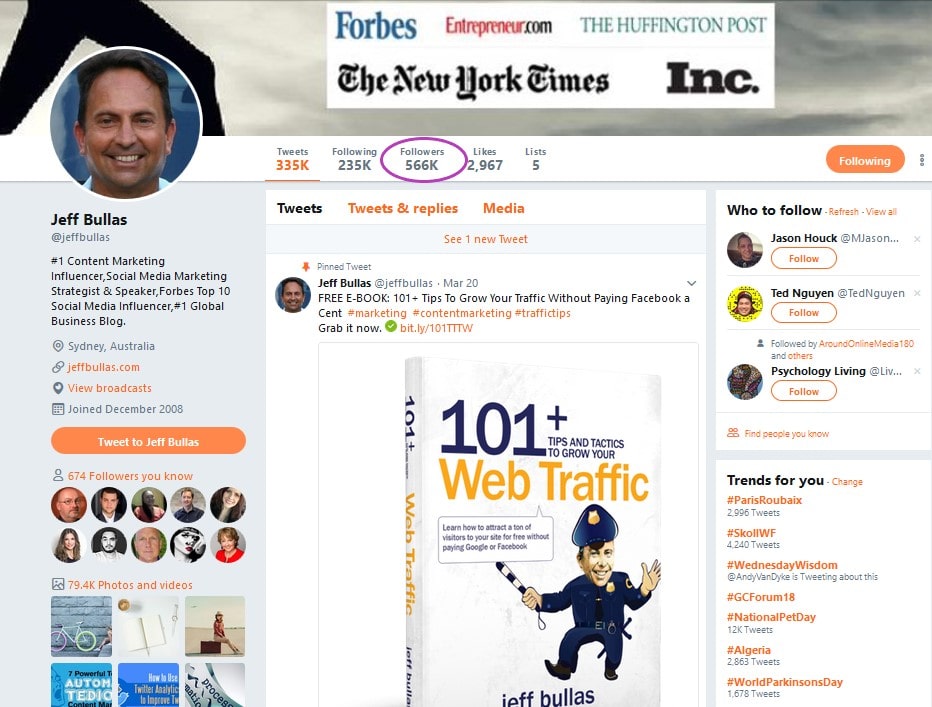
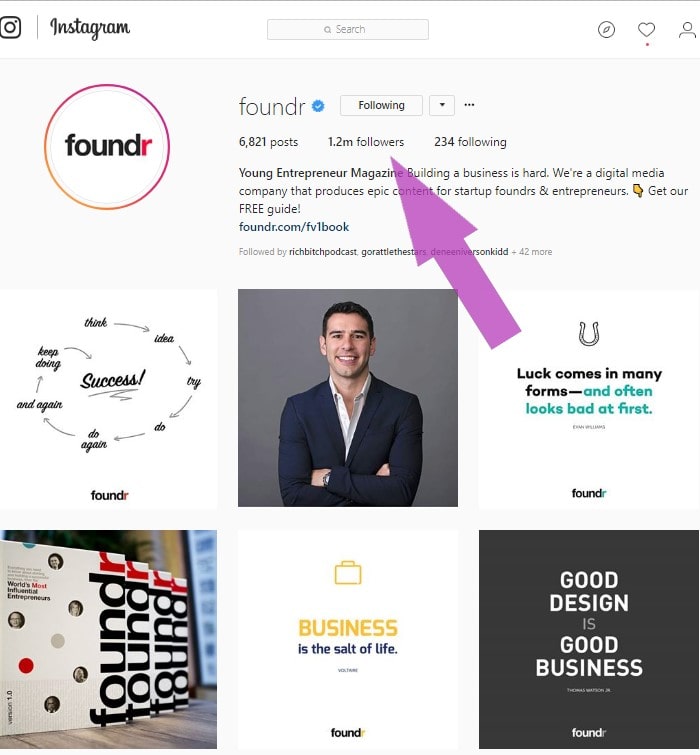
Today influencer can be literally anyone and you can find them anywhere. What defines an influencer is the dimension of his following on social media and on the web in general. Each industry has its influencers, they are to be recognized primarily by a large number of followers, hundreds of thousands or even millions.
And to convince you that influencer marketing is worth giving a shot, I am going to show you some influencer marketing statistics:
· The influencer marketing market was estimated at $2 billion in 2017 and is expected to touch $10 billion by 2020
· Research made by Activate by Bloglovin reveals that 67% of marketers consider influencer marketing to be the channel that helped them reach better results via a more targeted audience
· Social networks have the power to influence 74% of buying decisions made by consumers
· Rhythm One Report of 2016 on Influencer Marketing sustains that well-managed influencer marketing campaigns can bring up to $11.20 ROI for each dollar spent.
How Can Influencer Marketing Help You? Influencer Marketing Tips
When done correctly you will see shortly great results. Here are the influencer marketing benefits:
– Expand your reach to new audiences – those of influencers you collaborate with. The engaged audience of an influencer will react better to your targeted promotions
– Build credibility and brand awareness through the association with a certain influencer
– Increase engagement and connection with your buyer persona
– Minimize costs and improve conversion rates, as influencer audiences are more targeted and help reach the right buyer personas
– Create great content that your audience will love. Influencers have wide experience in creating highly valuable content that their audience consumes and will help you with creating content for your products.
– Increase search engine rankings and SEO authority, thanks to influencers backlinking to your site
– Expand social media following thanks again to influencers, as part of their followers will follow you
– Increase sales – this is the final scope of influencer marketing: attracting more sales and high-quality leads for your business based on influencer endorsement and reviews. This way you can close larger deals, and shorten the sales cycle.
How Do You Find the Right Influencers for Your Niche?
By now you should be convinced that influencer marketing may have a great impact on your business.
Good.
Of course, primarily you have to establish an influencer marketing strategy, your goals, and how are you going to use influencers to achieve them. Establish a budget that you want to invest in an influencer marketing campaign, what type of influencers you want to reach, outline the campaign, and identify the KPIs to help you measure the results of your campaign.
Now let’s get to work and see how to identify relevant influencers for your niche.
You have two options, either search for influencers yourself via search engines, social media, etc or use an influencer marketing platform like Fame Bit or Hypr where you can create campaigns and influencers will pitch to collaborate. We will talk about influencer platforms a bit later in this post.
Tip: Take into consideration that if you want to maximize the benefits of influencer marketing, you have to consider it a long-term game. In order to attract influencers, you need to put in place a strategy that emphasizes long-term partnerships and creates for you, reliable brand ambassadors.
Search and Identify Reliable Influencers for Your Niche
Your purpose is to find voices and influencers that not only have a good following but even more important appeal to your buyer personas and can entice them.
The most relevant influencers for you might not be the most popular with the largest audiences, but those voices can influence your audience. Investigate who your buyer personas listen to, and where they go to obtain the information they need.
The starting point is to make a list of industry leaders and experts, speakers that your audience pays attention to.
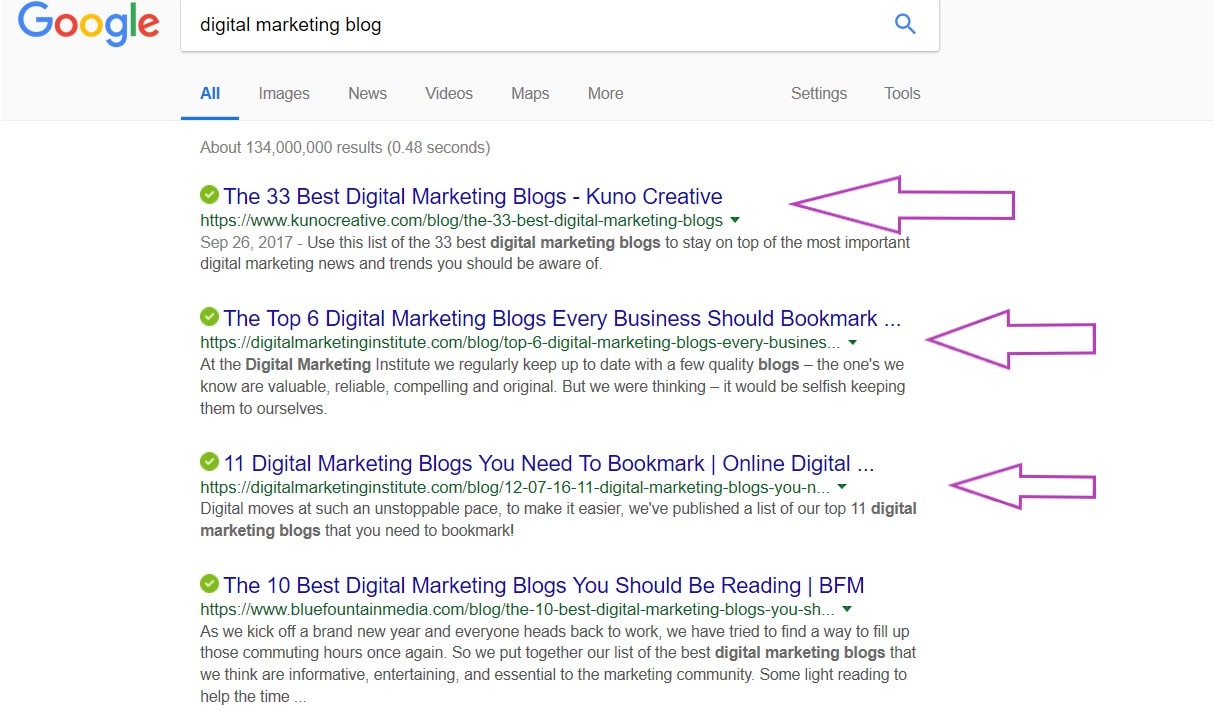
After that go to Google and do a simple search with “keyword” + blog, for instance, travel blog, WordPress blog, cooking blog, etc. And check the first most promising results. Here is an example search for “digital marketing blog” and it’s obvious you arrive at lists of influencers:
To help you decide among the results you obtained you may need further support from tools like MozBar, an SEO toolbar that indicates the domain authority of a blog. The higher the number indicating the domain authority DA the better. Aim for blogs with DA higher than 25, in general, they are established sites with large audiences, rank well, and can provide valuable SEO benefits.
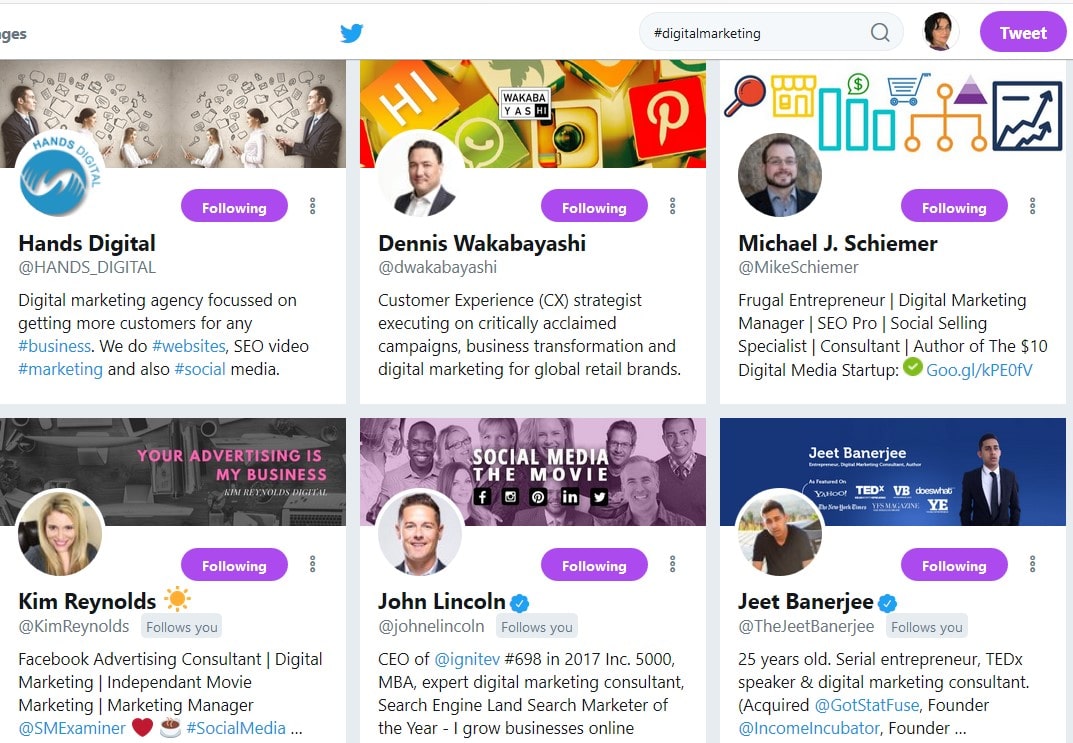
Another modality to identify influencers is to search with hashtags or keywords on social networks. Check on the persons that B2B marketers mention or retweet often on Twitter. To find influencers via Twitter just write the target keyword in the search bar and click the “People” tab:
For other social media networks, you proceed in a similar manner: to find influencers on Instagram search with the hashtags related to your niche, to find YouTubers search for videos valid for your niche.
Influencer Marketing Tips – Selection Criteria for Influencers
When deciding to put an influencer on your list, first do your research and check the following factors:
· Relevance for your brand. The content published by influencers is relevant to your products and brands? Is his audience overlapping with yours? Take a close look at the content that the influencer creates.
· Engagement. Has the influencer an engaged audience? Inspect social shares, comments, likes, etc. Is the influencer involved in discussions? Does he answer his followers?
· Following. Verify the overall audience that the influencer has across all channels: blog, Youtube, Twitter, Instagram, Facebook, etc.
Among the above three factors, the following ranks last. Be aware that an influencer with a smaller following but a more engaged one may be more valuable and provide better results.
Here is an infographic comparing the results obtained by micro and macro influencers on a sample of 700 Instagram-sponsored posts made by MediaKix. But for specific niches, the results may be different.
Also take into consideration other supplementary elements as:
· Quality of content that the influencers publish
· Consistency of content publishing
· Knowledge or expertise in the niche
· Relevancy of content for their audience
· Focus on a specific topic
· Connections with other influencers in their niche – verify LinkedIn and Facebook page
· Their voice. Do they use a cynical tone, a funny one, or maybe a sarcastic one?
Pick influencers that know their stuff and have the power to sway prospect leads. Also, pay attention to contacting influencers whose content is aligned with your brand strategy. They will be your brand ambassadors finally. Pick them wisely!
After identifying the marketing influencers that you are interested in, put them on a list and start contacting them. You can of course contact them directly, but if they are huge authorities in your niche, a strategic approach is better. Meaning taking the time and investing the necessary efforts to build connections and earn the trust of influencers.
To engage with leaders and experts you need to appear on their radar and attract their attention. So, choose an indirect way. Concentrate your efforts to build solid relationships. Don’t just contact them with your request, there are high chances to fail to obtain the results you want. Instead, comment on their articles or on social media, share their best content or the one you found most helpful, and start a conversation by asking a question or with a pertinent observation.
Influencer Marketing Tips – Mistakes to Avoid While Using Influencer Marketing
When you work with influencers you want to obtain the best results possible. So, avoiding mistakes that other businesses made with influencer marketing might help you improve your score.
Decide for influencers in your niche that do not match your brand
Targeting influencers in your niche is a no-brainer, but keep in mind that you need to be specific also. If you have a product for those who practice yoga, it’s better to approach yoga instructors or yoga experts than fitness bloggers or healthy life influencers.
To help you decide, create a buyer persona profile and decide if the influencer’s content is of interest to this persona. Would this persona consume the content created by this influencer, would she follow him on social media?
Superficial research
Getting impressed by a huge following without digging deeper and analyzing engagement. Shares, likes, and comments give the exact measure of the influence and impact an influencer might have. Also, asking for referrals and past results for other campaigns would be helpful to support your decision.
Pay close attention to posts that promote products and inspect if followers are really interested and ask relevant questions and not just write generic comments like “super”, “great stuff” or a collection of emojis.
Failing to build strong relationships with influencers
Influencers receive lots of pitches for sponsorships and collaborations. To be successful you need to differentiate yourself to entice the influencer to work with you. Remember that influencer marketing offers the best results in the long run.
When contacting an influencer don’t send an all-fits-one pitch. Personalize! Write for each influencer a dedicated copy, speak a bit about him, tell him how you identified him, and why you think their work is great. Emphasize the reason you consider the respective influencer will be a good fit to evangelize for your brand.
Skipping on influencer marketing strategy and goals
Having a clear simple strategy and realistic, measurable goals will ease your efforts. Will give you the right direction to concentrate, the platforms that the influencers should use in your campaigns, and the content that is likely to help you hit your goals.
Set for your influencer marketing campaigns other goals than simply increasing sales. Strive to help your customers, educate them and support them to use the full potential of your products.
Failing to track and measure results
Track the influencer campaign and check analytics to know exactly what results are generated by which influencer. Use coupon codes or tracking links to clearly identify which clients are redirected from which influencer. As influencer marketing is a long-term endeavor, the gathered data will support you in your future decision for future campaigns.
Influencer Marketing Example: Bigelow Tea Case Study
Bigelow Tea created an influencer marketing campaign to emphasize the health benefits of drinking tea. The main scope was to promote tea products and stimulate a healthy lifestyle.
The selected influencers creatively incorporated the Bigelow tea products into their promoted content. For instance, Ashley Thurman, the pen behind Cherished Bliss, created an iced tea recipe that mixed together iced lemonade with Bigelow tea.
Blogger Jess of A Million Moments came up with another creative idea, she conceived a guide to teach her audience how to create flower pots using tea packages. You can see below the result:
Output of the campaign
Influencer bloggers generated sponsored posts with about 32,000-page engagements. Bigelow Tea obtained a sales increase of 18.5% and its media value tripled. The key element in this campaign was the flawless integration of the sponsored posts within the usual content that influencers provide.
Influencer Marketing Tips: Influencer Marketing Platforms You Can Rely On
If you are a brand planning an influencer marketing campaign and thus in search of influencers or an influencer in search of a new collaboration, influencer marketing platforms might be the answer to your endeavors.
For brands in general, using micro-influencers might prove to be a winning card.
Here is a selection of top influencer marketing platforms you can choose from:
HYPR Brands
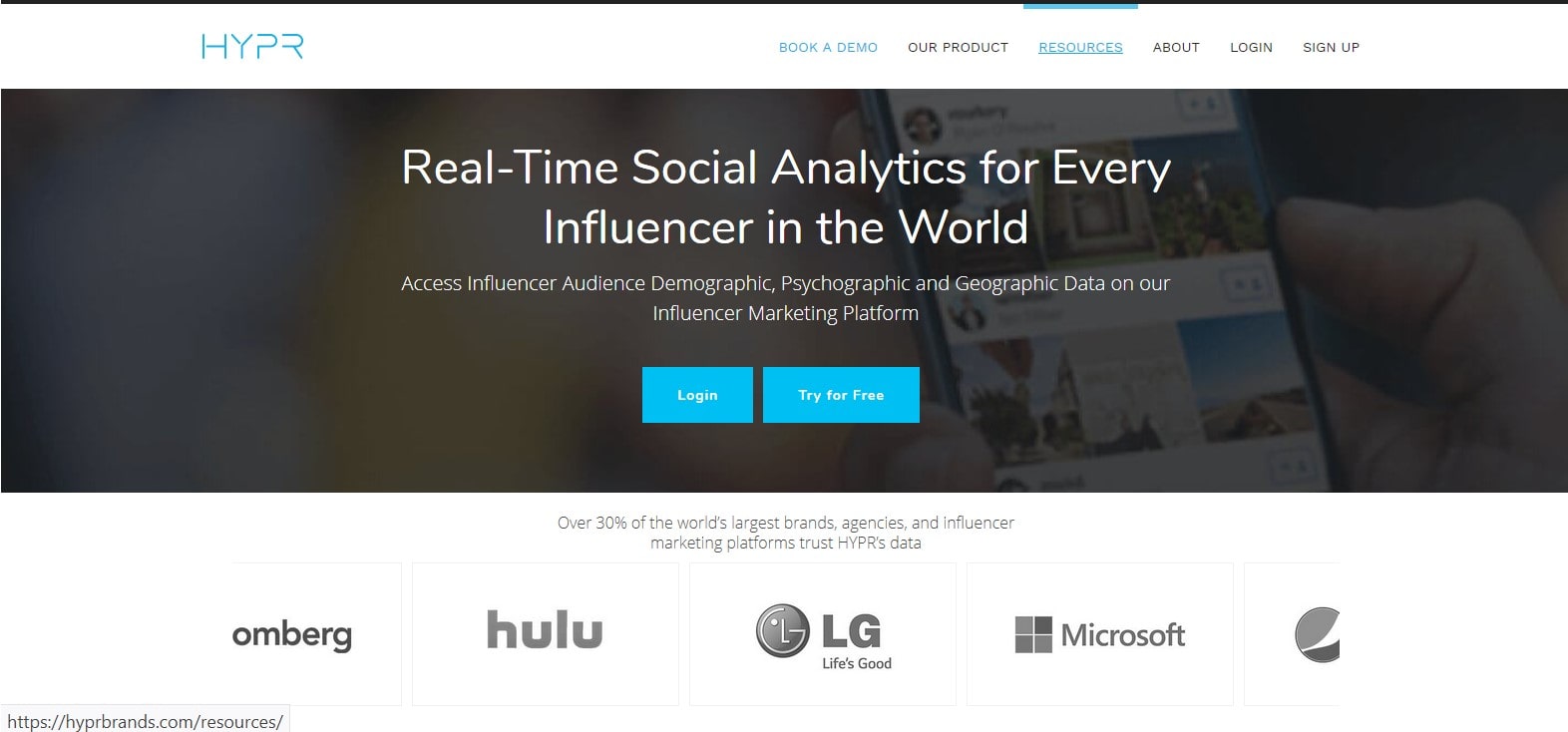
HYPR claims to be “the World’s largest and smartest Influencer search and discovery directory that provides real-time analytics for social Influencers across major social platforms.” They host over 10 million influencers indexed via demographic information, interests, and revenues. Also, detailed audience analytics is provided for brands to better support them in finding the right influencers for their own niche.
HYPR is proud to reveal that more than 30% of the largest brands across the globe trust their data and their services are used by more than 500 brands and influencer marketing platforms.
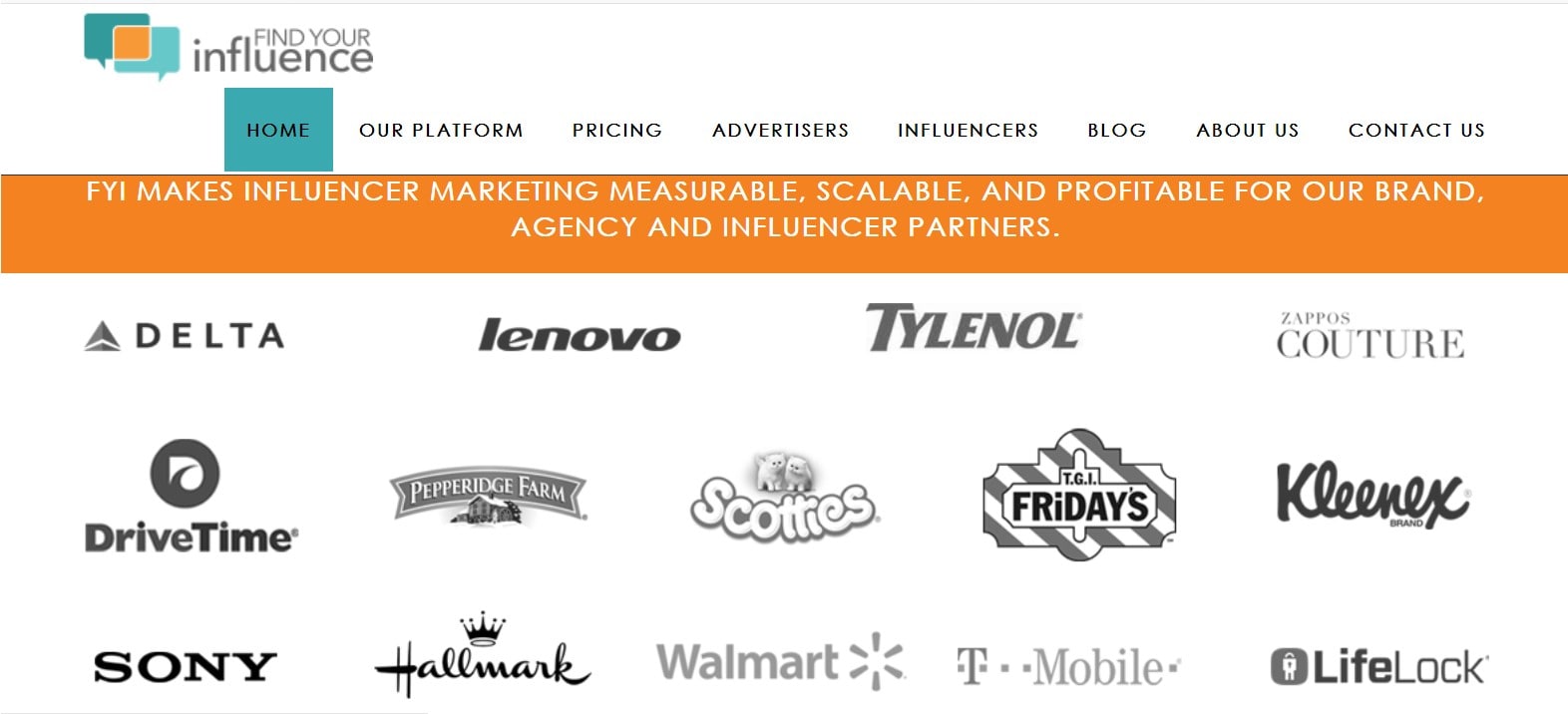
Find Your Influence (FYI) is the first SaaS acting as an influencer marketing platform and gathers more than 100,000 influencers. Brands like Sony, Honda, BestWestern, Nivea, and Walmart trust this platform for their influencer marketing campaigns.
FYI covers a large variety of niches from fashion to culture and is a marketplace that allows businesses to easily find relevant influencers. They provide a full-option platform with analytics tools, secure payment, and active support.
Shoutcart
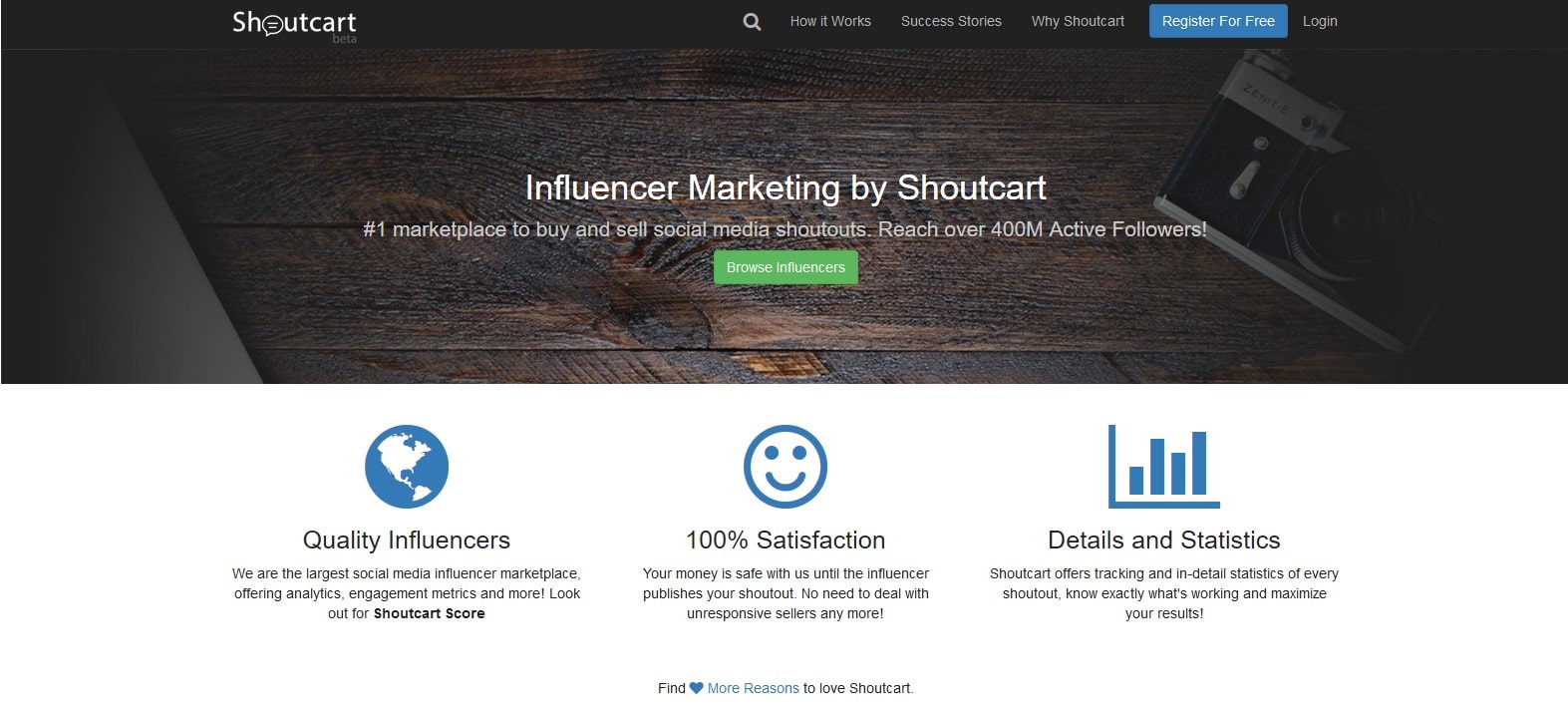
Shoutcart is one of the largest social media influencer marketplaces. Their model is different from other influencer marketing platforms because it is conceived as an e-commerce platform. Influencers publish their prices for posts or “shoutout” and brands shop what they find convenient as on any other e-commerce site.
Shoutcart provides scalable campaigns, followers demographics, tracking and statistics, and lower fees.
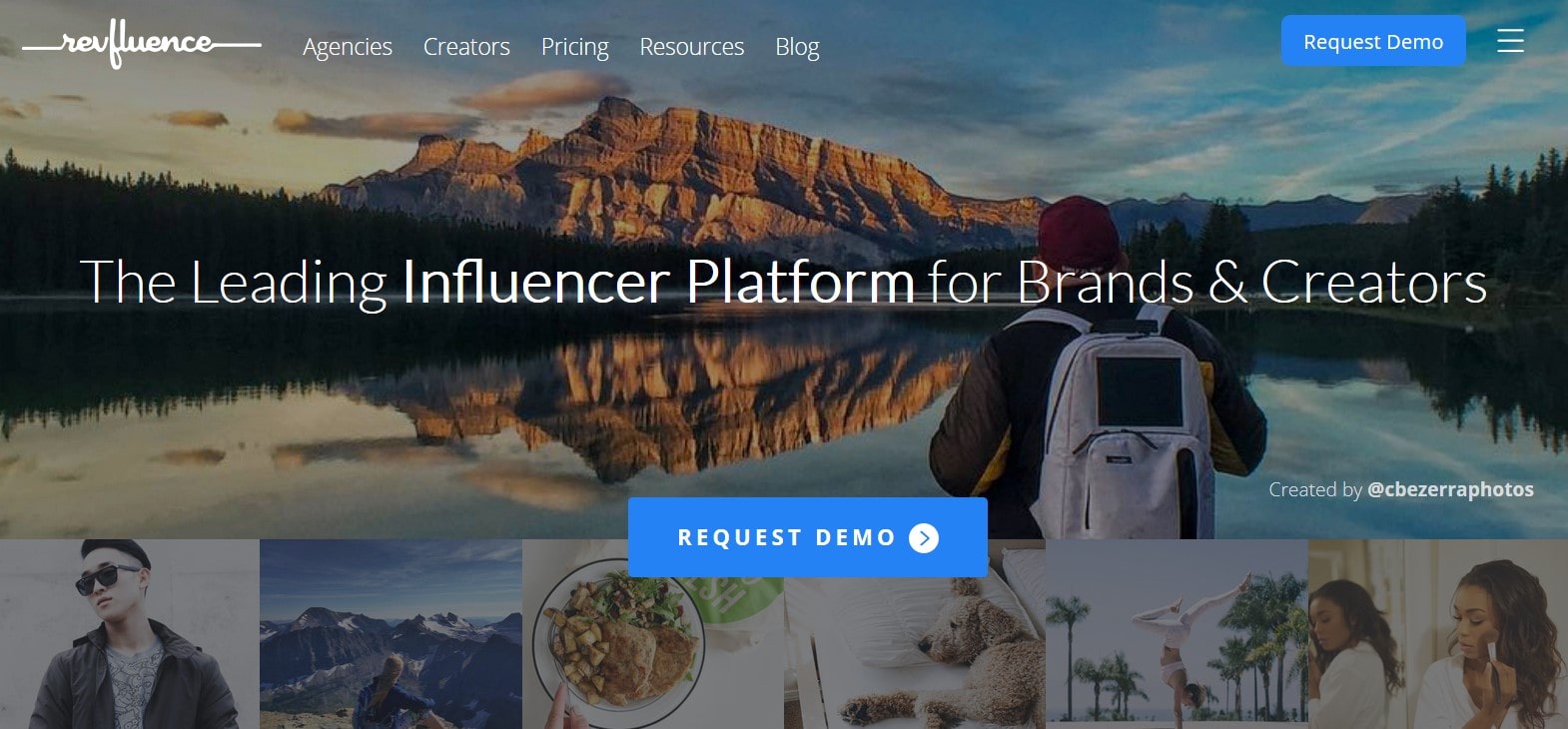
Revfluence relies on the power of machine learning to propose the most relevant influencers for your influencer campaigns. They leverage data from over 500,000 influencers, containing audience demographics and content quality, and deliver it via a sophisticated search engine.
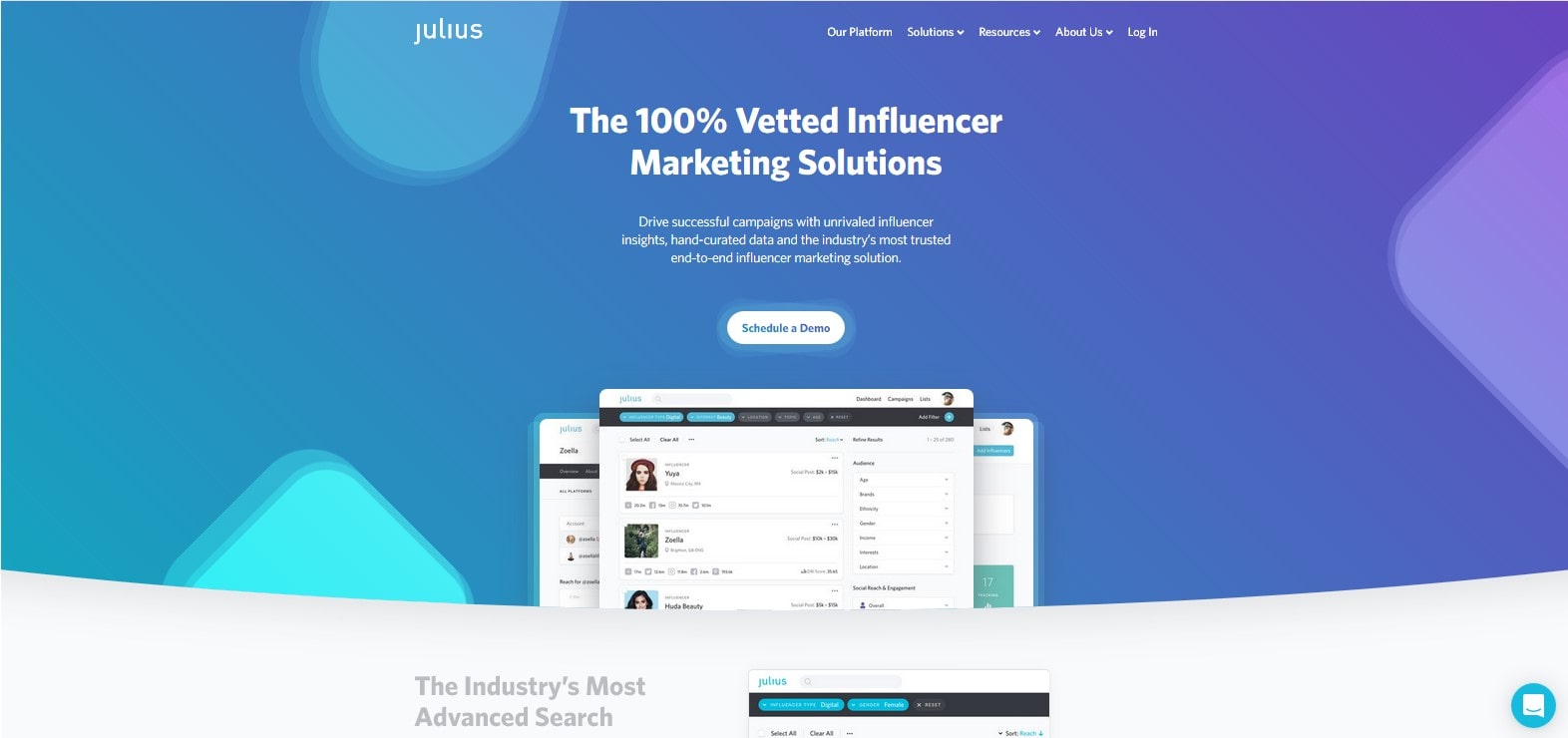
Julius allows brands to sort influencers via a comprehensive collection of forty search filters. They promise to connect you with highly targeted if not the perfect influencers through “one million hand-curated influencer data points”.
It offers a handful of campaign management tools such as integrated messaging, fast activation, comprehensive reporting, and extensive influencer data.
So, there you have it, a general introduction to influencer marketing and influencer marketing tips. It’s up to you to decide if you are going to use such strategies or not. Just keep in mind if you decide to go for it that, this is a long-term game and you should constantly make efforts to engage with influencers and build solid relationships.
Remember influencer marketing works, if properly executed, because it leverages the power of social media combined with content marketing, based on authentic authority already established for the target audience.
That SEO is paramount for ranking in search engines and driving more traffic to your site, is not a secret for a long time now. The two main areas of SEO are on-page SEO and off-page SEO. Test the best-considered off-page SEO techniques in 2023 to push up your content in search engine results.
The present article will focus on off-page SEO techniques and methods. First of all, let’s clarify what is off-page SEO: simply put all the techniques executed externally, outside your site, to boost rankings. Off-page SEO tools and tactics impact the position your site gains in SERPs and include brand awareness, links, and external site relationships.
Let’s Make Your SEO & Content Work Better for Your Business
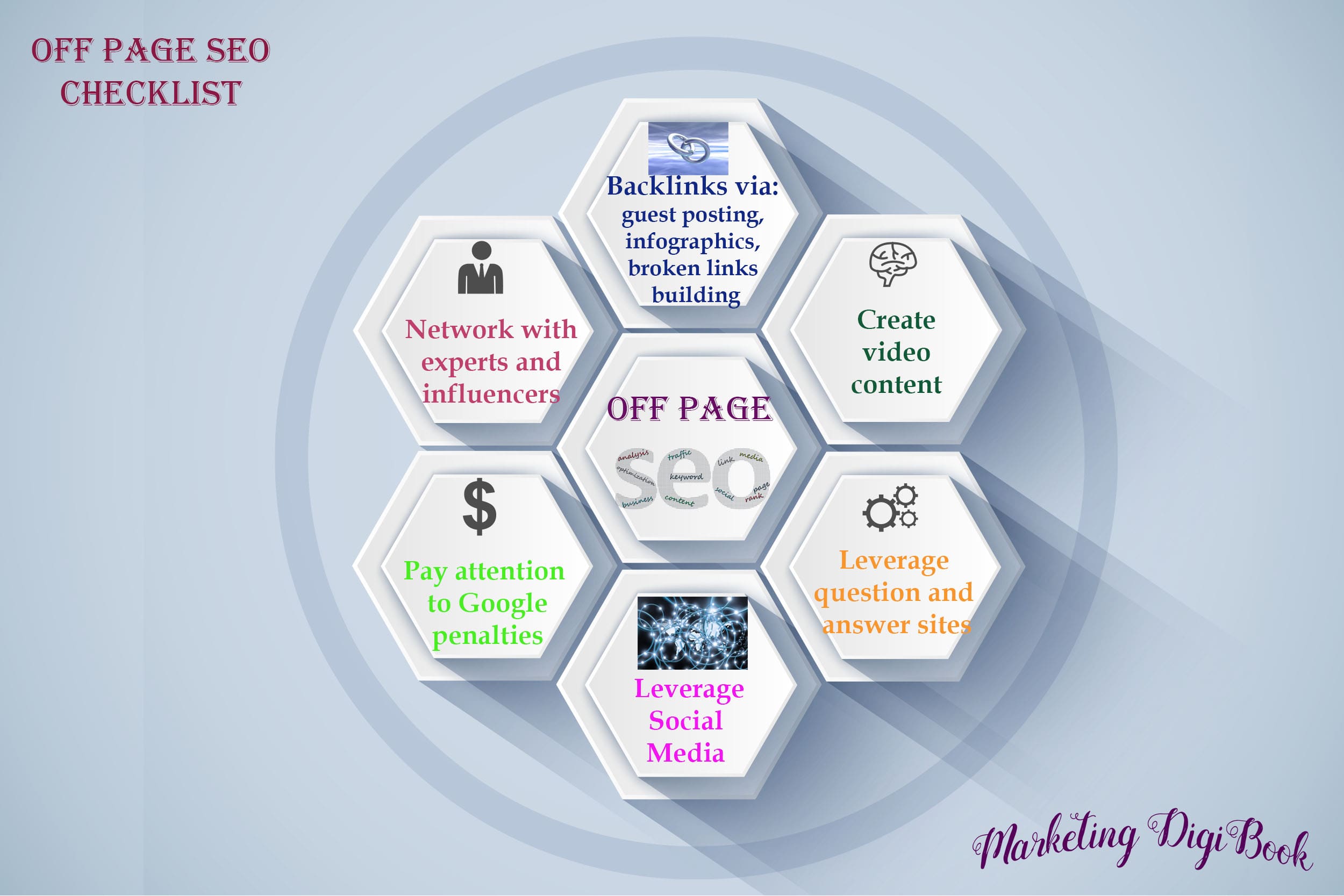
Here are the best off-page Search Engine Optimization techniques valid for 2020:
Off-Page SEO Strategy: Obtain Backlinks from Authority Sites
Most SEO experts agree that in terms of off-page SEO optimization, backlinking is the most prominent. Backlinks are impacting heavily on your rankings particularly if you want to appear on the first page of search results.
Reason?
Search engines like Google will trust you just after many others will trust you. If sites with high authority will link back to your site, Google will consider your site more trustworthy.
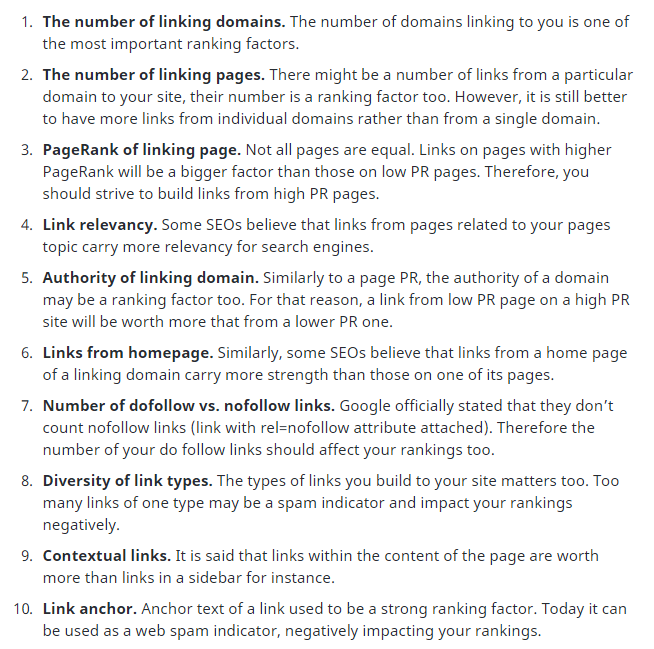
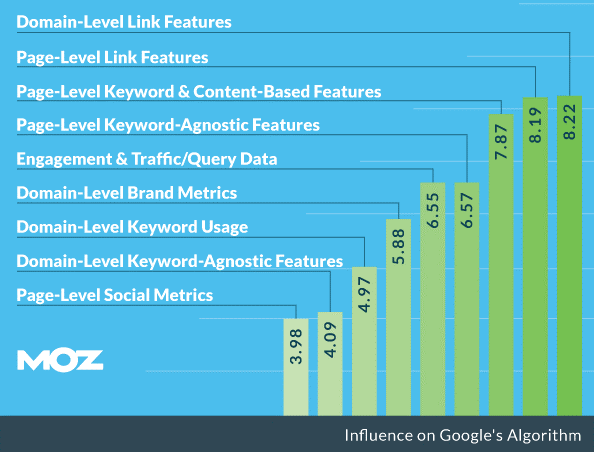
These backlinks are very important in the algorithm used by Google to rank pages in a list of results for a certain query. This algorithm uses a series of criteria baptized by Google Ranking Factors, which counts about 200 factors that are taken into consideration when deciding the hierarchy of sites when answering a search query.
Some of the most impactful are:
The more links from authority sites point to your site, the more value you gain in Google’s eyes. As it analyzes several aspects concerning the link: from which site comes the link? Which is its quality? Which is the logic of this connection? How fresh is it? Etc.
Ok, we get the importance of backlinks, especially from renowned sites. But, the $1million question is:
How do you obtain these authoritative, relevant links?
Here are some ways:
Off-Page SEO Techniques: Guest posting
Guest blogging is a reliable way to attract new links and traffic, even if some might consider it outdated. While contributing to other sites besides building links, you promote your brand building authority and acquiring referral traffic.
When posting on other sites, take into consideration the following:
* Make a list of sites that accept guest posts, that are connected with your niche, and that you are interested in publishing on.
* To cover all opportunities, search in Google and on social media networks with “your target keyword” + ”guest post”
* Check each site from your list and verify which is most popular, and which has the highest traffic, and prioritize them in the function of the results you obtain. Use a tool like similarweb.com, to help you.
* Use a social media analyzer to verify the number of social media shares the latest posts from the respective site had. This will help you establish the potential shares your articles may achieve.
* Remember not to insert too many links to your site.
This method involves a lot of homework, that’s obvious: you need to research your niche, find out which are the influencers and top bloggers, get in contact, and send pitches. But, if your request is accepted, your article will be published and voila, you obtained a valued backlink.
Off-Page SEO Techniques: Create high-impact infographics
That human beings are visual creatures in general, is demonstrated and proved with numbers. We all, are more attracted by visually appealing content – “an image makes more than 1000 words” and statistics show this.
In this category, infographics are still at the top, even if they saw fulminant growth in recent years and some may consider this practice arrived at saturation. Great results for backlinks and traffic can still be achieved if great graphics, information, and original idea are used.
To help promote your infographics you should consider publishing them on infographics submission sites and link them to your blog or site.
Infographics have a high potential of going viral if properly made and intensively promoted. When your infographic is shared, organic traffic is directed toward your site. So, you made it, backlinks are generated.
Off-Page SEO Techniques: Broken link building
A more efficient method to acquire links may be identifying broken links on authority sites and getting in contact to acknowledge this, offering in exchange a link of yours to replace it.
Broken links are all over the Internet, and authoritative sites are no exception. This arrives because initial links change, hosting expires, or links are damaged during migration processes. Having broken links on your site does not impact ranking, but affects user experience and you want to avoid that. Authoritative sites are aware of that too, and that’s why this technique is relevant and works.
Thus, make a backlink analysis on relevant sites for your niche, identify broken links, contact the owner and inform him about those dead links and propose a replacement link, preferably yours. Chances are that your effort is paid back with a backlink.
Off-Page SEO Strategy 2: Leverage Your Social Media
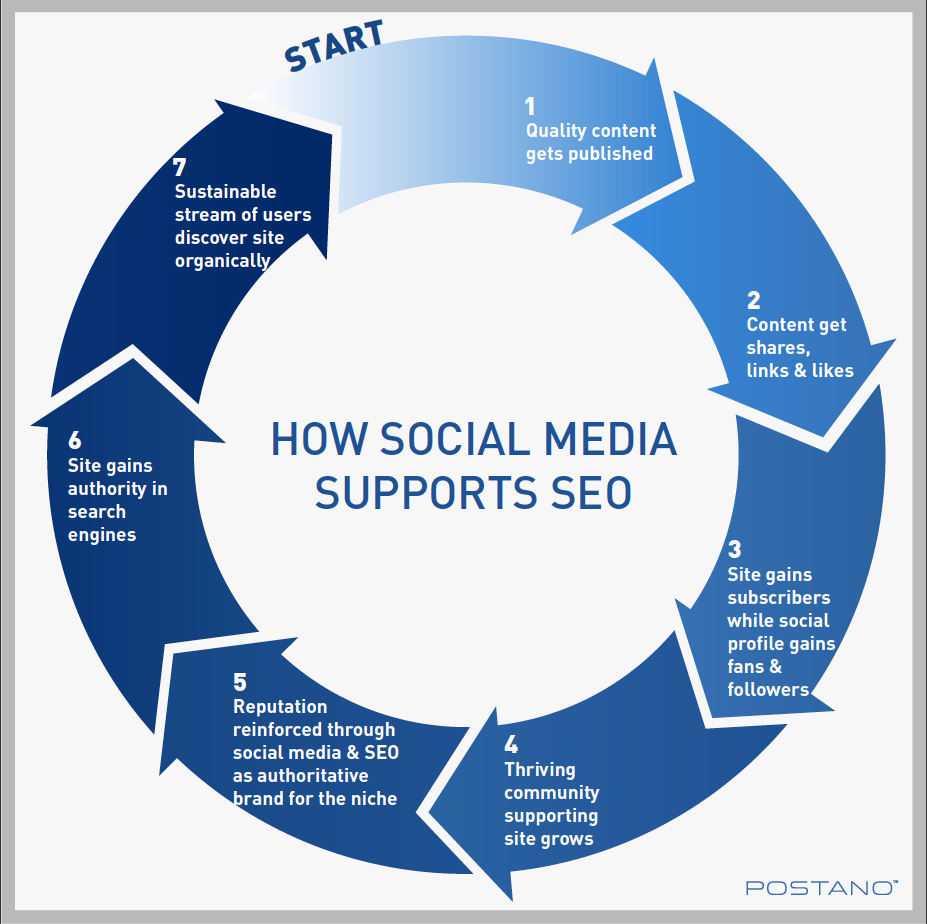
Off-Page optimization finds a massive pillar on social shares. Check below how this happens.
Social Media supports off-page SEO. Source: postano.com
Using social media helps you meet your target audience, know her better, and find out which are her pain points, where is she hanging out, and when.
Off-Page SEO Techniques: Increase Engagement on Social Media
Engaging on social media platforms is a primary Off-page SEO technique that will have a major impact on your site’s visibility and popularity. Being present and involved in social conversations on multiple platforms will expand your reach and help grow your business.
Off-Page SEO Strategy 3: Leverage Question and Answer Sites
Another way to boost your site visibility through off-page SEO techniques is to use question-and-answer sites like Quora.
Search and join questions associated with your business or niche and provide pertinent answers to these questions. Offer a link to your website to help you gain visibility.
Some specialists consider that if you don’t use Quora, for example, you do not use the full potential and you are missing points on your SEO efforts. Quora is a platform where you can obtain pertinent answers to any question you may have.
For brand awareness, link building, or for a certain marketing campaign, Quora is a not to be missed place.
Now!
How can Quora as an off-page SEO tactic serve your purposes? Note some advantages:
– Allows you to prove your expertise: Answers you provide on Quora should relate to your business and reveal your expertise in the mentioned area. If you gain readers’ trust they will turn to you with further questions they might have.
– Answers appear in Google results: If people upvote your answer, it will display in Google as an answer to the respective question.
– Boosts your traffic: Your answers can generate traffic in the long run.
– Enhances your knowledge: You can find out and learn tips and tricks for your business from other experts.
Off-Page SEO Strategy 4: Create Video Content
You may wonder what’s the connection. What has video content to do with off-page SEO? Well, video search engines like YouTube, can drive massive traffic, in fact, YouTube is the 2nd ranked search engine after Google. So, links obtained via videos published on YouTube are valuable for your off-page optimization and drive traffic to your site.
Video content is the next megastar of marketing, do you know that 54% of users are interested in seeing more content? And 51,9% of marketers consider the video has the best ROI among all types of content. Not to mention that YouTube can bring high earnings if the needed effort is input.
When publishing video content, aim for high quality, aim for differentiation how are you distinct from others, and what makes you unique. Gaining awareness on YouTube takes time, up to two years so be patient and consequent.
Off-Page SEO Strategy 5: Network with Experts and Influencers in Your Niche
Building relationships with other bloggers in your industry, prominent authors, and influencers is another great way to support your off-page optimization efforts and create brand awareness. Linking with professionals in the same vertical will increase your credibility in front of readers and search engines alike.
Collaborating with niche authors to create and exchange content and interviews gives you the possibility to have access to new high-quality content assets and to new audiences. Entertaining relationships and collaborations with experts in your area allow you to access a particular market segment and new opportunities for partnerships.
Off-Page SEO Strategy 6: Pay Attention to Google Penalties
We already established that backlinks are extremely important for your site ranking. Hence in some cases, backlinks may have a negative influence.
Source: Moz
That’s why is compulsory to stay away from Google penalties because recovering takes time, money, and effort, and besides that is a very difficult process.
Nowadays Google aims for valuable content and high-quality user experience. The focus is not directed anymore to the words people use for a search, but to the scope, they use those words.
There is no established procedure that guarantees you are out of the penalties radar, but there are some actions you can take to avoid such issues:
· Analyze and audit your site. Use a tool like SEMrush to identify and solve SEO-related problems.
· Create valuable and useful content for your readers. Put your users first and write for them, and insert images, videos, graphics, and data in your posts. Provide value and a great user experience for your audience.
· Apply different anchor texts. After performing your backlinks audit and identifying the sources of your links, you should consider diversifying your keyword phrases. This is a way to show Google your links are natural. So, use various keywords, brand names, and generic words as anchor text. Make sure your anchor texts are relevant to your topic and related to the referring page. Consider using your brand name as an anchor as often as possible.
Search engine optimization is not a sprint, is a marathon. Endeavors made today for optimization will fructify step by step in the future, in a compound effect. To see results from off-page SEO takes time and constant improvement efforts.
If there is an industry that has radically been affected by the growing spheres of influence of Google and Facebook, it’s the advertising industry. They control a duopoly of about 61% of US digital ad spending. The digital age has dramatically reshaped the advertising model from the traditional 30-second television spot to having to maintain a myriad of platforms and devices. Native ads are one of the venues to test.
This market fragmentation means audiences are grouped into different segments with varying preferences and needs. It’s for this reason that advertisers had to drop the “one size fits all” approach and embrace more personalized and authentic ways such as native content advertising.
The thing that makes native ads seem more authentic is how they incorporate subtle advertising that naturally blends into another source of content or material.
So, What Is Native Advertising?
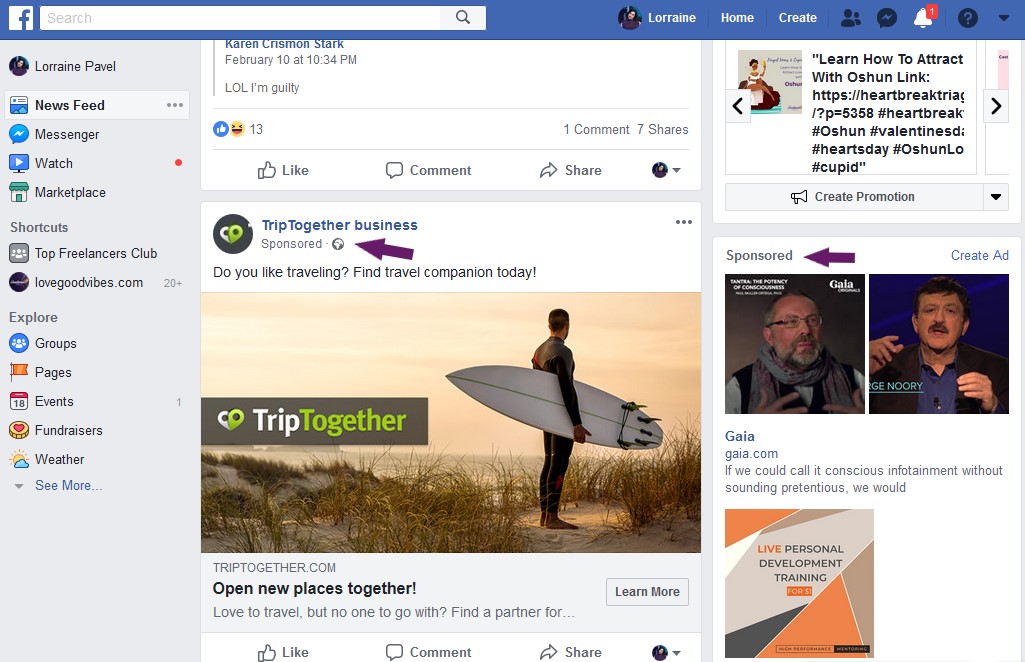
In simple terms, native advertising is content that’s been paid for but disguised as typical and organic content for a specific platform. Visually, it matches the website design and covers topics that resonate with the website’s audience. If used through the right channels, it can capture the minds and hearts of your potential audience in an excellent way and can take your brand’s visibility to the next level.
Let’s Make Your SEO & Content Work Better for Your Business
Sponsored content or sponsored ads are a type of native advertising. It’s content that’s created by the publisher on behalf of the brand. For the purpose of differentiating the two, native ads are a media placement offered by the publisher; they fit the form and function of the surrounding editorial and are filled with the type of content the brand wants to promote.
Sponsored content is not created or published by the brand, nor does it appear on the brand’s pages. It can look and read like a news story that can mention a product or service and includes a call to action. Native ads on the other hand can be created and published by the brand and appear on its pages. It also can look and read like a news story BUT doesn’t promote a product and neither does it have a call to action.
However subtle it is, the difference is evidently clear.
Native Advertising Vs. Content Marketing. Are They the Same Thing?
No, these two are not one and the same thing; content marketing is a larger idea than native advertising because it has a wider and longer focused goal.
Like native advertising, content marketing offers valuable knowledge to create brand awareness while targeting a specific group of prospective customers.
The difference, however, is that content marketing takes it further in that its main focus is to sustain the lead as part of a long-term process with a target of more conversions. It doesn’t just do a single piece of content; rather it integrates into an overall marketing campaign.
Your Traffic Drop Probably Isn’t Random
Most ranking losses come from overlooked SEO issues. Download my Complete SEO Audit Checklist to quickly identify what’s broken, what’s underperforming, and what to fix first to regain visibility.
You have Successfully Subscribed!
Native advertising is a form of content marketing.
Another difference is that the media used to share this marketing content, is owned by the brand itself (like they own their own publishing house, etc.) while native ads use media that they do not own, so they pay to play.
This long campaign often involves the use of content assets such as newsletters, blogs, videos, and guides.
What Are the Types of Native Advertising?
As brands are hunting for the least intrusive ways to reach their target audience, publishers are seeking new ways to monetize their content, native content comes to complete the game and provide effects so seamlessly.
Here sponsored content is promoted within a publication’s native environment and it’s marked as sponsored. Its format is identical to the format of the publication. This content may be written by either the publisher or by the corporation of the sponsoring brand.
These are just listings without editorial content and are created to fit harmoniously with the browsed content. They’re characteristically used by e-commerce sites to feature sponsored products and resemble already existing products on a particular site.
3. Paid Search Ads
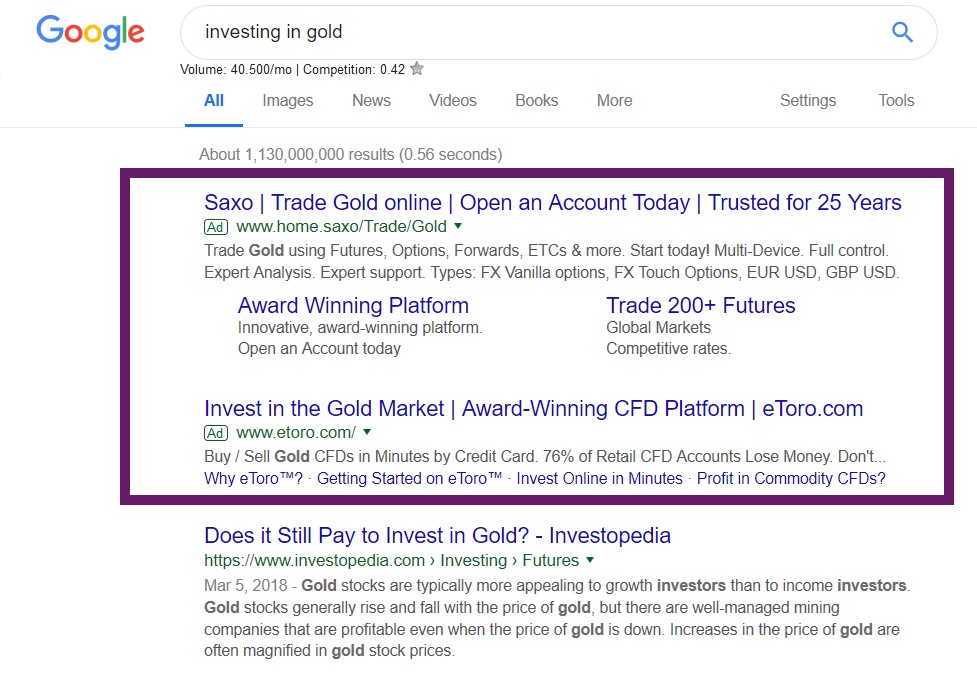
Have you ever noticed ads on top of your search results page? Those are paid search ads. They’re similar to promoted listings, the only difference is that they specifically appear at the top of the search results page. They are also localized; this means they promote businesses around the user’s area depending on their preferences. They are considered native as they are made to appear as organic search results.
4. Recommendation Widgets
You most likely have come across a widget like “You may also like” or “Recommended for you” at the end of most articles you’ve read on most websites. Those are content recommendation widgets. They are paid content discovery links distributed by content amplification networks meant to amplify a brand’s content by recommending it to sites with a similar audience.
5. Custom Ads
These are personalized ads created to fit perfectly into the media hosting them.
6. Ads Created with Specific Native Elements in Mind
These ads don’t look any different from other ads; the difference is that their context is very relevant to the publisher’s site as well as the content they appear next to. They may easily look like one flowing story.
Native Advertising Examples
There are so many amazing examples of native advertising. Here are just two of the best.
This is a great example of simple and clean content designed to arrest the user’s interest. The campaign dubbed “The rise of the super-human” is centered on various technologies that can turn people into super-humans by reducing human error and allowing you to achieve your potential through the use of the robotic exoskeleton suits, and the fact that this Mercedes Benz E-Class series integrates this intelligent driving system.
The Landrover
This nail-biting movie-like native ad campaign by Landrover that was shared in their networks is the perfect example of how to sell your product, without looking like you’re trying to.
Why Do Native Ads Work So Well?
There are loads and loads of content being generated daily, and all this content is always accompanied by ads in such an intrusive manner, that many consumers come up with ways of ignoring ads, while others seek help from ad-blocking software to get rid of these ads from all sites altogether.
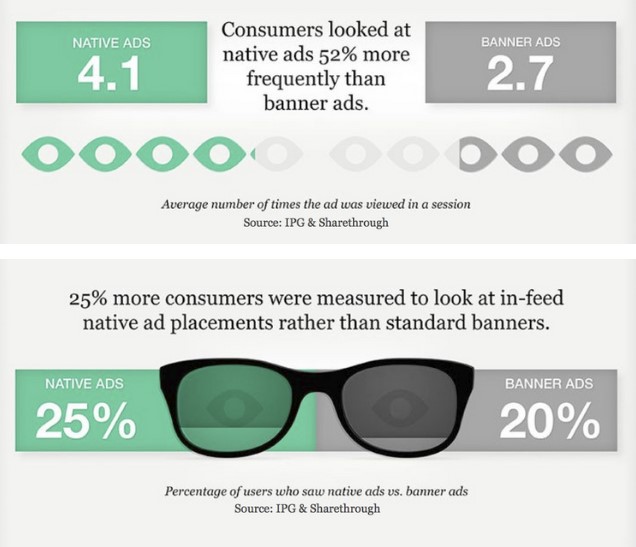
But since native advertising is not meant to look like a common ad, it’s often consumed and pretty hard to ignore. Native ads Statistics show that consumers engage with native ads more than traditional banner ads and have the potential to boost conversions by up to 18% more than display ads.
Brands and advertisers also love native ads because of the main fact that the click-through rates tend to be much higher compared to typical ads. 70% of people prefer learning about products through well-written content than through traditional advertising.
With this in mind:
Here Are 3 Main Reasons Why Using Native Advertising Gives You an Up Leveled Advantage
a. It Captures More Attention
The main purpose of any advertisement is to access and capture the attention of your target audience. In marketing, performance metrics are essential and native advertising when used right generally offers higher viewership rates, greater conversions, and more engagement compared to traditional advertisements.
b. Native Advertising Builds Up Brand Relevance
As a brand, the more you engage with your audience using their own tools and language, the more you’ll be able to resonate with them and build a relationship. With the countless ads that consumers are bombarded with on a daily basis, the possibility of building a relationship with your target market encourages trust and loyalty.
This is an indispensable part of building a network of devoted, repeated buyers as well as encouraging the arrival of new fans into your tribe.
Using native advertising to associate your brand content with the target taste and the publisher in question, you boost your level of shareability which gives you an opportunity to go viral.
c. Native Advertising Empowers Your Target Audience
Most consumers don’t just shop for new products or services when they get online, what they look for are solutions to problems they have. As such, they value useful content from companies that seem to provide solutions or assistance to them, rather than content that out rightly seeks to make profits.
Native advertising offers content in a subtle and convincing way that presents useable and empowering information to customers, by convincing them that they’re valuable. This effort is always rewarded with their loyalty.
How Does Native Advertising Boost Visibility?
Research shows that readers spend almost the same amount of time reading native ads as they do editorial content; it also indicates that 53% of them pay more attention to this kind of advertising compared to other forms such as banner advertising.
Native ads are simply the solution to banner blindness. They are often received well by the target audience because they always seem less intrusive compared to say popups or other ad types that are easily ignored as people see them as noise in their everyday environment. Native ads offer a different feel to the audience and entice her to consume the content. So, how then can you get the best visibility using native ads?
How to Get the Best Visibility from Native Ads
1. Identify the right channels
Create a list of channels where you’d like your native ads to appear, have in mind that not all channels will offer the option for native advertising and some may not be fitting because they may not appeal to your target audience.
When you think about the visibility of native ads, think of related industry websites, digital magazines, and social networks where your ads might blend in naturally. Your aim should be to pick a platform that will seem organic for your brand and the target audience you want to serve.
2. Position yourself as an authority
Once you’ve identified channels that will be relevant to your ads, research how ads are placed on these platforms and make sure that yours will look exactly like the native sites. While you’ll need to write about topics that are relevant to the reader, quality should your top priority.
Consider how you can create content that’s a step above what the readers are used to seeing. Think of things like thought leadership, unexplored news items, and such approaches. This will build your authority and attract many potential viewers.
3. Make the most of A/B testing
A/B testing can help you judge how certain elements of your ad can perform in the right circumstances. Whether you’re looking to try native advertising or are getting paid to create content for it, elements such as headlines can hold so much for your success. So, it’s critical to test and optimizes frequently.
Your Traffic Drop Probably Isn’t Random
Most ranking losses come from overlooked SEO issues. Download my Complete SEO Audit Checklist to quickly identify what’s broken, what’s underperforming, and what to fix first to regain visibility.
You have Successfully Subscribed!
How to Create Effective Native Advertisements
Before proceeding with these steps, it’s critical that you have a look around at what’s trending and what’s going viral across the web. This will give you a hint on concepts that are already working having been tried and tested by others.
When properly executed, native advertising will improve your
Customer engagement
Brand’s reputation
Content exposure
Brand reach and awareness
Traffic to website
Email List
Step 1. Set Your Goals
It’s important to have a plan and a goal for what you want to achieve. Understand the demographic formation of your audience in terms of brand size and industry etc. Is it digital? What platforms will best fit your advertisement? Is there any other method of distribution in the native ad package? All this information will help you draw a plan that’s practical.
Having a clear image of what you want to achieve and with the best strategy identified, content creation becomes the next most important thing. It must include a mission statement that’s in tandem with your goal.
To be able to create content that’s relevant to your audience, you must understand their preferred platforms and content of choice.
As you tailor your copy to your publisher’s culture and design, consider who will write the content. If your team writes it then it means they’ll have more control over what to say and the brand voice will be stronger. However, if the publisher’s editorial team will be writing it, just know that your content will most likely be tailored to lean on their brand voice.
That said though, you can provide your publishers with a topic of your choice. This will help get your message to your audience, but with a voice, they’re familiar with.
And just for good measure, you may want to find out if your publisher allows a link back to your website because you’ll need this for lead generation.
During content creation consider visual content as well, over 80% of marketers are leveraging visual elements and components in the content they’re publishing, with video alone having over 60%. This means video content is quite important if you want your campaign to thrive in engagement. They can go together with the written content to give a powerful and irresistible campaign.
Lastly, remember native advertising is simple marketing. It’s all about capturing the audience’s attention by telling them something interesting and helpful to them. So, by all means, keep it simple and clear.
Step 3. Optimize
Well, it goes without saying; the key to perfecting any marketing channel including native advertising is optimization in both top and middle of the funnel.
It’s important to know the average conversion rates of all your campaigns, this way you can break them down to campaign type and performance. This will aid your optimization process. Here is how you can identify what requires to be changed if the campaign is not performing as expected.
The number of distinct views/ total impressions= strength of the headline.
Number of clicks/ distinct views=strength of the content/ article
The number of leads/clicks = strength of the landing page.
For the strength of the headline and the article, you can work with your publisher to make changes where necessary if the results are not pleasant. If the issue lies in the landing page, then work on it and see why you’re not getting conversions.
It’s however, important to remind you that these metrics can only compare against your own brand data, not the whole industry.
So, because the real goal of your native ads campaign is lead generation, the best metric to show success is the sales opportunities that arise from these leads. Great leads mean more sales opportunities. Publishers here can help since they have the visibility to see the quality of traffic that’s being driven to the article. This leads to the next point.
Step 4. Build a Good Relationship with your Publisher
Even after all the work has been done, if you don’t have a good relationship with your publishers, then all that effort may not amount to much. Having open communication with the editor ensures that your content is aligned with your goals and the message you want to pass.
A good relationship ensures a flexible working environment where any challenge can easily be resolved.
Step 5. Evaluate and Compare
Whether it is conversions, page views, impressions, or time on the page, the results of the goals you set out in step one above are what you should be getting now. So, track your metrics, take a look and see how they have performed.
Take Home
Native advertising is effective if done correctly. Your ad must add value to the audience and must be placed alongside relevant content for it to be native. More and more customers are choosing products offered through content compared to traditional ads.
So, to learn properly how to incorporate effective native ads into various publishers’ cultures, designs and audiences, you should look at it both as an art and science and you will need to master it.
Most bloggers or site owners dream about having their blog/site appear in the first position of search engine results, or most often Google’s first page. When I hear affirmations like these “I have a two months blog and I want to get on the first page of Google” most often it makes me laugh. It’s not a secret that the results displayed by search engines have behind a complex algorithm that includes in the case of Google, more than 200 factors. How to get on the first page of Google is a tough question with a complicated answer.
A new site has insignificant chances, if not second to none, to hit the first page or the first position in the first page. One great impediment is the domain authority – if in your niche the influencers or large companies have thousands or tens of thousands of backlinks and high domain authority your chances to overrank them are literally zero.
Let’s Make Your SEO & Content Work Better for Your Business
This blog has about 27 posts and is ten months old, at the moment of writing this article. I would still call it small and rather new. Most often I publish twice a month, 2000+ articles. In these conditions ranking on the first page of Google didn’t even cross my mind. In the digital marketing niche, there are large companies and prominent bloggers with large sites and thousands of backlinks to their domain. So, there is no real possibility to reach Google’s first page very quickly. Or so, I thought.
But surprise!
While verifying analytics I noticed lately that one post has constantly a higher number of visitors compared with my other blogs. I thought it was weird as the respective blog is among my less shared articles and if I were to make a top ten of my posts, I wouldn’t count this one.
When making the following search on Google I had a huge surprise:
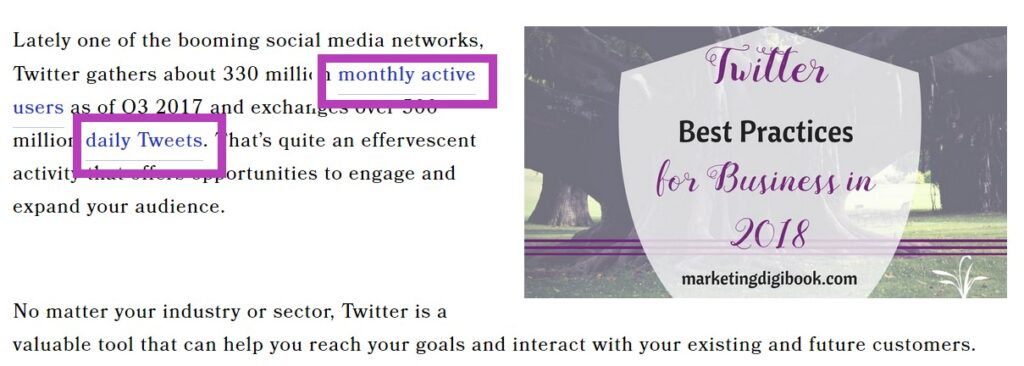
My post “Twitter Best Practices for Business” ranks the first on Google SERPs. On Google US and on Google France. It also appears on the first page for other related keywords.
Say, whattttttttt?
I thought I need a new pair of glasses.
How comes?!
A blog having a MOZ DA 9 and no backlinks outranks pages having MOZ DA 72, 100, 94. Moreover, a no-name blog outranks Twitter’s for business section concerning the topic Twitter for business. Rather funny, I would say.
How did this happen?
Let’s inspect a bit what I did with this post and how is possible to repeat this exploit.
My first suspicion is that RankBrain has a heavy word on this. Or at least at this moment, I do not see other better explanations. Might be that it’s simply happening. But it lasts for a couple of months…
So, what I did, how I got on Google’s first page for free? I used on-page SEO best practices to optimize my post.
Included the Target Keyword in the Title “Twitter Best Practices”
Most part of experts estimates that the title is the primary on-page SEO factor and gets the pole position as importance. I totally agree. Also having the keywords as the first words of the title has importance in SERP rankings.
We all use keywords to search, and the results returned by engines contain those keywords and the title is the first in line. If the title contains the words you used in your search most likely you will click on that link if you suspect you might find there the answer you are looking for.
I would say in SERPs it’s more about the probability of getting the information you need than how engaging or catchy is the title. Leave aside each of us has his/her definition on what’s engaging or not. What one considers engaging one other will not.
So, a title like “Twitter best practices for business” has more chances to appear on search results than a fancier title like “How to crave your way to a highly engaging Twitter account”, for the simple reasons it will most probably not cross your mind very often to use those words for research. This type of title will see higher success on social media than in SERPs.
When you are interested to find which are the best practices for Twitter you will use these words most probably “Twitter best practices”. Not trying to be creative and see how well Google performs. You will type strait the words you consider have the best chances to return the information you need.
Rules for high performing titles in SERPs:
– Keep the number of characters of the title under 60, to avoid getting it cut in search results
– Insert the keyword in the title – that’s compulsory
– Place the keyword first, if possible.
The title of the article we are talking about includes 2 modifiers “2018” and “best”, confirming the theory that modifiers tend to improve rankings. So, use modifiers “best”, “2018”, “guide”.
Assigned H1 Tag to the Title of the Article
Nothing new here, the H1 tag is of utmost importance for SEO, thus check if your CMS assigns properly H1 to the title of your article. H1 tag includes the target keyword and appears just once on every page.
Defining what quality content means is a firing debate with no strait answer. Nowadays unique content, ranging anywhere from 1000 words to several thousand – left aside the quality of information – is considered high quality, in depth content. Various researches indicate longer content as ranking better.
A precondition of high-quality content is to be skimmable, easy to read, and aesthetic as design. Stress for short paragraphs, use bullet points, subheadings, and bold keywords to attract attention to them.
“Twitter best practices for business in 2018” respects these requirements also.
Inserted Catchy Visuals to Improve the Appearance of the Post
Formatting your post for readability matters. Make use of charts, screenshots as examples, videos, gifs, appealing images to retain reader’s attention, increase dwelling time and diminish bouncing rate.
As we are visual human beings we are all more attracted by visual content, so including visuals is a must to gain reader’s attention, to make your post more attractive and shareable. And search engines have a preference for high quality visuals, too.
Optimized Images – an Absolute Must for Google Ranking
These are of course details, but the “devil is in the detail”, hence images need to have proper descriptive names, alt texts and the alt texts to include keywords. A little something that helps search engines establish the topic of your post in their algorithm. So, give them a hand and do yourself a favor.
Also, I noticed that my articles that have some sort of infographic rank better. “Twitter Best Practices for business in 2018” has a checklist as infographic.
The First 100 Words Contain the Target Keyword
Again, to help search engines correctly identify the subject of your post, include the target keyword at the beginning of the first 100 words.
Also, keywords should appear in your article where appropriate, and in the end, there is no one-fits-all formula for this, just keep the right balance. Using too many keywords and overstuffing your content might be subject of Google penalties, consequently, refrain from this practice.
Used Latent Semantic Indexing Keywords
Latent Semantic Indexing Keywords are synonyms or related words taken into consideration by search engines to decide on the relevance of a page. Use part of them in your post.
Subheadings Marked as H2 Tags
All subheadings in the article are H2. But there is no subheading H2 having the keyword included. I missed this one.
Recent Content
Search engines prefer fresh content – normally I would say. You, as a reader, are not very interested in consuming outdated content. Updating periodically your content is decisive, particularly updating content that is time sensitive.
Google shows the last update of an article, so this is relevant detail. When you update your older posts, make these modifications significant – add more details, remove parts that are less relevant – not just change a word or two here and there, Google will remark it. To enhance your rankings, update frequently your posts.
Made Sure to Relate to Reliable External Sources
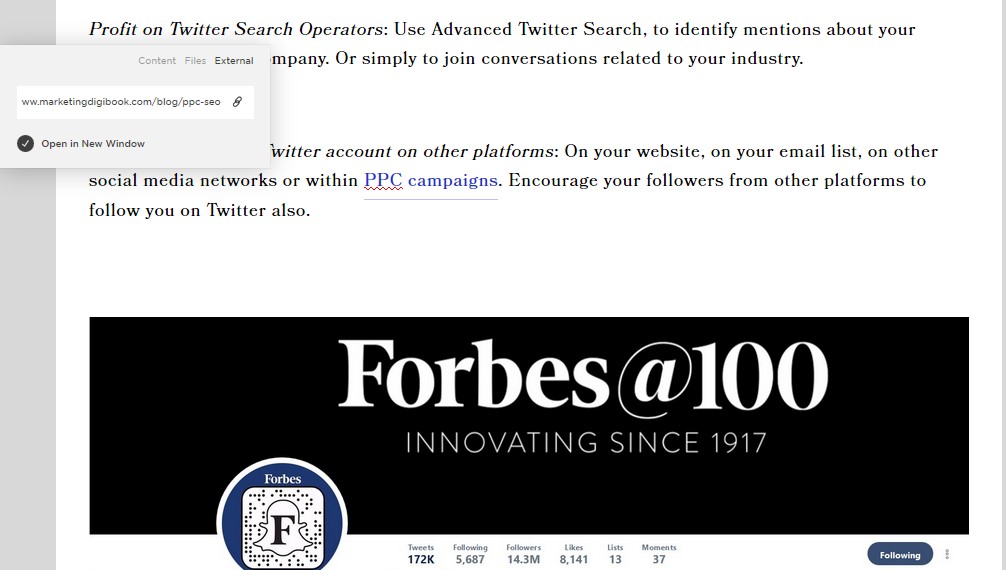
Having outbound links is a simple way to generate traffic. They improve the quality of your article and that of the provided information and serve supplementary clues to search engines to establish the subject of the respective post.
If you want your audience to trust you and gain more credibility in front of search engines pay attention to outbound links. Select just high authoritative and reliable sources. Peak world-renowned publications like Wall Street Journal, Forbes, Huffington Post, etc, and quote influencers and experts in your industry. For the marketing area citing sources like HubSpot, MOZ, Content Marketing Institute, Backlinko, Neil Patel, etc is recommended, as they create high quality trusted content that your visitors will highly appreciate.
Included Also Internal Links to Other Pages on My Site
Inbound links need to be considered too, as interlinking is relevant strategy to retain more time the user on your site. It’s a pretext to make the linked pages recrawled by search engines and you raise the quality of the post by providing supplementary details.
Be sure to have about 3-4 links to your other posts and choose as anchor text relevant keywords. Place them only when pertinent and when they enhance the value of the provided information and avoid stuffing the post with 20 inbound links.
Inserted Social Sharing Buttons
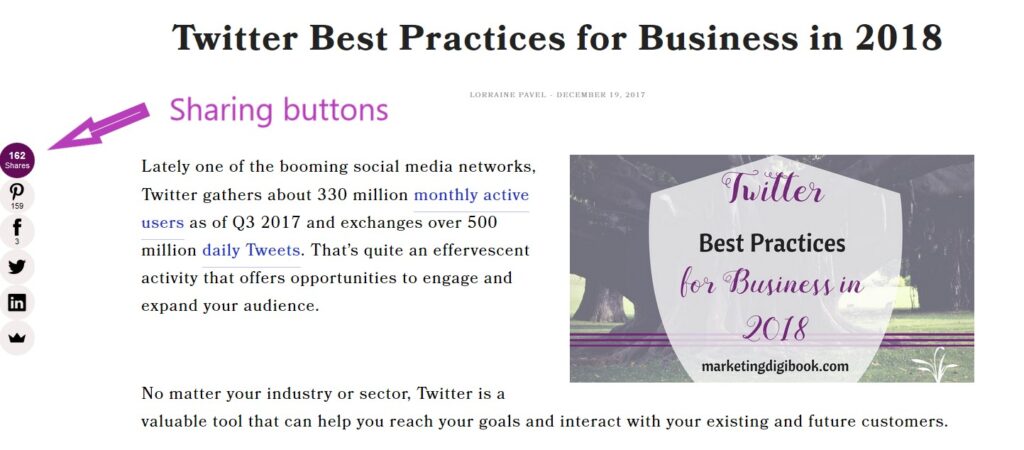
Social sharing is not considered a ranking factor, but it helps indirectly, as it supports extending your reach. As you may notice there are social buttons on the left side of my post, Sumo is responsible for them and their personalized design.
URL Is SEO Friendly
There is no secret that the first 3-5 words that form an URL impact heavier on the search results.
As consequence, the permalinks should be relevant, as short as possible, and comprise the target keyword.
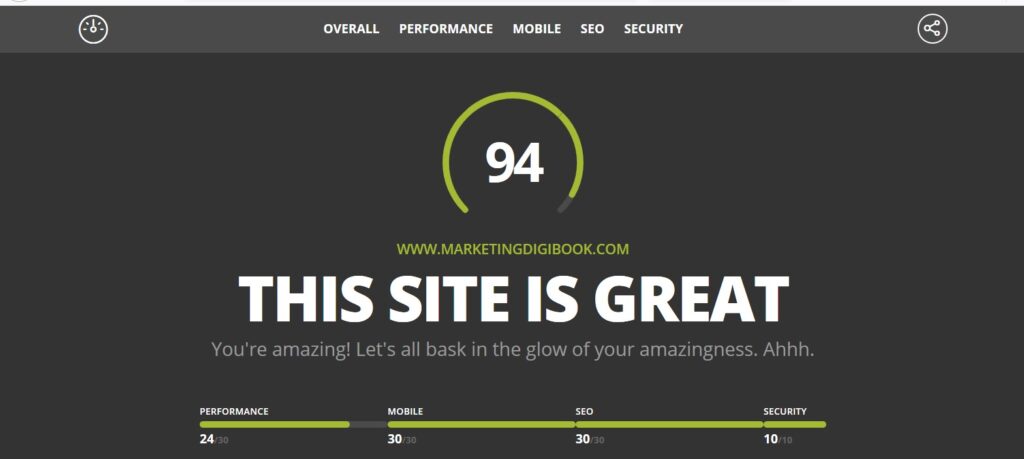
The loading speed of the sites is counted as an SEO ranking factor and a must-use on-page SEO technique. User experience depends highly on the loading speed of the site. Experts say that users would not return to a site that loads slow, and aim for a loading speed of under 2 seconds.
“Make sure they [web pages] load fast, for your users. I aim for less than 2-3 secs” John Mueller, Google”
Marketingdigibook tested for speed. Source: HubSpot Website Grader
In summary, this is all I did for this page in terms of SEO and for the moment it is ranking on first position in Google search. For more insights on how to rank higher on Google in 2018 and eventually how to get your business to show up on Google first page, listen to an expert:
We use cookies on our website to give you the most relevant experience by remembering your preferences and repeat visits. By clicking “Accept All”, you consent to the use of ALL the cookies. However, you may visit "Cookie Settings" to provide a controlled consent.
This website uses cookies to improve your experience while you navigate through the website. Out of these, the cookies that are categorized as necessary are stored on your browser as they are essential for the working of basic functionalities of the website. We also use third-party cookies that help us analyze and understand how you use this website. These cookies will be stored in your browser only with your consent. You also have the option to opt-out of these cookies. But opting out of some of these cookies may affect your browsing experience.
Necessary cookies are absolutely essential for the website to function properly. These cookies ensure basic functionalities and security features of the website, anonymously.
Cookie
Duration
Description
cookielawinfo-checkbox-analytics
11 months
This cookie is set by GDPR Cookie Consent plugin. The cookie is used to store the user consent for the cookies in the category "Analytics".
cookielawinfo-checkbox-functional
11 months
The cookie is set by GDPR cookie consent to record the user consent for the cookies in the category "Functional".
cookielawinfo-checkbox-necessary
11 months
This cookie is set by GDPR Cookie Consent plugin. The cookies is used to store the user consent for the cookies in the category "Necessary".
cookielawinfo-checkbox-others
11 months
This cookie is set by GDPR Cookie Consent plugin. The cookie is used to store the user consent for the cookies in the category "Other.
cookielawinfo-checkbox-performance
11 months
This cookie is set by GDPR Cookie Consent plugin. The cookie is used to store the user consent for the cookies in the category "Performance".
viewed_cookie_policy
11 months
The cookie is set by the GDPR Cookie Consent plugin and is used to store whether or not user has consented to the use of cookies. It does not store any personal data.
Functional cookies help to perform certain functionalities like sharing the content of the website on social media platforms, collect feedbacks, and other third-party features.
Performance cookies are used to understand and analyze the key performance indexes of the website which helps in delivering a better user experience for the visitors.
Analytical cookies are used to understand how visitors interact with the website. These cookies help provide information on metrics the number of visitors, bounce rate, traffic source, etc.
Advertisement cookies are used to provide visitors with relevant ads and marketing campaigns. These cookies track visitors across websites and collect information to provide customized ads.