Content marketing funnel! Voila, some other fancy name, and apparently a Gordian knot that you need to solve. But wait, that doesn’t need to be overwhelming, if you approach the notion step by step, you will see it is achievable. Content marketing funnel explained for complete beginners.
What Is a Content Marketing Funnel and Why Do You Need It?
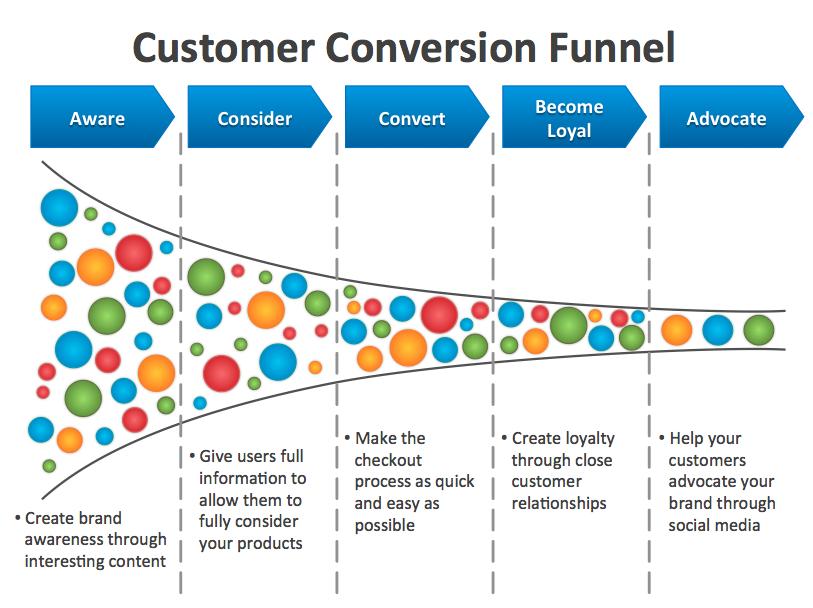
A content marketing funnel is a way of creating your content based on the phases of the buyer journey. Meaning following the steps that a prospect/visitor is following through the content of your site to purchase a good or service. In essence, users arrive on a landing page – from ads, emails, or organic search, and all the additional pages they are visiting until they buy is a content marketing funnel.
Along this path, a large part of the traffic that arrives on your site will drop off at different points, and in the final stage – the purchase stage – will arrive just a small part. This explains the form of the funnel, with a larger top and a smaller bottom.
Why does this happen?
There are a plethora of reasons – a bunch of them on your side like technical dysfunctions, incoherence between your ads and your landing pages, or reasons related to the customer. These could be: the visitor is just looking for information, he is not looking to buy; the visitor is not aware he has a problem that your product/service could solve.
That just means the visitor is not ready to buy yet. So, pushing him in a funnel to buy right away is simply not appropriate and will not bring the results you want.
The content marketing funnels should be constructed as client centric.
Their mission is to align customers’ needs with your business needs, in a win-win manner. You need to polish continuously your lead generation funnels, to identify where the “breaches” are in these paths. To fix them and anticipate the questions of a potential client and answer them even before he asks.
From your business point of view, the main purpose of a content marketing funnel is to translate as many as possible visitors into paying customers.
Let’s Make Your SEO & Content Work Better for Your Business
The number one question is how you attract a larger part of these visitors to become customers.
Through lead nurturing. Meaning answering all the questions, doubts, and concerns a potential client might have.
Why do nurturing leads count?
Research by Marketo confirms that 96% of visitors arriving on your site are not prepared to buy at that moment.
That’s more than huge, it’s enormous!
The reality is that leads that don’t convert at all are a burden on your marketing expenses, a fact that propels leading nurturing among the top priorities of any business.
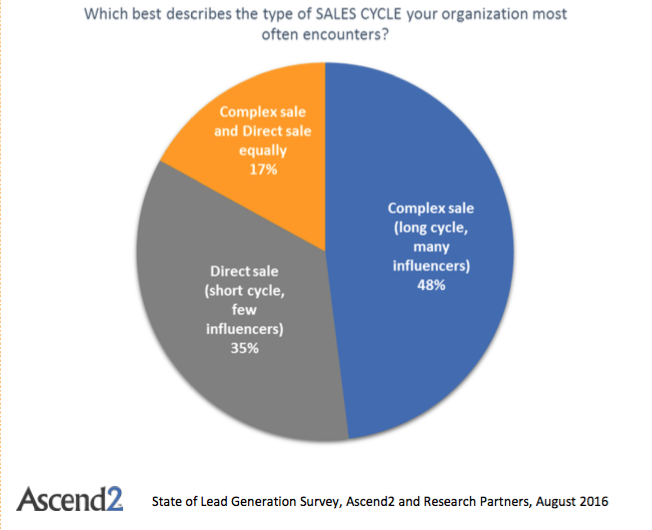
48% of businesses confirm that a great part of their leads is involved in “long cycle” nurturing.
Businesses that best employ lead nurturing observe a 50% increase in sales and a reduction of 33% in costs.
Based on these numbers, the conclusion is obvious: users will trust and buy from you, only after you prove you pay great attention to and anticipate their needs.
Content Marketing Funnel Explained: How to Build an Effective Content Funnel?
In order to simplify the process of creating your content marketing funnel you need to clearly establish some details like what you want to sell through the funnel. How do you want to sell the product? Where do you find the qualified traffic?
What product will your funnel sell?
If you have just one product/service, the answer is obvious.
If you have more, you should make a decision. Aim to build a funnel for a specific service/product, not a general one. For instance, a writer should not consider building a funnel for “writing services”, but for “content marketing writing services for the real estate industry”.
Being specific will facilitate your efforts in defining the stages of the funnel.
Take into consideration several criteria:
· Popularity of a product/service
· Potential of that product/service to drive sales (a product that can lead to selling other products, or services that involve more work)
· Ease to sell
As a general rule, a sales funnel should sell one product/service.
How do you sell the product/service? From where?
Depending on the specificity of your business the place where you place your pitch is different:
· Long-form sales pages – for courses, conferences
· Pricing pages – for books, software applications, consulting services
· Product pages – for online stores
Where do you find the qualified traffic?
Firstly, you can count on the traffic you have on your site or your email list (if you have one). Your existing visitors already know about you and are already positioned somewhere inside the stages of the funnel.
· Partnerships with influencers and other specialists in your industry
Now that you have clarified the funnel basics, start with defining the content marketing stages:
The genuine art of converting means a flow and a funnel that doesn’t simply end with a sale. It’s a perpetual mission of reaching, keeping, and increasing your buyer persona base, using technology, content marketing, social media, email automation, etc. to satisfy better their needs.
It’s part of a broader marketing strategy that mixes lead nurturing, targets behavior uses retention tactics, and in the end, obtains referrals.
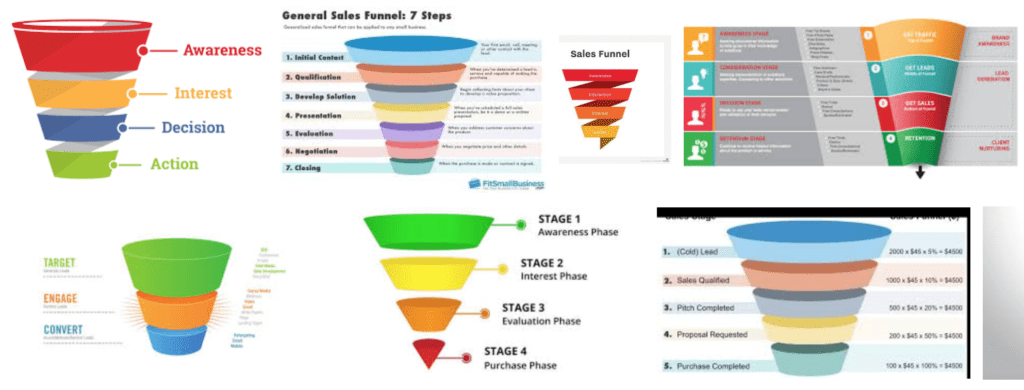
If you do research, you will obtain various good-looking versions like these:
Source: Google
The content marketing funnel has a logical flow — it starts with generating awareness for your brand and problems it solves. Then Captures the interest of those users searching for a solution to such a problem. Attentively guides the flow to a purchasing decision. And arrives in the final stage of taking action and buying.
To each of these stages of the marketing funnel, you have to assign corresponding messages, that are buyer centric:
Content Marketing Funnel Stage 1: TOFU
The question is: which is the awareness level of my prospect?
This stage is the first contact point, you have to present your business, your mission, and your offer. You need to inform the users that you exist.
Most often this happens when:
* Traffic is redirected to your site from an advertising campaign
* Backlinks link to your site
* Your business is mentioned in a video, webinar, or podcast
* Word of mouth is spreading – happy clients make advocacy for your business
* Search engines pop your business within organic search
The essential is that awareness emerges when your activity appears in front of potential leads in places where they spend time.
On his side the customer may find himself in the so-called various stages of awareness, depending on the acknowledgment he has of his problem, existing solutions, and the role of your brand.
The famous copywriter Eugene Schwartz pinpointed several stages of awareness:
Not aware: the user doesn’t consider he has a problem, nor is looking for a solution, and knows nothing about your brand
Problem aware: the user suspects he has an issue, but no clue about a possible solution
Solution aware: the user knows his purpose but does not know your brand can be a solution.
Product aware: the user is familiar with your business and brand, and knows that you can offer a solution, but hasn’t decided that your product is his best option. The user is considering various options.
Most aware: the user had decided in favor of your product and just needs to take action and buy.
How long is the funnel and how much you have to work to convince the potential client, depends highly on which level of the above spectrum he is. This refers to individual parts of the buyers’ journey and also to the whole funnel.
If the client is in the “totally unaware” position of course the funnel will be longer and more convincing elements will be needed. The best case, from the sales point of view, is the most aware position when the prospect is prepared to become paying client.
Depicting where the potential client is on his journey, will help you identify elements that the client responds favorably to and moves him a step further in the funnel.
From the very beginning is vital to know exactly (research is important) which are the pain points and desires of your audience.
At this point, you have to indicate how your solution is a benefit for clients from various perspectives. Potential customers are in different stages of the content marketing funnel and a multi-direction approach can help generate more qualified leads.
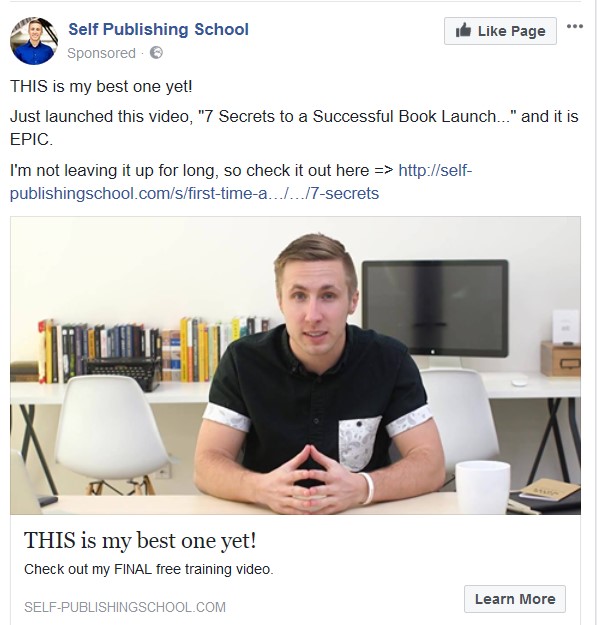
Top of the funnel content: – land on the funnel from a Facebook ad:
Source: Facebook
Or from an affiliate email:
You have to show a potential client which is the value you deliver and how are you going to do it. You need to put in front something that clients value, not what you consider they judge as valuable.
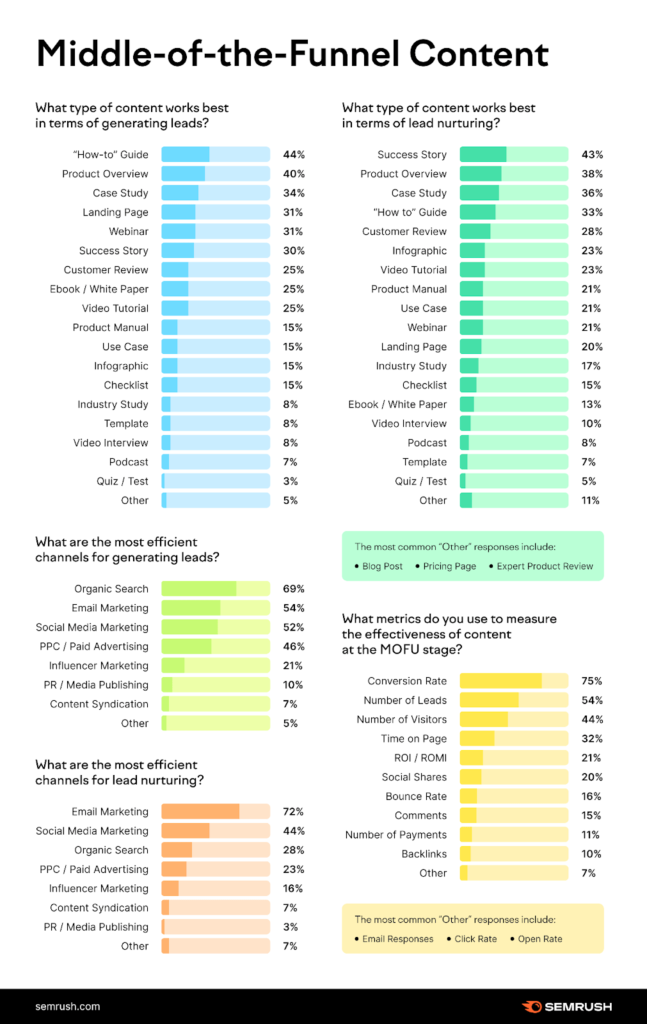
Content Marketing Funnel Stage 2: MOFU
The question is: which problem fixes my product?
As a general idea, what you sell is not the product/service itself, but its benefits, and the improvements that it can bring into your client’s life.
Thus, it is compulsory to clearly depict the problems and issues that your product solves for your client and how it will impact his life after such problems are eliminated. And create the corresponding content to provide answers.
Consequently, you have to do your homework and search in detail which are the pain points, desires, and needs of your prospects, how they see your product, which issues appear while using it, which are their exact requirements, which are the messages that resonate better with your target audience.
Ask your clients, listen to them, and also check on forums or question-and-answer sites like Quora to get some answers. A keen understanding of your prospects’ needs and behavioral targeting will support you in your endeavors.
Remember: you encourage action to help your prospects solve their problems and in exchange, you endorse your brand awareness.
Using the exact words that clients use to describe their situation proved to be the most reliable option, as it helps improve conversions.
Speak to your audience in their language with their own words about your offer, why is it valuable, how is it different from your competition, and why is it a better alternative. Identify and answer all objections and fears your buyer persona might have even before their questions pop up.
To generate a high-converting funnel, you need to educate your audience concerning the benefits of your offer.
Craft informative articles on your blog, and make video demonstrations, tutorials, or testimonials to emphasize the value you offer. Open up the conversation, show your potential clients you are always open to discussing and listening to their problems and that you are easy to reach, that you actually care. Ask for feedback. Gain their trust.
Most often a clear sign of interest is subscribing to your email list. If a visitor of your site gives you his email, in exchange for a freebie, for example, this is clear proof of interest.
Sparkling interest is crucial for migration to the next level of the conversion funnel.
The question is: What’s the leading need/desire that will make my prospect decide?
This stage relates to presenting prospects with your offer in a persuasive manner to make them decide if they buy or not.
The decision process is a function of your prospects’ purposes and desires. Even if their problems and struggles are the ones that are requiring a solution, their emotional needs are the real trigger of the decision.
Your message, to be effective should appeal to these deep emotional needs, the benefits of your offer should deliver at this level. Something like “we are the best in the world” or “we save you money” is not relevant enough.
You have to dig deeper to find meaningful answers. A way to discover this is to ask why until there are no questions left.
Practically this is a sales process. There are infinite options to arrive at this stage. Some ways are:
* Registering for a webinar
* A long-form sales page displaying the benefits of your offer, touching emotional needs, showing social trust, and testimonials
* Scheduling a free consultation where you speak about your offer
* An email series to warm the lead-up for the sale
Your Prospects Need to Take Action
Question is: why is my prospect still hesitating? Are there still unsolved concerns?
This is the purchasing stage. Prospects arriving at this stage will split into two categories:
· Those that are ready to buy, act and become customers
· Those that are not ready to buy, and you need to nurture them further
Not all prospects who arrived at this stage will buy, most of them will not, and that’s the reality. They will still have hesitations, for various reasons ranging from not trusting you to not being really convinced they need your product. Whether you like it or not, your visitors will have hesitations about buying from you.
It will be your task to minimize these hesitations by displaying the expected information in the right phase of the funnel. And how do you find that? What to say in which stage? Well, customer research is here to help you discover what to say, when, and also what makes your visitors stop and not act.
After passing through the above-mentioned sales funnel stages, from informing clients about your business, to rising their interest to having them engage in some form with your brand, it’s the moment to ask for the sale.
Now, your prospects should be prepared to trust you and your business. Use powerful attention-grabbing calls to action in emails, ads, and sales pages. Offer incentives to urge the need of buying, like limited discounts (20% discount if your buy in the next 15 minutes) or free bonuses.
The client bought it, end of story! Right?!
Wrong!! You should continue to engage your clients and transform them into evangelists of your offer.
And for those that finally didn’t buy, you have to continue your efforts by putting in place a marketing sequence. Send them a series of emails offering valuable information and propose another item from your sales funnels. Don’t waste such an opportunity!
The sales conversion funnels are in a continuous modifying cycle as clients modify their expectations and you should adapt your funnel to the new changing conditions. Improving user experience should be a top priority for you.
What will make your copy more compelling?
· Avoid ambiguity be clear and concise, people react better when they face known and calculated risks.
· Clear and common language is better than complex, people trust what they can understand quickly.
· Short and sweet, stay focused on the object.
Your Traffic Drop Probably Isn’t Random
Most ranking losses come from overlooked SEO issues. Download my Complete SEO Audit Checklist to quickly identify what’s broken, what’s underperforming, and what to fix first to regain visibility.
You have Successfully Subscribed!
Further Explanation for Your Content Marketing Funnel: Test It
After putting in place a coherent content funnel strategy, creating and settling in your funnel, you should always be looking for ways to improve it. And testing is the best method to do that. Be aware that you should focus on each stage of the sales funnel, not just on the awareness one. The final buying stage is more than important also.
Since you may have multiple pages that need testing, you need to filter and prioritize them. Start with the best performing and improve them if possible. Take a look at the implementation necessities: Are they easy to do or challenging from a technical point of view and require lots of time? Which is the conversion value brought by these modifications? How likely is it to have more prospects that convert?
Provided that you choose which pages are to be tested, they should go live and the results to be tracked.
Firstly, you have to set some realistic conversion goals and pick a tracking system, like Google Analytics. Analytics tracks the users on your site and provides a series of information like sources of visitors, how long they spend on your site, which country are they from, and which device and browser they use to connect.
Tools like Google Analytics support you in testing, refining, and optimizing your funnel.
Here you have it – a detailed content marketing funnel explanation and a game plan to convert your next funnel into a journey that inspires your customers and multiplies your sales.
Frequent Asked Questions
What is full-funnel content strategy?
A full-funnel content strategy is a strategy that takes into consideration also the stages of the buyer journey and plans adequate content for each step of the content funnel (top of the funnel, middle of the funnel, bottom of the funnel).
What are the four stages of marketing funnel?
The four stages of the marketing funnel are awareness, interest, decision, and action.
What is an example of a marketing funnel?
An example of a marketing funnel could be the series of steps that a potential client takes when he finds out about a brand via organic search, goes to the brand’s website, reads some articles and case studies, subscribes to the newsletter, and after a while buys the products/services that the brand provides.
There’s no secret that the power of social media is incredible. Everyone knows about Facebook, Twitter, Youtube, and Instagram. However, when it comes to LinkedIn, we are talking about a special case. This social and professional network is a powerhouse, ready to unleash its benefits to your business’s advantage.
LinkedIn is a great tool to help you strengthen your presence on the market and expand your network. There are various LinkedIn best practices you can use to increase your business development. Some of them can be implemented right away while others will take a bit of time to show their efficiency.
The way you build your personal brand tells a lot about yourself.
The events of 2020 have seen many people out of work. But as the world economies struggle to get back to normalcy, LinkedIn being the existing top platform for professional connections continues to see a remarkable increase, especially among job seekers. And other professionals trying to channel the next career move. LinkedIn has put more weight and relevance on its digital training tools to help job seekers and other professionals better align themselves with emerging trends and opportunities.
So, with all things going virtual, what are LinkedIn’s best practices to help you connect better?
Let’s Make Your SEO & Content Work Better for Your Business
Have you ever wondered why is LinkedIn so powerful for B2B businesses? First, according to the latest estimations, there are approximately almost a billion people using this network. Therefore, it is easy to imagine that there are over 830 million people with whom you can connect and share your ideas. Part of them is your future clients and partners. Plus, over 55 million companies have Linkedin profiles.
It is worth mentioning that 61 million LinkedIn users are considered to be senior-level influencers and over 40 million LinkedIn users are in key decision-making positions.
Moreover, LinkedIn is appreciated as a high-quality source of content. This makes users become very engaged when using it and count on it in their business decisions. Even though it is a valuable resource for any type of business, this doesn’t mean that success is guaranteed.
If you really want to have a competitive advantage when using LinkedIn, you need a forthright strategy. Since it is a marketing channel that can change the face of your business, it should be granted special attention.
Before we dig more in-depth, here is a short list of LinkedIn best practices for business that you can implement today:
· Develop SMART goals for your LinkedIn marketing strategy. Just like in any marketing strategy, your goals should be specific, measurable, attainable, relevant, and time-based.
· Reach the right target audience. LinkedIn offers you various demographic data which can help you develop specific audience segmentation. Therefore, it will become very easy for you to personalize your messages and grow your audience.
· Create the right messages. Your messages should give answers to your client’s questions and provide solutions to their problems.
Now that you got yourself familiar with what LinkedIn means and how it can help you, let’s dive into more details. Use the strategies below and get ready to revamp your business.
LinkedIn Best Practices 1: Strengthen Your LinkedIn Profile
The first thing your clients and business partners see when they want to know more about you on LinkedIn is your profile. It is your business card and it should show you in the best light possible.
So, you need to pay close attention to the way you present your business, your story, and your services. Your LinkedIn profile logo and background photo are extremely important for the first impression. LinkedIn best practices for profiles encourage you to use recent photos, not exaggerate with powerful colors and use symbols that represent you. As long as you don’t complicate things too much, there’s nothing that could go wrong.
Other useful tips when it comes to your company’s profile are the following:
· Your LinkedIn company page should be always up-to-date;
· Your summary section should talk about your fascinating story. People like to read about others. They feel immediately when you are telling the truth, or you are just writing nice words. So, be real and speak from your own experience;
· Use your company logo and keywords to help clients identify your LinkedIn company page faster;
· Optimize your profile for search on LinkedIn by using your main keywords;
· Highlight your most important products and services and rearrange sections to align with your strategy.If you really want to stand out, try a high-quality video or explainer video to present your products/services.
· Ask your clients to share their experience with your products and services by writing reviews and testimonials. This is how you show your future clients that you are reliable, and your products are exactly how you present them to be;
· Attach a ProFinder Badge to your LinkedIn profile if you are a solopreneur or just starting up.
LinkedIn Best Practices 2: Use LinkedIn’s Educational Nature
Another remarkable thing about LinkedIn is that it makes it very easy for its users to publish articles. However, if you think that you will write some promotional content that will sell your products immediately, you are totally wrong. The people who are using LinkedIn are not interested in just another promotional post that encourages them to spend their money on a specific product.
LinkedIn users are rather more interested in how your products will help them solve their problems. They have several questions for which they hope to find the right answers by reading your articles. So, you should focus on educating your customers and giving them practical solutions to their problems. This is how you build your brand’s credibility and show that you are an expert in your field.
Best Practice 3: Conceive LinkedIn Showcase Pages That Target a Certain Buyer Persona
You have the possibility to create niche pages related to your main Company Page via LinkedIn Showcase Pages, highlighting specific products or a targeting specific audience. This helps you personalize user experience and communicate more effectively, as users have the possibility to follow just a showcase page, not the main company page or other showcase pages that your company might have installed.
Best Practice 4: Optimize Your LinkedIn Page for Search
Optimizing your LinkedIn Company page enables you to target your audience better and thereby gain better visibility among relevant audiences. You can optimize your LinkedIn page by using keywords though the whole profile and mainly through the company description.
Keywords – You can incorporate specific keywords and phrases that your target audience is likely to use when searching for your product or services. Ensure to insert them in your “About” overview. This will better describe what your business is all about.
Link it to your page – another way to optimize is to link your LinkedIn page to your website. Clean up all your team member profiles often to ensure they’re always up to date.
Post relevant content – this cannot be emphasized enough. When you share relevant content using all the relevant keywords and key phrases, you boost your chances for your LinkedIn page to appear on search results.
There have been many studies revealing that humans react better to visual context. We are visual creatures which make us understand visuals a lot faster than any text. Thus, if we apply these findings to the internet world, it is already a fact that visuals get more views than content. So, this is one point you should focus on in your LinkedIn strategy.
One of the LinkedIn best practices in 2023 which will continue to be successful in the following years too, is using infographics and charts in your articles. Your readers will find it easier to understand the information and remember it when they need it in the future. So, if you already applied this strategy last year, you should continue using as many visuals as possible in your content.
LinkedIn Best Practices 6: List Your Relevant Skills/Business Offer
This sets you up for quick wins, there are many life skills/benefits, scroll down and identify the ones most relevant to you. This is the best way to validate your description under your Headline Summary.
It also gives an extra nudge to others to endorse you since you come out as a professional and an expert. Therefore keep relevance by listing only your most relevant skills, and this is one of the continuous LinkedIn profile best practices that you have to refresh every now and then.
LinkedIn Best Practices 7: Tell Your Story Using Videos
Keeping your audience engaged and enticing her curiosity concerning your products is a tough job. Taking into consideration the soaring popularity of videos, you can use them to convince your prospects to return. Furthermore, it’s easier day passing for your clients to be able to watch videos from their desktop or mobile devices, no matter their location across the globe.
Here are some ideas you can use to create new videos:
· Create a demo on how to use your products;
· Interview an influencer in your industry/niche who is open to sharing his/her opinion on your products or services;
· Interview customers and publish their video testimonials;
· Create a video story of your brand.
Your Traffic Drop Probably Isn’t Random
Most ranking losses come from overlooked SEO issues. Download my Complete SEO Audit Checklist to quickly identify what’s broken, what’s underperforming, and what to fix first to regain visibility.
You have Successfully Subscribed!
LinkedIn Best Practices 8: Leverage on LinkedIn Live
As statistics reveal, video performed so well that LinkedIn has recently rolled out LinkedIn live. It has 24 times more engagement than regularly pre-recorded videos. The main difference between LinkedIn live and other social media live events is that the audiences on this platform are part of a professional network. Thus, their main goal is to network further, learn and discover more in their related fields.
The LinkedIn best practices for live include:
Be prepped – ensure you’re well-versed on your subject matter to be able to give a sufficient response. Also, prepare well for the whole show ensuring quality sound, light, and stable connectivity.
Be authentic – be as genuine and real as you possibly can. Offer your audiences relatable and fresh content.
Consistent – Once you pick this new format, ensure to be consistent. Pick an ideal time when most of your audiences are online and let them know of a regular specific time that you will be going live. Whether you choose to do it weekly or monthly, let them know when to expect new content.
Be interactive – engage your audience as if you were all in a real room. Moderate the whole session in a lively and engaging manner and respond to them as much as you can.
When these LinkedIn best practices are followed well, you can utilize this format as a unique and interactive way to directly show your services and products in a better way.
LinkedIn Best Practices 9: Be Consistent
No one sustains that LinkedIn is going to bring incredible results overnight. It takes a lot of consistency and hard work to show your clients that you are a reliable business owner who puts them on top of his priority list.Therefore, you should pay attention to keeping your content fresh.
The publishing frequency is also important. So, if you post a new article at least once per week, then you are on the right track. In addition, try to always be the first who announces your loyal customers when something new appears in your niche. You will see that all these efforts will pay off in the end.
LinkedIn Best Practices 10: Share Thought Leadership Content
You can consider it authority marketing or thought leadership, but this is one of the most important LinkedIn best practices for business in 2023. It’s the kind of content that you need to create in order to build credibility, impress hiring managers, or reinforce your brand.
It’s about leveraging your best knowledge and expertise and offering solutions and answers even to questions your audience is yet to ask. Here is a quick guide on how to approach thought leadership content:
Product – You know your products best; you can therefore show this product expertise in a context that offers help and solutions to your audiences’ problems.
Industry – Share expert knowledge about your organization or industry, and give your connoisseur a take on new trends and technologies making news.
Organizational – Create content about your organizational stand or approach on various business aspects. Talk about employees and how to treat them, talk about your shareholders or other stakeholders in your business.
LinkedIn encourages users to use thought leadership content on their LinkedIn company page because it’s a powerful way to grow your audience.
LinkedIn Best Practices 11: Know The Best Time to Post
Unlike the rest of the social media platforms, LinkedIn does not have a specified time that can be considered the best time. With this said, there are certain times of the week that are definitely better than others.
Posting your content between Tuesday and Thursday is considered ideal. The ideal hours in these 3 preferred days fall between 8:00 am to 2:00 pm in your time zone. While the less recommended time to post would be on weekends or outside working hours. This is typically 9:00 am to 5:00 pm.
To narrow it down a little further, depending on your business, the best time to post for B2C businesses is between 11 am to 2 pm. For B2Bs and most tech and software businesses should be mostly between 9 a.m. to 5 p.m., obviously. For education and health care, the best times are between 11 a.m. to 1 p.m.
But all the above suggested times are quite general, to really get that perfect time for your LinkedIn profile, use your personal data found in LinkedIn analytics. They will give you more detailed insights about your profile and how to best optimize it for excellent results.
Best Practice 12: Don’t Underestimate the Power of Your Employees
Your employees can become your strongest partners in promoting your business. Who else can better promote your products than your employees who know all details about them? LinkedIn best practices encourage entrepreneurs to listen to their colleagues’ ideas and publish them. Sharing your LinkedIn strategy with your employees will help you grow your business presence in your industry.
This is a good approach if you want to show your employees that you care about what they think, and you want to make them part of your business. They will become more loyal to the brand and be more open to contributing to your business’ growth.
So, adopt a smart strategy and accomplish a double goal: grow your employees’ productivity by listening to their ideas and strengthen your presence on the market.
Best Practice 13: Use LinkedIn Analytics to Measure Results
Even though you think you are doing things right, this doesn’t mean that you are really successful. You need clear data to show you how many people viewed your LinkedIn page, which were your most popular LinkedIn posts, etc. LinkedIn metrics will tell you everything you need to know when you analyze your LinkedIn marketing efforts, like:
· Your visitor’s demographics. You will know everything about the people who visit your LinkedIn page: where they live, which are their jobs, how old are they, etc.
· The number of page views during a specific period.
· How many unique visitors you had during the analyzed period?
· Identify what your competitors are doing and what their metrics look like.
· Engagement statistics.
· The number of new followers acquired.
If you belong to the LinkedIn Business Solutions category of clients you benefit from Content Marketing Score and Trending Content resources. The Content Marketing Score provides you with insights related to user engagement on your sponsored LinkedIn posts, LinkedIn pages, Linkedin groups, or Influencer posts if the case. And also showcase recommendation to implement in order to improve your numbers and the results of your LinkedIn content.
LinkedIn Best Practices 14: Study Other LinkedIn Company Pages
LinkedIn has a tool called Companies to Track. And no, this isn’t about snooping. This useful tool found at the bottom of the followers’ tab is great for helping you with your LinkedIn marketing strategy.
It shows you other businesses that are similar to yours and metrics such as their social engagement, number of followers, and follower growth. You can use this information as a yardstick for the performance of your LinkedIn company page. It can help you tell whether your company page growth is steady compared to other similar LinkedIn company pages with a similar average number of followers or if it needs tweaking.
You can use it to measure how well your content drives social engagement and the type of content that performs the best.
LinkedIn Best Practices 15: LinkedIn Ads and Sponsored Updates
In case your budget allows it and you want faster results, then you can use LinkedIn ads to amplify the power of your content. LinkedIn offers you a bunch of features allowing you to target and refine the target audience you want to communicate your message to. For instance, you can target specific job titles or industries. Therefore, your messages reach exactly the type of people you need in order to grow your business.
You can find out in the video below more details why LinkedIn is a prominent channel for B2B advertising:
Best Practice 16: Create Your Own Group
Creating a group can be a smart decision only if you have a strong number of followers who will form a solid foundation. People look for evidence before they join a group. Therefore, you need to count on your connections who can convince new followers to become active in your group.
And of course, you need to be aware of your competition. There are many groups on LinkedIn, in fact too many, especially promotional ones. This means that you have a mighty competition. If you want your group to be successful you need to bring a new and interesting idea to the table. Moreover, apart from promoting your products, you need to create discussion topics and encourage people to share their ideas.
NowLinkedIn Groups integrate into the main site and mobile apps, they are more user-friendly, more engaging, and integral part of the prime LinkedIn experience. Groups benefit from an admin functionality and have the capabilities of being managed via Android or iOS apps.
So, if you are planning to have a group on LinkedIn this is a great moment to start.
Best Practice 17: Nurture Your Connections
If persons from your connections list take some minutes to say something positive about your business, then you should show them how much you appreciate it. Always leave a comment when you receive feedback from one of your connections. If the person who commented is not on your connections list, then this is a fantastic opportunity to connect with them. You can also stand out by replying to the people who send you a connection invite. People are so busy with their activities that they don’t pay so much attention to the power of these small actions.
There is no doubt that LinkedIn is a powerful tool that can boost your business. These best practices will help you use your talent to its fullest potential and show your clients that you have something to say in your niche.
If you use this platform for your personal profile, you can also apply the tactics listed above. LinkedIn is great when you want to stay updated with the latest trends in your industry.
Conclusion
Implementing a LinkedIn strategy is definitely not as difficult as it might seem at a first glance. It is a powerful tool for those who want to leverage their business. These practices show you that this is an achievable goal. The above-mentioned LinkedIn best practices for business in 2020 will help you build a stronger profile and reach more customers than ever before.
This is 2023, so it’s not an issue of whether your business or brand is on social media or not. It’s almost certain that it is. But the question of the moment is which social media platforms are you using and whether you’re using any social media management tool.
In today’s world, a social media strategy is a vital concern for any business that wants to stand out in its field and reach out to a wider audience. A social media strategy involves several steps that must be repeated daily in order to become an industry leader through engagement with current and potential customers.
That’s why a large number of agencies prefer to utilize specific tools to achieve these results.
Let’s Make Your SEO & Content Work Better for Your Business
There are several useful tech solutions that ease the burden of juggling multiple social media accounts that are available for all types of businesses. Whether you’re looking to schedule, get analytics, design social posts, or research or all these put together, you’ll find a social media management tool to match your needs.
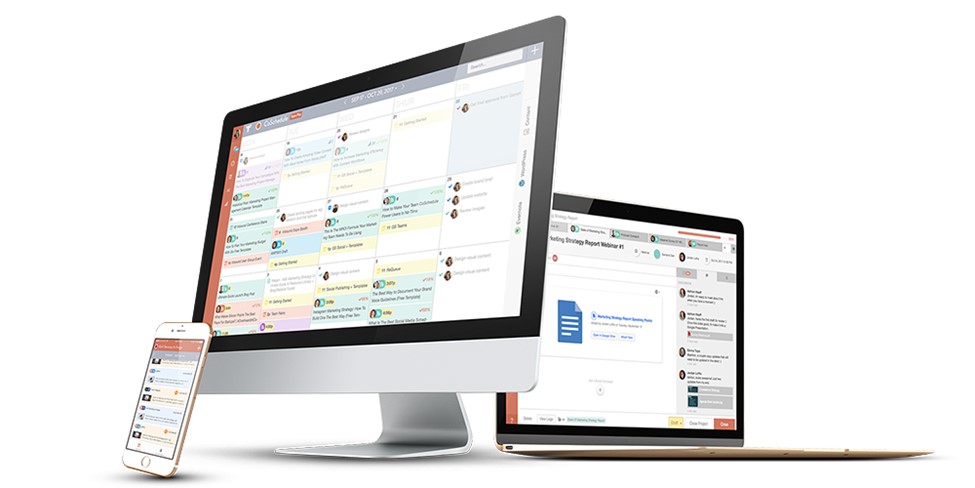
Remember an effective social media platform extends to planning, this means there’s a lot of collaborating with various people including the clients themselves. So, between creating ideas and getting approvals to creating workflows, you will find that some of these tools such as the social media calendar are very handy during planning and through the implementation stage of the strategy.
Why Use Social Media Management Tools
Imagine using Facebook, Instagram, Twitter, Reddit, and LinkedIn for your social media and needing to post on each and every one of these platforms daily and at times several times a day. That would be tedious, to say the least.
So, here are a few reasons why you should use a management tool:
a. Organize Your Social Media Calendar with Ease
The best social media management tool will help you stay on top of your posts, what you have planned to do, your next post, and the type of content to create. It also brings support to building a social media strategy because it will help you observe what’s working and what’s not.
A good social media management tool will offer you data that you can use to evaluate your decisions based on what worked and what didn’t work in the past.
They will show you for instance who is engaging with your content the most, the kind of posts are performing best, the best time to post in order to reach most readers, and also the platform that performs the best overall.
These details will surely guide your next steps in your social media marketing strategy.
c. Monitor Multiple Accounts in One Place
So, as said earlier, rather than login into each social media platform individually, these social media management tools allow you to manage all your accounts from a single interface. On top of making your life a whole lot easier, it also improves your efficiency.
d. Boosts Engagement
Isn’t this the main scope of every marketer and business? Most of these tools will allow you to centralize all your messages into one place, where giving that single response might just be what you needed to gain another loyal customer. You’ll also be able to interact with them when they share, like, or even follow your account.
e. Team Collaboration
For most businesses, chances are that the social media strategy involves a team of people working together, so it’s important to find a channel through which everyone can stay in the loop. This will avoid scenarios where 2 or more people respond to the same message. Social media management tools are designed to streamline all team communication through the use of a shared inbox.
Your Traffic Drop Probably Isn’t Random
Most ranking losses come from overlooked SEO issues. Download my Complete SEO Audit Checklist to quickly identify what’s broken, what’s underperforming, and what to fix first to regain visibility.
You have Successfully Subscribed!
So, How Do You Know What Is the Best Social Media Management Tool to Use?
There is a plethora of good social media management tools out there, so it is rather easy to get confused. But, as you go through the following list, you will be able to identify the ones that fit your unique organizational needs and integrate them better with your strategy.
Most people running their own businesses or social media managers first want to find out what is the best free social media management tool. Well, we all know that most often free means dealing with a limited version of a tool. Thus, there is no such thing as a best free social media tool, if you want to manage multiple social channels. And most social media management tools offer for free a trial period of 2 weeks or a month to test the services.
With that said, here are the best social media management tools to enhance your workflows and catapult your social media strategy to the next level:
Has a free plan, a 30-day free trial, and plans that start at $99.
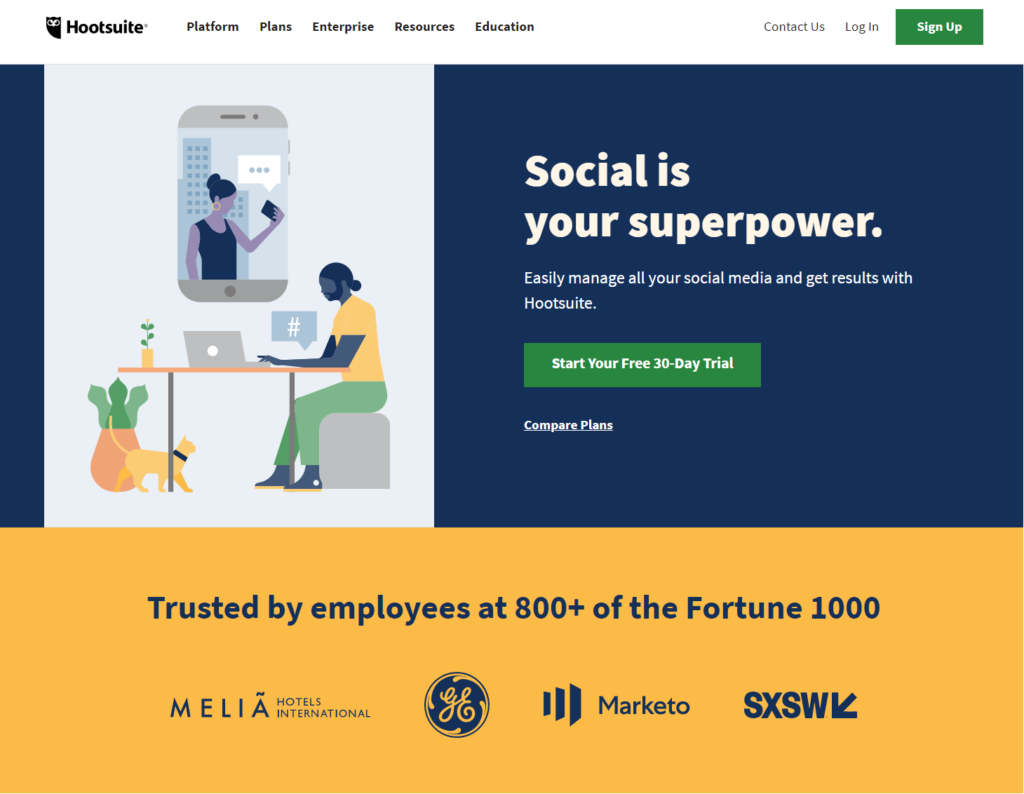
This is probably the most successful social media management tool. This tool offers features that you can use to manage all your social media accounts from a single dashboard. Besides enabling you to create and schedule content and providing you with analytics, it also measures your ROI as far as your campaigns are concerned. Plus, it also runs your social media ads.
Some of the features that make it stand out include a limited free plan, compatible with the major social media platforms and it offers free training courses to help you get started. No wonder it’s most marketers’ favorite tool.
The analytics graph will show you the number of clicks per day, as well as the geographical locations of these people. It will also show you the top referrers and links and this is free for all plans.
Hootsuite will also enable you to follow topics that are relevant to you with their social media following feature. You can use it to filter conversations through the use of hashtags, keywords, and location, and even in multiple languages, in order to keep track of what’s being said about your brand, your competitors, and the whole industry in general.
It also offers a centralized messaging feature you can use to respond to messages by assigning this to the appropriate team member.
Has a forever-free plan, and a 14-day trial with the cheapest plan starting at $6.
This is an intuitive tool, featuring a clean and quite easy-to-use interface. Buffer enables content publishing, boosts engagement, and offers analytics. It also includes team collaboration features for smooth and effective functioning.
Buffer’s functionality works in three directions: Publish, Reply, and Analyze.
Under “Publish” the team members can contribute if they have full access, alternatively, the posts can be submitted to the managers for review since they have tweaking rights.
The “Publish” feature allows you to publish your content across all platforms and an overview of all posts scheduled.
The “Reply” function is all about engagement, as well as details referring to who is liking, sharing, following stats, plus location and sometimes the company they work for and management level they have. This function goes further to include old chats even fresh conversations for easy tracking. Managers are able to assign specific interactions to any team member they deem fit while internally adding notes to each task. It’s also very effective in upholding excellent customer service.
Buffer’s “Analyze” function offers a unique approach, where there is a feedback loop that spins back any content that stands out. This means while going through post metrics, the post that did best can instantly be shot back to the queue with just a click with the ability to edit it if need be.
In short, Buffer has a competitive offer and provides value to its users.
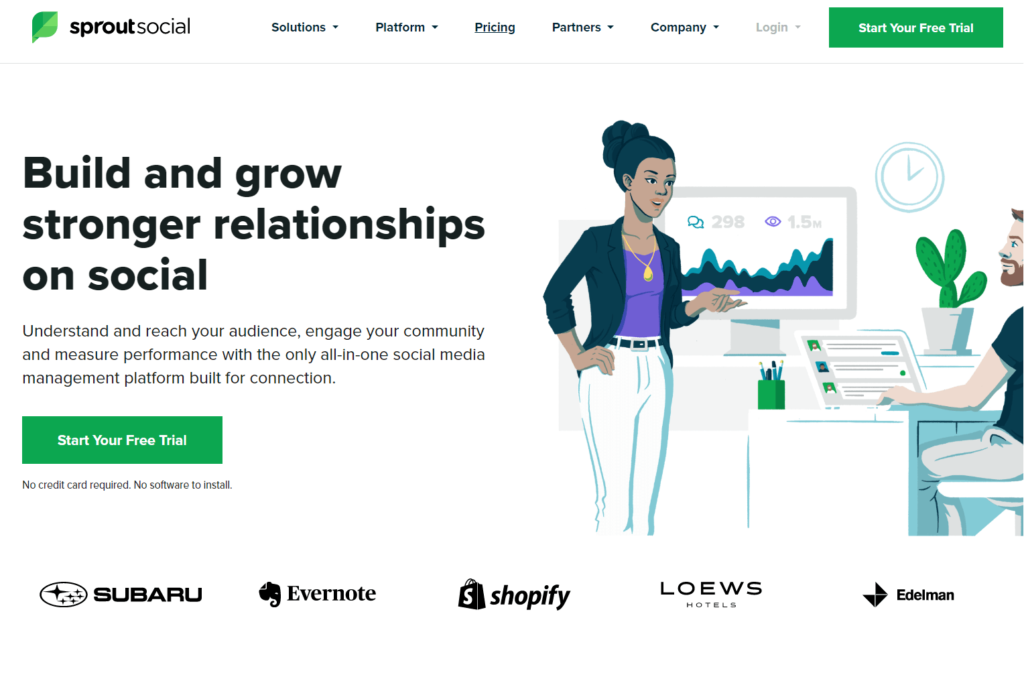
This tool sort of gives the other tools a run for their money, here’s why. Sprout Social integrates with Twitter, Instagram, Facebook, LinkedIn, and Pinterest and has an all-in-one scheduling dashboard that allows you to seamlessly switch between these platforms for better management.
You’re able to queue your posts and optimize the captions and tags for each platform. It includes a ViralPost feature that guides you on the best time to publish your post, i.e. when your audience is highly likely to engage.
Sprout developed a smart inbox feature that instantly prompts you when you have a message from your followers; this immediate responsiveness is especially useful for conversions, people generally like responsive brands. The smart inbox compiles your incoming messages from your different platforms and allows you to use a tag or branded keyword filters to sort the messages in order of relevance. It allows you to assign these messages to the relevant team member to handle it and when done properly, this is really great for your customer service.
Moreover, Sprout Social provides you with a comprehensive analytics and reporting function. Besides giving you the most functional hashtags for your content, you access insights like audience growth, post engagements, impressions, clicks, and general performance of your posts on all platforms.
It highlights the most engaging content you created and that your audience likes as referral traffic plus conversions, therefore offering an opportunity that you can leverage. When used properly, Sprout Social features are a great place to start in developing your impact on your audience.
Price: From $792 per month Inclusive of the Marketing Hub Professional Tier
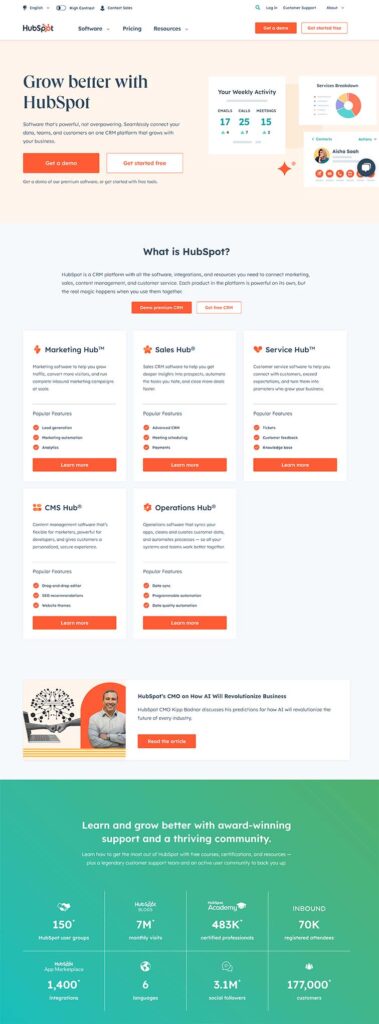
This tool is versatile and saves you lots of time since it schedules your content, integrates all your social networks with your blog, and keeps track of your messages and mentions all at once. Your marketing is integrated with your CRM, therefore you’re able to figure out the number of leads and customers you’re getting directly from your social media platforms.
The unique thing about Hubspot that makes it stand out as a social media management tool is that it works as part of the Hubspot Marketing Hub and therefore besides managing your social media, it facilitates your entire marketing effort through a very smooth integration.
So, what are some of its features?
You’re able to share posts and other types of content from the same interface you’ll be using to build your marketing campaigns. You will be equipped to automatically share any fresh content from your blog to your social networks as it gets published.
It enables you to schedule your content and suggests the best time to post for maximum reach. It monitors your social mentions and enables you to create and use keyword monitoring for relevant interaction.
It offers social reports that permit you to compare how different platforms or campaigns are performing, meaning that whether you will be publishing straight from HubSpot or elsewhere, you’ll still get a report on the effectiveness of your social strategy from one central point. And this ability to do all your marketing under one umbrella is the core reason why it’s a brilliant tool.
Zoho pricing starts at $10 per month and offers a free trial.
If you’re looking for team collaboration, this is another fantastic social media management tool. It has the (now almost standard) features that include a calendar for scheduling, as well as a feature for bulk scheduling where you can create as many posts as you like and then schedule them up in one go.
Here is a brief breakdown:
It offers unique timeslots for bulk scheduling your content and has SmartQ that can publish your content at peak times when your audience is active. Zoho includes a listening dashboard that can create columns through which you can track your mentions, keywords or reviews, or conversations around your brand.
You can view all incoming engagements as they happen and may respond in line to all your messages or assign them to a team member.
Zoho has a complete sphere of analytics and permits the creation of tailor-made reports for all your platforms, using appealing graphs and charts.
Later pricing begins at $18 per month and has a free version but does not offer a free trial.
If your social media strategy revolves around Instagram, then Later is the best social media management tool for you. It comes with a visual publishing calendar that is easily editable, with a drag-and-drop feature, it allows you to preview your posts before publishing in order to keep a consistent theme of your feed.
One key feature that stands out is the blissful content organization function that lets you sync your images and videos from any location, be it your mobile device, desktop, or Google Drive. Besides, it allows you to tag your content meaning you can find it with ease and repost it whenever you want.
Finally, Later has built-in analytics features to help you keep track of all your posts and have a global overview of your Instagram marketing. Even though Later mainly focuses on Instagram, you can also use it for other platforms such as Facebook, Pinterest, and Twitter.
This one starts at $65 per month and offers a 14-day free trial.
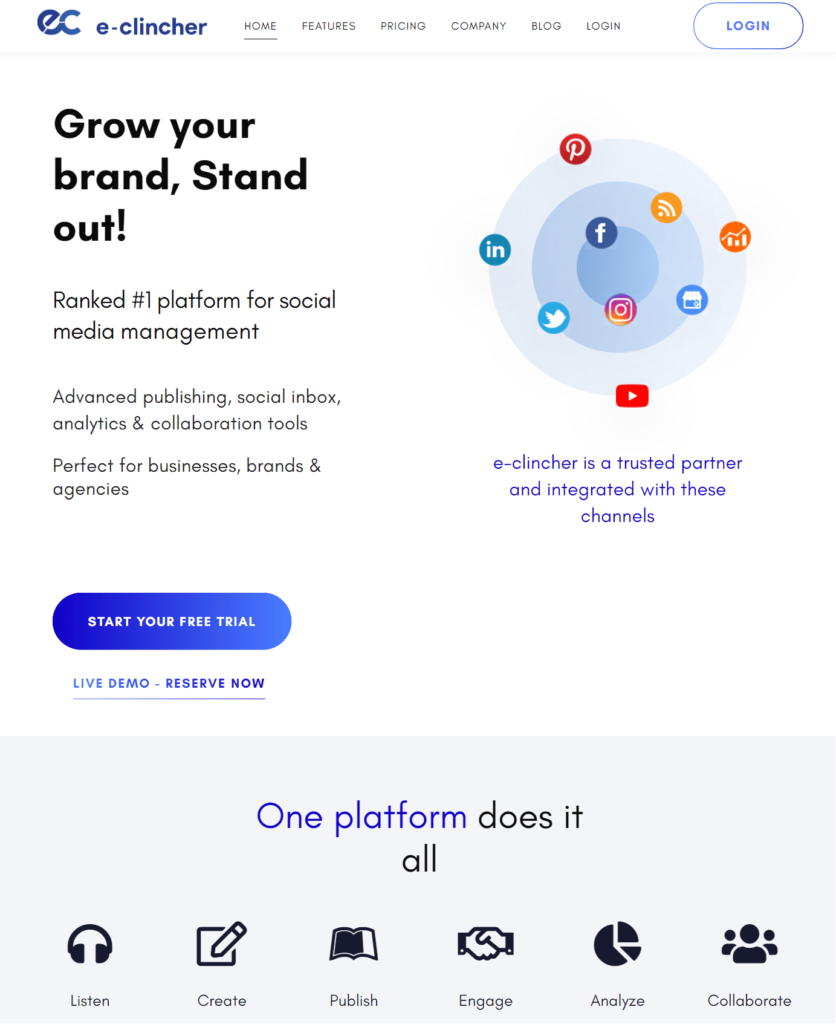
E-Clincher is packed with features as well, from a content scheduler, an inbox or social customer relations management feature, smart queues for auto-posting, suggested content including curation, influencer alert, keyword monitoring, and essential analytics reports.
The auto-post is the most appreciated feature that allows users to publish bulk content that could last for months! There is the possibility to recycle the content that performed well. It supports video publishing, animated GIFs as well as auto link shortening.
The social inbox enables you to manage your entire social media engagement from one single place. E-Clincher offers social listening features that help you monitor relevant conversations. And lately influencers’ discovery and engagement.
When it comes to client management, E-Clincher offers a clean workplace feature for each client. This means a separate calendar, analytics, inbox, and various assigned team players. And as said, it allows you to generate reports through fully customizable white-label analytics reports.
It supports all the major social media platforms including Google My Business and Google Analytics.
Pricing starts at $29 per month per user and offers a free 14-day trial.
So, what does Sendible offer?
Bulk content scheduling to as far in the future as you need. You can create bespoke posts for each client’s post for every social platform, taking advantage of hashtags or attachments that can boost your organic reach. Using the publishing calendar offered, you can get a view of your content and rearrange it through a drag-and-drop feature.
You can also enhance your posts with visual content since you’re able to upload videos and images from other sources; you can share your stellar content using the RSS feeds, preview your social media posts, and much more.
The analytics feature here allows you to track your social media efforts and get custom reports that can be delivered directly to your clients’ email daily, weekly, or even monthly. And finally, it enables social listening that can keep you in the loop of what’s being said about your brand. A unique feature is how it can sort your messages according to their sentiment: positive, neutral, and negative.
If you’re looking for the right tool to help you curate relevant content, then Social Pilot is the place to be. Their content curating function allows you to search for ideas based on relevant keywords and industries (e.g. hair and beauty industry) and this simply makes your content creation work a whole lot easier.
For agencies handling multiple accounts, there is a client management feature that allows access without requiring countless passwords and logins. There is an option of inviting your clients, so when they log into a social media account, they’re automatically added to your accounts lists.
The client management feature also offers white labeling, meaning you can add your company name plus logo to your emails as well as to the panel the clients see and therefore they don’t need to know the social media management tool you’re using.
The rest of the standard features Social Pilot offers include the possibility of connecting and managing over fifty social profiles from one place; an easy-to-understand analytics tool that tracks your efficiency and performance with the possibility of exporting the data into a PDF in a click; the use of social inbox feature that lets you reply, comment or send messages in real-time; a social media calendar that helps you visualize your content and a mighty bulk scheduling feature that can schedule up to five hundred posts for the coming days, weeks or months with a delete or edit feature.
Social Pilot works on all the major social media platforms.
What is the best free social media management tool? This list would not be complete without a tool that is reliable and free (at least for the moment)!
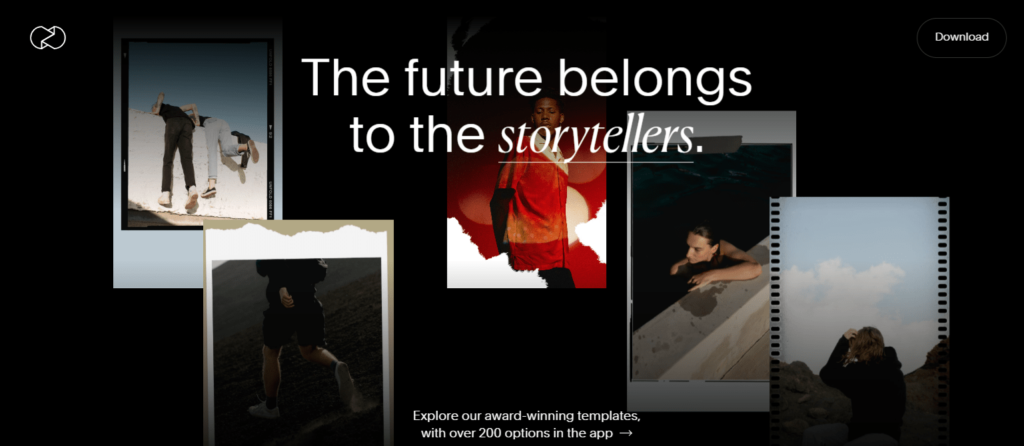
Unfold describes itself as a tool for storytellers, available on both Android and iOS. It is a great tool for bringing your creativity out to play.
On Unfold you can take advantage of the easy-to-use templates given to create engaging stories, you can edit your images, or use the videos filter and effects features provided. They have also offered curated fonts and styles to personalize your text and they let you export your stories and share them on other platforms with ease.
It’s worth noting that you can get extra features with Unfold+ for just $2.99. Such features include over 200 templates to create your stories, advanced editing tools, and early access to new collections.
Unfold is ideal for lifestyle brands as it offers an array of stylish collages that really draw an organic audience and engagement easily.
Barely Scratching the Surface
There are numerous high-quality social media management tools out there, this list does not sum them all, but it gives you a hint of what the best tools have to offer. The most important for you is to pick the tool that best fits your marketing needs, your budget as well as your marketing goals.
You can start by comparing your list of needs and requirements against what these tools offer in order to determine the tool that will make business sense to you. With some social media management tools free plans.
2020 and 2021 have been years like no others in recent history, and while people are still watching to see how it ends, Facebook has been at work with an accelerated speed in improving and changing with the times. Due to the issues that have hit 2021, there has been so much misinformation making rounds on the internet but Facebook has been hard at work trying to reduce or counter it. Instead, they have been trying to promote transparency, inclusivity, and diversity and this has also will have an impact on Facebook best practices 2023.
From a way of connection and communication among family and friends, Facebook metamorphosed into the interaction interface between businesses and their audiences and communities. Facebook experienced a tremendous evolution and lead the progress of online interaction.
This huge people database of different areas and demographics is what makes Facebook marketing a thought-out and needed master practice by businesses. All businesses need to reach their targeted audience hence the requirement to learn and apply Facebook best practices for 2023.
Let’s Make Your SEO & Content Work Better for Your Business
· Helps you reach a new target audience, therefore, acquiring new customers.
· Facebook page is a powerful lead generation tool.
· It is essential for the retention of existing clients.
· Helps your organization achieve its goals.
Before getting into the current Facebook best practices, here are a couple of major updates that you should know about:
i. Educational Hub
Facebook has rolled out an educational feature called “Educational Hub”. It contains a huge amount of educational resources customized to help learners, teachers, and parents as well. Some of these resources include:
§ Group-focused features meant to bring together people with the same interests.
§ Mental health and self-care material.
§ Anti-racism material.
§ An online literacy option called “get digital” designed to help start online conversations and activities to support students.
ii. Paid Online Events
This feature is designed to aid small businesses find a way to survive and recover due to the effects of the pandemic. It’s meant especially for creators, businesses, or publishers to earn quick income during the lockdown. The page owners are able to host online events and people can pay to attend online. All this is enabled through the live video platform.
iii. Sponsored Posts for Groups
Groups have been getting more attention and priority in news feeds and this is promoting the number of people joining groups. There’s a chance now for people running active and thriving groups to earn revenue from them. Besides the possibility of running ads, groups can now have brand partnership posts. Admins of groups can now run sponsored Facebook posts in partnership with advertisers.
These are just a few of the many Facebook updates for 2023. And with the newly changed algorithm, has placed users’ most searched content at the top of their feeds. Thus, you should apply Facebook best practices to increase your odds of appearing in your audience’s feeds.
Top Facebook Business Page Tips and Tricks – Facebook Best Practices for 2023:
This One Is Old But Still Very Actual: Create an Eye-Catching Profile
A profile picture is the first point of contact your audience interacts with on your page. Easy recognition of the picture is key to being liked and found on Facebook search. Cluttering a profile picture with slogans, and contact details are not recommended. Consistency with your branding is important for the coherence of your brand image.
Cover photos are another element representing your brand and speaking loud to your customers as the first impression. And do not forget the first impression counts, always. Your cover photo should be high-quality, engaging, and eye-catching. Don’t clutter it with texts and be sure to change it often or during your campaigns.
Craft a Relevant ‘About’ Page
This is the most visited section of your Facebook page and informs your audience about your brand and values. Whenever visitors want to find out more information about your business, they head to your “About” tab of the business page. It is important to give them a clear and concise snapshot of what your brand is about. Your mission, vision, story, company information, and any other relevant details that best showcase your brand.
Facebook allows you to customize sections that record your milestones, awards, and product launch dates.
Facebook Best Practices: Customize the Call to Action Button on Your Facebook Page
A call-to-action buttonis what prompts people to take a certain action. Facebook introduced this feature in 2014 and since then the option has been massively expanded. The button prompts things like ‘Sign Up’, ‘Call Now’, ‘Book Now’, ‘Watch Video’, etc. and users are offered the possibility to customize it to different URL destinations as they consider pertinent.
As a marketer, this gives you the opportunity to drive traffic from your Facebook page to your site easily. This can be added by simply clicking on the page and clicking on the ‘Add a Button’ box, choosing which one you want to create, and inserting the URL you want to direct visitors to. Facebook Insights will help you measure and report the effectiveness of the CTA button.
Know Your Audience
Facebook demographics are used to ensure you know your buyer personas. They are continuously evolving hence the need to have tools to help you measure, report and keep track of the changes. Knowing your customers’ avatars will help you tailor your marketing campaigns and promotions to target them.
The below questions can help you better understand your ideal customers:
· What is your brand user demographic? Their age, educational background, gender, income level, etc.
· What is the goal of your Facebook campaign? This helps you target the right audience that has the highest chance of being interested in your offer. Don’t use the same content to communicate with all your buyer personas.
· What is your competitive advantage? What differentiates you from your competition?
Facebook Best Practices: Set SMART Goals
It’s easy to only keep an eye on vanity metrics such as likes or shares, but if they don’t help you achieve your desired results in terms of revenue, they won’t mean much. Each step you take in your business strategy must be tied to your business goals. And these goals are different for each business, you could perhaps be looking to generate leads, create brand awareness, boost conversions, or give better customer service, among others.
Your goals must be specific enough to be measurable, keep them S.M.A.R.T. This means each ad placement, each post you share or every comment must support your ultimate goal/s. This will help you be consistent and will guide the rest of your Facebook business page agenda.
Pick the Right Category for Your Business
When setting up your Facebook business page, pick a category or categories that best describe your brand in order to maximize visibility. Facebook best practices for choosing the best category suggest that you pick only the most relevant and precise category.
You could for instance be running a cake business, so instead of simply selecting a local shop as your category, you should select bakery or dessert shop. The purpose is to make sure you’re easily visible to your customers and easier to find.
Categories will help your business grow by helping you appear on Facebook searches. People that have shown interest in your field or niche will get recommendations for your page and your business will also appear in search results when people look for such businesses near them.
Finally, you will appear as related pages, meaning even someone who was not necessarily searching for your business might find it and choose it instead of the one searched.
Facebook Best Practices: Create Engaging Content
One of the most important Facebook rules is creating content that probes your audience to take action. Developing an engaging relationship with your followers is what will determine their interaction with your brand. As a content creator, one should not just stick to general statements, opinions, and facts but be bold, and spice up your content with some fun. Questions, photos that ask questions, and fill-in-the-blanks are some examples of content that entice people to act.
Respond to conversations in the right rhythm and cadence, be responsive and social, and finally, this is a social media channel. Going out of your way to make your audience feel important makes them bond with your brand. Quick feedback on Facebook page is highly appreciated especially in the early stages of community building. This shows the brand’s commitment to customer service and smooth communication with its clients.
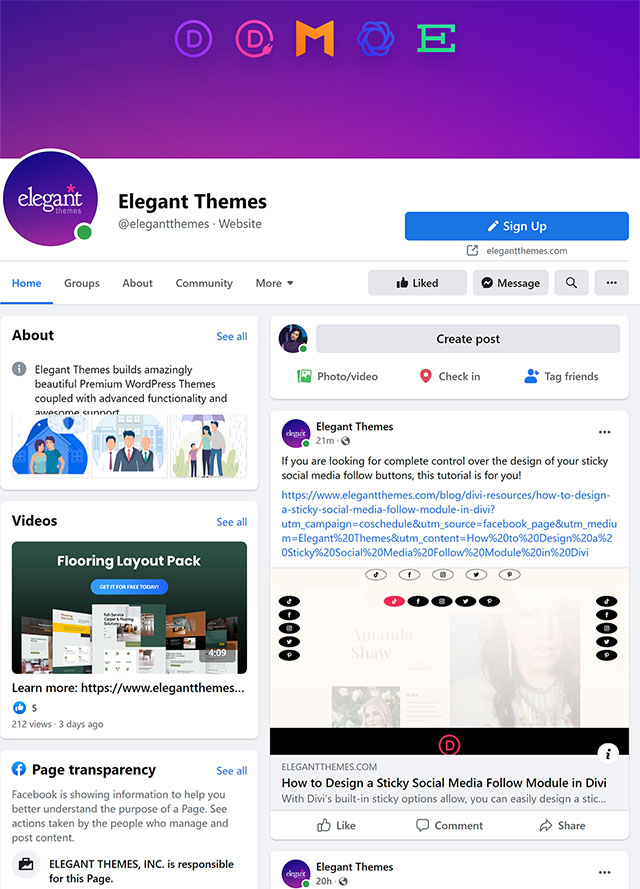
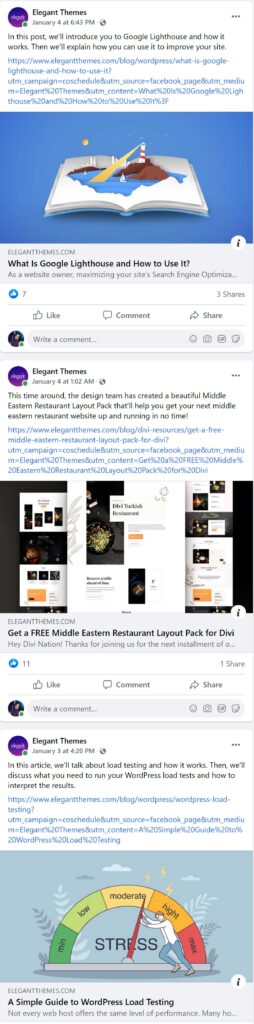
Source: Elegant Theme’s Facebook feed
Post Videos and Pictures to Catch the Eye of Your Potential Clients
Social media platforms attract primarily with their visually engaging content and Facebook is no exception. Posting highly appealing visuals and videos is greatly appreciated.
Video content is the most consumed type of content on Facebook currently having a wider reach than images. 84% of marketers are relying on Facebook as their principal video marketing channel. Nowadays, videos are used to drive engagement and brand awareness. It is a marketer’s top priority. Live Videos are visualized three times more than pre-recorded videos. They are deemed fun, more real, and provide in-the-moment brand engagement. People want real-time interaction with brands.
Silly memes are attention-grabbing and easy to consume especially in this era. Image engagements are high as compared to plain posts. A meme can make your timeline blow up with visitors, reposts, comments, and followers.
Facebook Best Practices: Make Use of Facebook Live Videos. Live Is the Superstar of the Day in Terms of Engagement
Facebook live has exploded since the platform stepped up its support of live streaming elements that raised users’ interest in this almost complete human interaction. They have reported almost three times the engagement of similar videos across all social media.
But for you to make the most out of Facebook live you have to apply the following quick Facebook best practices for Facebook live:
§ Ensure it’s of high resolution and crisp clear.
§ Ensure it is stable via these two ways: you can use a tripod and if you’re using a mobile device you may want to rely on a high-speed connection such as Wi-Fi. You can run a speed test before setting it up to be sure the connection is strong.
§ You want to spark meaningful interactions with your live video, create content that can inspire such interaction and respond to comments as much as possible, answer the questions on air, and if you can, pin some of the best comments on top of your chat. This sort of interaction is the main purpose of going live.
§ Let your broadcast run for a longer period in order to reach more people. You can do these live videos often.
§ Finally, remember to announce beforehand that you will be doing a live.
Try and Test Facebook Reels
One of the best ways to use Facebook is to create reels. A Facebook reel is a short video that you can use to promote your business. It’s a great way to show your customers what you have to offer.
There are a few different ways to create a Facebook reel. You can choose to engage your users by having them leave comments, play a game, or take a poll. Or by using videos from popular online channels like YouTube or Vimeo. One of the best things about Facebook reels is that they’re catchy. They’re short and sweet, and they grab your attention, making them perfect for promoting your business page.
Facebook Best Practices: Set up a Posting Strategy
It is well known that no planning is planning to fail. This is applicable to Facebook as well. A reliable strategy is essential as you plan your Facebook business page. Every page is unique, and you have to think, plan and manage your page based on your target audience, brand story, and the desired reaction you want to obtain from your potential customers.
Layout your sales and promotion goals and plan how to communicate and achieve those goals. It is important to schedule posts in advance and links them to your site to drive traffic for better results. Nowadays there are many apps available to help you schedule your posts in advance, promptly respond to your clients, and engage with your audience. Hootsuite, Buffer, Sprout Social, Coschedule, HubSpot are just a few of them. The Facebook interface also provides you with a schedule post option among other apps.
Your Traffic Drop Probably Isn’t Random
Most ranking losses come from overlooked SEO issues. Download my Complete SEO Audit Checklist to quickly identify what’s broken, what’s underperforming, and what to fix first to regain visibility.
You have Successfully Subscribed!
Create a Balanced Posting Schedule
How frequently you publish posts and when you post them is vital for your Facebook marketing activity. Posting too often might irritate your followers. On the other hand, not posting frequently enough might reduce your chances of credibility and authenticity. Striking a good balance between the two is the key to a strong brand presence.
Facebook page insights will greatly help with this as once you have observed the performance of your previous posts you may customize the frequency, timing, and strategy as required. Here are some tips to help as you start off.
· Afternoons and evenings are the moments of the day when most people visit their Facebook account so, post between 1 p.m. and 4 p.m. However, avoid being robotic by posting at the exact time daily.
· Posting twice a day is adequate to create awareness and gain post impressions. This ensures consistency and originality without looking spammy.
· Always include images where possible.
Facebook Best Practices: Use Hashtags Carefully
Hashtags (#) are used to gain momentum on Facebook. They drive traffic to your posts when people search for the topic related to your post. When there are trending topics and you talk about them, they can be used to expand your reach. On Facebook, unlike Twitter, Instagram, or Linkedin, you need caution and proper use of hashtags.
· Don’t use them in all posts.
· Don’t misuse a trending hashtag just to appear on a search result.
· One post requires only one hashtag in order not to be stuffed with hashtags.
Show Humanity
Being social is what is called being human. Brands are communicating with human beings, not robots, so it is important to keep that in mind while creating posts. People want posts that speak out to them, consequently personalizing messages will enhance engagement. Most often people want to see the face of the person they are socializing with or associate a brand with a human face. Show empathy, respect, and kindness in your comments and replies. Mention a person’s name when replying to their comment.
How you treat and interact with your clients online will affect how they respond to your brand. Being human is the foundation of customer service as your audience gets assured that you know what they feel and what they are going through. You create a relationship with them.
Build Credibility
Trust is what sustains your brand online and offline. The bottom line of trust is credibility. Do not allow doubt to interfere with your relationship with your customers. Ensure all your posts and news you are publishing come from credible sources. Protect your customers from all malicious cybercrime attempts by only sharing credible links. The safety of your customers should come first.
A credible brand creates a loyal and trusting relationship with its customers and followers.
Facebook offers you the possibility to segment your audience in different demographics and interests and target them with specific posts. You can segment your audience according to their age, location, income, education, language, specific interests, etc. Simply click on the bullseye symbol that’s at the bottom of the post, then set the preferred metrics as per your targeted audience.
These days building a strong brand on Facebook is literally impossible without using Facebook Ads. Once you create high-quality, engaging content, you have to find the best ways to bring it in front of your target audience. A powerful marketing strategy sets aside a budget for Facebook Ads. Yes, some content might go viral on its own, but that’s most often not the case.
Facebook lets you create your own Ads according to your goals and puts at your disposal an array of tools to help you refine the targeting of these ads. You get to select the people you are targeting, their demographics, their interest, and brands they interact with, among others. Make sure you create ads that are eye-catching and grab the attention of your target audience. Once all these are in place, promote your ads and test various options till you obtain the results you are expecting.
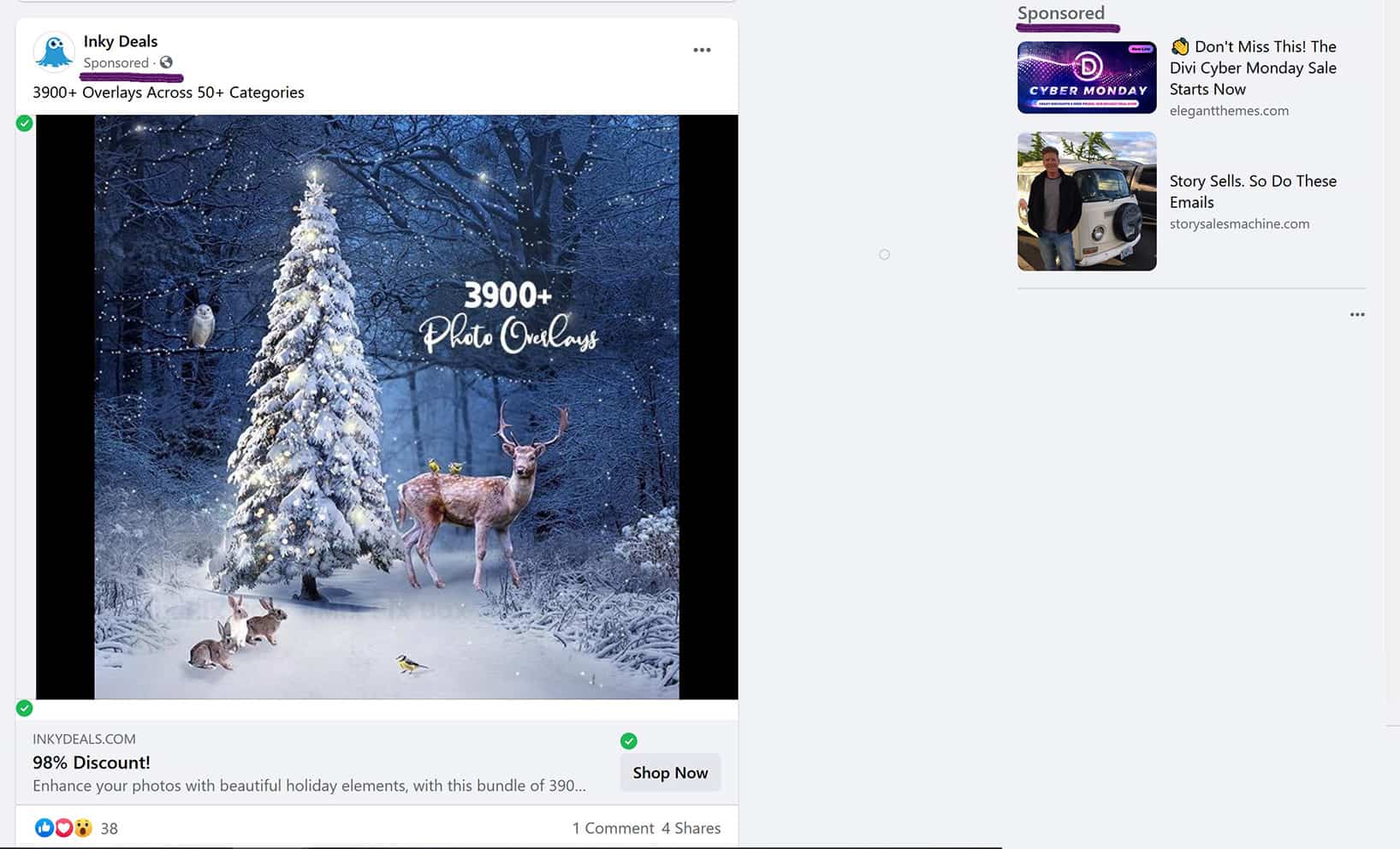
Facebook ad example.
Facebook Best Practices: Leverage on Contests
People enjoy good competition and the excitement that comes with winning free stuff. This can be a way to increase your fan database over a short period of time. If a contest is promoted and run correctly, it is a gold mine to your Facebook page.
There are various Facebook Apps that can help you run contests. However, a third party has to oversee and conduct the contest for you. The contests have to be customized to fit your target fans to facilitate their interaction with the contest.
Facebook Best Practices: Use Minimal Page Apps
Apps used to be disturbing tools from the user’s point of view, as most of them would force users to like or subscribe hence harvesting emails from them. Facebook had a default landing page app before they introduced a timeline to facilitate the creation of relationships between brands and customers.
Apps can now be used to sell products, drive traffic to your site, run contests, carry out giveaways, and collect emails. Excessive use of applications drives people away from competitors as no one wants to be spammed or forced in some way. So, reduce to the minimum the number of apps you use on your Facebook page.
Use Analytics and Measure the Success of Your Facebook Page
Facebook best practices cannot be complete without understanding how and where users interact most with your business across your Facebook page, the app, or the web. This is so important that there’s a mobile app version for it to compete with Google analytics.
Facebook analytics will help you analyze how well the goals you set are performing and whether you’re increasing your ROI.
On the web, you can measure the actions people are taking to see all about your aggregated demographics. You have many features such as cohorts to measure their behavior over a given period of time, funnels that can help you measure conversions, and so on.
You have the possibility to leverage the Facebook pixel. Once you set it up, it can help you measure your page’s performance and more. You can also get combined data from your Facebook page, your website, and the mobile app to get a clearer granular picture.
Understanding Facebook Analytics is critical for your marketing strategy. Analytics and insights offer detailed information concerning the results generated by the content you are sharing. As a marketer, you need to know if your content is successful or not. You can only get a clear picture of your posts’ performance by studying Facebook page Insights. You get details on specific engagement metrics enabling you to track and measure your success. You get to know what works and what doesn’t for your brand.
Currently, it is easier to understand Facebook Analytics as they have made it more user-friendly. Additionally, they have tutorials on Facebook Blueprint that will help you better understand analytics.
Facebook Best Practices: Content Variety
Having great quality but always in the same format can be a little meh. Offer your audience a perfect blend of content formats. You can use the 80-20 rule to help you balance it out. 80% of the content can be educational, entertaining, and informative. The 20% can be about promoting your brand.
You can consider this the rule of thirds of Facebook content. Besides this, another excellent way to boost your engagement with a variety of content is to include the user-generated content you already have. It’s a good way to boost brand loyalty and interaction. Followers would love to see their photos or comments on your page.
Source: Youtube
Facebook Groups
These are powerful tools especially for marketing your brand. They are a place for your customers, followers, or readers to come together for a common cause: your brand. Groups can be public, private, or secret. Facebook has really put a focus on groups now more than ever as small businesses and groups and private messaging are taking over online social communities.
You should leverage groups because they drive more engagement around your brand. It’s a great tool because it can help you narrow down to specific people’s interests in order to be more relevant and generate useful interactions. They also give you real-time insights that can be of absolute importance for your decision-making.
Thus, to ensure you get it right, you have to apply a few Facebook best practices for groups that include:
Have a clear code of conduct – set the mood right from the word “go”. You should however avoid too many rules but have basic respectful rules for members to avoid bullies or irrelevant talks.
Engage on a regular basis, but don’t monopolize – this group is mainly for your customers or readers. If they want to keep the chats going on throughout then so be it, but as the admin, remember this is business, spark a debate and sit back, let them do the rest. Offer guidance or wisdom or important information about your product when you see the need.
Schedule Facebook posts – your group insights can show you the time that your group members are most active. You can schedule to post your content at this time, it will also ensure that they keep track and don’t miss out.
Post frequent welcome messages for new members, and keep the topics interesting and unique.
· Never have a personal profile to represent a brand. Create an authentic Facebook Business Page.
· Never publish personal content on your brand page. Always assign page roles on a need-to basis and post as a brand, not as a private person.
· Never spam your followers. Aim to be classy yet perceptive.
It is of utmost importance for all brands to understand how to properly manage a Facebook business page. The Facebook business page best practices listed above aid in tight the connection between communities and brands. You get noticed, followed, and engage with your target audience creating a reliable tool for lead generation.
But as Facebook is continuously evolving, you need to be up-to-date and willing to adapt and try different strategies to see massive success and results for your business. Always check on the most recent Facebook best practices updates.
Just like the rest of the social media platforms, Twitter is swiftly adapting to the ever-changing social media landscape. Some features have been done away such as SMS accounts, but there are some other new interesting features such as control over who can reply to your tweets. They have done a good thing to also implement changes to improve the platform’s problem of fake news and bullying. Along with all these changes, Twitter best practices for business must still be observed for success.
One of the top social media networks, Twitter gathers about 368 million users as of Q4 2022 and 237 million monetizable daily users across the globe. That’s quite an effervescent activity that offers opportunities to engage and expand your audience.
No matter your industry or sector, Twitter marketing is a valuable tool that can help you reach your goals and interact with your existing and future customers.
Let’s Make Your SEO & Content Work Better for Your Business
In order to gain visibility among your customers, following the best practices for Twitter is compulsory. To successfully launch and manage your Twitter account, check out the following to-do list:
Your Twitter Account Should Be Optimized
Like anything else in the online marketing world, your profile and account for Twitter need optimization. The essential Twitter best practices for business rely in their majority on visibility. So, aim for visibility.
Ease for others the task to find you, set your account to be searchable and become visible to more people.
Since visibility has a great pay-off, pay attention to:
Your Handle: Keep it simple and short, it needs to have a connection with your brand, to be identical if possible. Avoid adding supplementary characters or numbers to your handle to make it unique. If you absolutely need to differentiate from other names, try adding letters.
Your Bio: Optimizing your Twitter bio is paramount, especially when speaking about Twitter for business. Conceive a rockstar profile that will attract users to your profile. Your bio is the first thing on your profile that users will check on and one of the most important pillars of your Twitter marketing. Insert relevant hashtags for your industry, a link where users or followers are able to find you.
Hashtags you employ: There is no secret anymore that hashtags increase reach. As such you have to use appropriate hashtags for your industry or trending topics. Count on a hashtag analytics tool to support you in deciding what hashtag to use. And use a maximum of two hashtags per tweet.
Pinned Tweets: Make sure your display a pinned Tweet on your feed. It is recommended to be a popular and engaging piece of content. As people are more likely to engage with already popular content that others already interacted with.
Profit on Twitter Search Operators: Use Advanced Twitter Search, to identify mentions about your product, service, or company. Or simply to join conversations related to your industry.
Cross-promote your Twitter account on other platforms: On your website, on your email list, on other social media networks, or within PPC campaigns. Encourage your followers from other platforms to follow you on Twitter also.
Get Verified
This is one of the most important Twitter best practices for business, whether you are a small or large business, you should apply for your account to get verified. They accept requests for verification of fashion, music, government, acting, religion, media, sports, and business among other key interest areas.
Once your request has been accepted, your account gets verified and you get a checkmark next to your business handle. This is the symbol of authentic accounts.
Why is this an important best practice? There are many rogue people out there who may try to impersonate your brand in order to benefit from it. To avoid such risks, you need to get authenticated.
Verifying your account also gives people confidence that you are indeed a trustworthy brand.
Build a Relevant Twitter Following
When you are just starting with your Twitter account and you see accounts with hundreds of thousands or millions of followers, well that becomes instantly overwhelming and thoughts like “I will never be able to achieve such a level of reach…” is teasing you. But be patient, everyone started from zero at a certain moment. Start by following the influencers and most prominent personalities of your industry.
Refrain from unproductive methods like buying followers. If you want a relevant, truly engaged following that could convert into customers at a certain moment, build it from scratch.
As mentioned above when starting follow all your industry leaders.
To increase your Twitter following, approach tactics like:
Use helpful tools like BuzzSumo to identify prominent personalities in your industry. BuzzSumo allows you to see the most shared content in your industry, who wrote it, and which companies are generating pizazz. Follow them all.
Follow leaders’ followers. Tools like Tweepi or ManageFlitter can help you with this task. The advantage here is that these users are already interested in your industry and expertise area, so more likely to follow you.
Exploit Twitter directories. Tools like About.Me and Twellow empower you to find other influencers and users connected with your industry. As you start to build relationships with these leaders, your audience will grow also.
Recommend followers. As you do this for others it’s a high probability that others will return the favor.
Follow users that mention you – your products/services, your brand, or your industry/niche.
Tweet famous and inspirational quotes – People, in general, enjoy greatly inspiring quotes and they share them with their following. So, this is a simple strategy that will get you retweets and increase your reach.
Organize or promote a contest. If you want to expand fast the number of your followers, this is a proven way. Even if the quality of the acquired followers might not be the best, it’s recommended to award a prize that is interesting for your buyer persona. (Do not decide on a smartphone – as this will be of interest to anyone, try a paid course or a subscription to a relevant tool).
Test promoted tweets. If you consider you need some extra exposure, you can also try the promoted tweets to expand the number of persons you reach. Twitter offers various targeting options to select who exactly will view your tweets.
Twitter Best Practices: Establish Your Goals for Twitter Marketing
Your marketing strategy should absolutely include a social media marketing strategy that details the goals for the social media networks you are present on. So, obviously, you should have some goals established for your Twitter activity, some measurable and realistic ones.
The goals you set are the ones that will determine your whole Twitter marketing strategy. They will help you identify the metrics to keep track of.
These goals may include:
§ Drive more traffic to your website.
§ Increase brand awareness by keeping track of the number of your followers and the reach
§ Increase conversions via sales tracking
§ Boost interaction and engagements by tracking retweets, comments, shares, or likes
§ Improved customer service support
These are only some of the major goals and yours could be different but, you must set clear goals. This means each content material you create and every comment or step you take in your marketing strategy must get you closer to achieving them.
Here are some examples:
Tweet daily at least once: Keep your feed active, tweet at least once each day. You may want to try posting 3 times a day for a month for example and analyze the results.
Establish a rate of followers’ growth for a six-month period. Input effort to see each month an advancement compared to the last month.
Be followed by 5 influencers. This will help accelerate your following development.
Engage your audience more. Take 5 minutes each day to engage on Twitter: to reply, retweet, and like. Establish clear goals depending on your purpose.
Get involved in Twitter Chats. 1-2 per month for instance. Twitter chats are events hosted by leaders and businesses and are very frequent. Make use of tools like Twubs or Tweetchat to find or host such chats.
Let’s Make Your SEO & Content Work Better for Your Business
Twitter Analytics is the tool that dictates the fundamentals of your decisions concerning your Twitter activity. Measure the results of your Twitter marketing efforts to see what’s working best for your audience and where you need to direct more resources. Measure the number of followers, impressions, likes, mentions, link clicks, etc. Use social media analytics tools like SemRush, Sprout Social, Followerwonk for supplementary insights.
How effective have your efforts been? Analyze your Twitter account to see the best and worst-performing content. This will help you fine-tune your future campaigns by offering your audience the kind of tweets that they’re more interested in and dropping the kind that failed.
Twitter for business provides reports on your performance such as customer care and competitive analysis among many more. For optimum results, you can look at the following popular metrics:
Impressions – How many times did your tweet appear in someone’s timeline?
Engagement – How many retweets, favorites, follows or replies did your tweet get?
Top tweets – Which were your most engaging tweets?
Hashtags – Which is your most popular hashtag?
Twitter Best Practices: Engage, Engage, and Engage
Engaging is the mantra of social media and Twitter is no exception. The basics of Twitter are the micro conversations and it’s among the first places to give feedback, ask and answer questions. Sprout Social Index reveals that 45% of consumers contact brands on social media to obtain a response or resolution.
Engagement is a pillar and paramount request of consumers on Twitter, so, search for the right balance between conversation and promotion. The recommended ratio is 80% versus 20%.
Your Traffic Drop Probably Isn’t Random
Most ranking losses come from overlooked SEO issues. Download my Complete SEO Audit Checklist to quickly identify what’s broken, what’s underperforming, and what to fix first to regain visibility.
You have Successfully Subscribed!
Some tactics to enhance your Twitter engagement might be:
Ask relevant questions and run polls. Don’t just ask questions for the sake of conversation, try to ask questions that uncover insights and different points of view related to your products or services. And as a bonus, this will revive conversations.
Respond immediately, retweet, and @mention others. Responding quickly shows others that you are active, retweeting content posted by others and mentioning other users creates the premise that others do the same for you. Curate carefully your retweets, as they will reflect on your business and should be in line with your core values.
Tweet trending events and breaking news. Use the “trendjacking” (association with a trend for awareness purposes) technique in your favor. Conceive a way to originally associate your company with the trend.
Join the conversation and tweet others daily. Comment on other users’ tweets, and build conversations as often as possible to expand your reach. If you’re going to send a direct message, it’s recommended to value bombing rather than cold prospecting. The person operating a company’s social media accounts is rarely the person who makes buying decisions.
Use just your best content for marketing on Twitter. People are more likely to share valuable, well-researched content. Preferably evergreen content. Use content research tools like Social Animal to find the top-performing content in your niche. Social Animal allows you to analyze top-performing content, find the best Twitter influencers, and with the View Sharers feature you can get a list of relevant audiences to whom you can promote your content.
Talk about industry events. Ask for details and opinions of those who were present at a certain event. You will gain insights, interact with industry influencers and brand ambassadors.
Count on visuals. Insert images, gifs, or videos in your Tweets to increase your engagement rates. Engagement, in general, is triple for visual Tweets, so exploit them.
Any business that advertises on Twitter must know the kind of tweets that stir the most engagement from users. It’s one of the best ways to increase your brand influence. Twitter advertising offers two approaches, Twitter Ads or Promoted Tweets.
Twitter ads are a very reliable alternative if your goal is to build a large follower base or when you want to increase your brand awareness. You can use a large variety of targeted tweets to achieve this. The amount you pay for your advertising will be determined by the objectives you’ll set for Twitter ads. (for instance video views or conversions)
Promoted tweets show your tweet on users’ search results as well as users’ timelines. Via this option you will pay a monthly fee for the period your tweet is being promoted and Twitter will display the tweet on your targeted audiences’ timeline.
“Tweeps” are able to engage on Twitter ads just as they would on any ordinary tweet. Thus, you can leverage this to make the best return on investment from Twitter Ads.
Twitter Best Practices for Business: Use Visuals
280 characters can definitely not make a thousand words. So, why not use pictures and videos that say way more than that?
Visuals are a sure way of saying more with your limited amount of characters. They will hold your audiences’ attention for longer, and that way you’ll give more information. Statistics actually show that tweets with images get three times more engagement while videos rake up to ten times more engagement.
Gifs also add to the content mix and they improve our tweet engagement by 55%.
Twitter best practices for using visuals include the fact that you must optimize them for mobile because 93% of videos are watched on a handheld device.
Run Twitter Polls
Twitter polls are fun but a genius source of market data when Twitter best practices are observed while running the poll. Twitter gives the following guidelines:
Run the polls regularly – Create regular polls on a weekly or monthly basis, it kills 2 birds with one stone, you stay on top of your audience’s mind and you show them that their opinions matter.
Let them contribute to decision-making – this offers them validation that builds better relationships with the target audience. Letting them participate in business decisions of whatever level gives them the feeling that they’re stakeholders in the brand.
Get market research data on your business – you can get so much out of a simple Twitter poll in terms of insights.
Run a poll on relevant topics – think about the topics and ideas that are relevant to your brand and create polls around them. It could be information you’re seeking about your products or services or just a simple muse on the industry. Run a relevant poll and you can gain so much and strengthen your brand based on that.
Twitter Best Practice: Keep It Personalized
Instant gratification is the biggest order on the menu of social media. And people love to be acknowledged because it gives them the immediate satisfaction that a brand noticed them. Of course, every market has its “special” people, so you won’t miss one or two people just looking to cause a disturbance. But there are loyal customers who are just looking for someone to listen to their complaints or compliments.
You can also personalize by mentioning followers by “@ “directly at them. This brings the human side of the brand and people can relate more to you than when it’s all robotic. There are many instances in that brands have gone viral in a positive way just because someone responded to a tweet or reached out to someone on Twitter.
Use Hashtags Wisely
Hashtags are often used wrongly. But it’s one of Twitter’s best practices for businesses to use relevant keywords and key phrases in order for their visibility to be propelled wider. Stick only to relevant keywords.
When users click on the hashtag, they’ll be able to view all tweets that have included that hashtag. And when you get super creative with it, you’ll easily turn it into a trending topic.
Improve your vision on Twitter
Just like YouTube or Facebook, Twitter, too, customizes and sometimes limits the content it lets users see according to their location. If you have followers in different countries or just want to circumvent the limitations you might face because of your country’s laws, a VPN comes in very handy. You can check how your tweets look from a different country’s perspective and pick up on the subtleties of the local Twitter community. This will help you find the right voice and hashtags for tweets targeted at a regional audience.
You can change your country setting on Twitter as part of your account info, but only a VPN allows you to actually change your location by accessing a VPN server in a country of your choice so that you can experience Twitter as if you were really there.
Consistency is the basis for Twitter marketing and this is a core Twitter best practice. Tweeting can be a time-consuming activity, so in order to streamline, the best way is to use a social media management tool to help you schedule your tweets. Tools like Hootsuite, Buffer, MeetEdgar, CoSchedule offer you the modality to plan your tweets and stay organized. Thus, this activity will consume a few minutes a day or several hours a month, without even being logged on the platform.
Don’t forget to be authentic in your tweets! It’s your most original asset.
Social listening is how businesses are using Twitter in 2023. It’s not all about saying something relevant. Listen out to conversations around your industry. Pay close attention to everything being said about your brand.
Thankfully Twitter enables this through its advanced search tool. It lets you know what’s being said about your products and services. You can get even more insights from discussions on trending topics. When you get this information, you’ll use it to refine your content and tweak it where necessary to build more trust and loyalty.
To get the most out of it, pay attention to what’s being said about your brand name, industry hashtags, your competitors as well as relevant topics.
Depending on the level of your Twitter account, you may have to do a part or even all of these tasks. Here is a synthesis, a checklist of Twitter best practices for business to help you tick them easier.
Twitter and social media are part of a still-young industry and they are continuously evolving. As a consequence, these Twitter marketing best practices change in time, so you have to keep learning and be up to date with the modifications that will interfere. And your following will continue to increase and probably generate more customers and business.
We use cookies on our website to give you the most relevant experience by remembering your preferences and repeat visits. By clicking “Accept All”, you consent to the use of ALL the cookies. However, you may visit "Cookie Settings" to provide a controlled consent.
This website uses cookies to improve your experience while you navigate through the website. Out of these, the cookies that are categorized as necessary are stored on your browser as they are essential for the working of basic functionalities of the website. We also use third-party cookies that help us analyze and understand how you use this website. These cookies will be stored in your browser only with your consent. You also have the option to opt-out of these cookies. But opting out of some of these cookies may affect your browsing experience.
Necessary cookies are absolutely essential for the website to function properly. These cookies ensure basic functionalities and security features of the website, anonymously.
Cookie
Duration
Description
cookielawinfo-checkbox-analytics
11 months
This cookie is set by GDPR Cookie Consent plugin. The cookie is used to store the user consent for the cookies in the category "Analytics".
cookielawinfo-checkbox-functional
11 months
The cookie is set by GDPR cookie consent to record the user consent for the cookies in the category "Functional".
cookielawinfo-checkbox-necessary
11 months
This cookie is set by GDPR Cookie Consent plugin. The cookies is used to store the user consent for the cookies in the category "Necessary".
cookielawinfo-checkbox-others
11 months
This cookie is set by GDPR Cookie Consent plugin. The cookie is used to store the user consent for the cookies in the category "Other.
cookielawinfo-checkbox-performance
11 months
This cookie is set by GDPR Cookie Consent plugin. The cookie is used to store the user consent for the cookies in the category "Performance".
viewed_cookie_policy
11 months
The cookie is set by the GDPR Cookie Consent plugin and is used to store whether or not user has consented to the use of cookies. It does not store any personal data.
Functional cookies help to perform certain functionalities like sharing the content of the website on social media platforms, collect feedbacks, and other third-party features.
Performance cookies are used to understand and analyze the key performance indexes of the website which helps in delivering a better user experience for the visitors.
Analytical cookies are used to understand how visitors interact with the website. These cookies help provide information on metrics the number of visitors, bounce rate, traffic source, etc.
Advertisement cookies are used to provide visitors with relevant ads and marketing campaigns. These cookies track visitors across websites and collect information to provide customized ads.